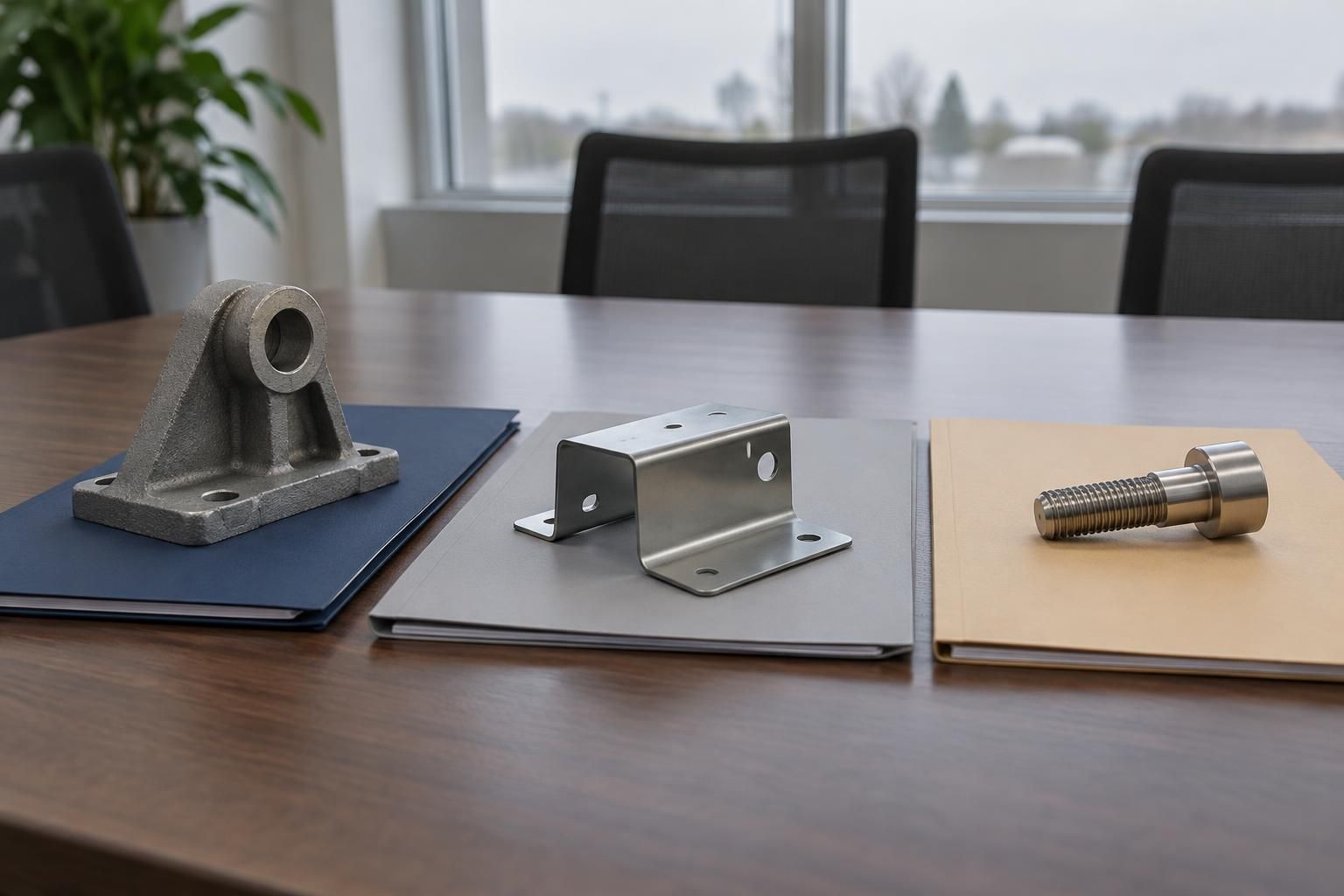
Complexity ReductionFewer Parts, Fewer Suppliers, More Leverage in Procurement
Procurement glossary · Updated · 6 min read
Also known as: Complexity Reduction, Part Standardisation, Item Master Cleansing, SKU Reduction, Variant Reduction
Short answer
- Complexity reduction systematically reduces the variety of parts, suppliers and processes in procurement.
- The main benefits are higher bundling volumes, lower material and process costs and better supply control.
- Implementation typically takes place through part rationalisation, standardisation and supplier consolidation with clear KPIs.
Complexity reduction refers to the systematic reduction of the variety of parts, materials, suppliers, processes and variants in procurement and manufacturing. For buyers, it is one of the most effective levers for lowering costs, reducing inventory and increasing security of supply. The term does not describe a single project, but a holistic approach spanning engineering, standardisation, supplier structure and processes.
Key facts
- Complexity reduction typically lowers material and process costs, because higher volumes per part enable better purchasing terms.
- Core approaches include part rationalisation, standardisation, modular kits and consolidation of the supplier base.
- Success depends heavily on cross-functional collaboration between procurement, engineering, production and sales.
- Typical KPIs are part count per product, number of suppliers per material group and the savings rate on a cleansed prior-year basis.
- Risks such as single-source dependencies are controlled via thresholds such as the second source threshold.
- In practice, complexity reduction frequently achieves mid-range to single-digit percentage savings on the affected procurement volume.
Contents
Definition: complexity reduction
Complexity reduction is the planned reduction of internal and external variety along the value chain. It encompasses the cleansing of the item master data, the harmonisation of components and materials, and the streamlining of the supplier and process landscape.
Distinction from cost reduction
Complexity reduction must not be equated with classic price optimisation. While negotiation or should-costing attacks the price of existing items, reduction changes the structure itself: fewer items, larger bundling volumes and simpler procurement processes. Both levers complement each other but operate at different levels.
Why complexity in procurement is expensive
Every additional part number generates costs that go beyond the purchase price: planning effort, warehousing, quality inspection, master data maintenance and minimum order quantities. In practice, the true cost of an item is therefore frequently underestimated, because it is spread across many departments and rarely reported as a whole.
Typical causes of complexity
Common drivers are historically grown designs, customer-specific special requirements, inherited item numbering after acquisitions or mergers, and a lack of standardisation between sites. Reactive procurement – such as short-notice rush orders from new sources – also causes the item and supplier master data to expand in an uncontrolled manner.
Methods and approach in procurement
A structured approach is divided into stocktaking, potential analysis, implementation and anchoring. It is crucial that procurement does not decide alone, but prioritises jointly with engineering and production.
Part rationalisation and standardisation
The starting point is an ABC and cross-usage analysis of the item master data: which parts are rarely or no longer used, and which cover the same function with slightly different dimensions? This is followed by allocation guidelines and component standardisation, for example uniform screw or seal series. This produces standard-part sample cases that engineers are required to use.
Supplier consolidation
In analogy to the item master data, the supplier base is cleansed. Using a supplier longlist and subsequent supplier performance evaluation, reliable partners are identified and volumes bundled. A supplier change or the connection of suppliers via structured e-procurement platforms additionally reduces transaction costs. A defined second source threshold is important here, so that cost advantages do not turn into unacceptable single-source risks.
Process and interface simplification
Complexity also resides in processes: many approval stages, different ordering channels per site, manual releases. A clear process organisation with standardised ordering processes, clear approval limits and automated material availability checks (ATP) noticeably lowers the processing effort per transaction.
Key KPIs for steering complexity reduction
Without measurable target metrics, any list of initiatives fizzles out. A small, consistently recorded set of KPIs that is reviewed regularly with the specialist departments makes sense.
Item and variant metrics
Key metrics are the number of active part numbers per product family, the share of standard parts in the total part count and the number of new part numbers per year. If the net intake of new parts declines despite a constant order backlog, the rationalisation is working. The hit rate of engineering using the existing sample cases is also a good early indicator.
Supplier and process metrics
On the supplier side, the number of active suppliers per material group, the volume concentration ratio of the top suppliers and schedule adherence count. On the process side, order volumes per transaction channel and the share of automated orders are suitable. Those who measure these regularly detect relapses into old patterns at an early stage.
Financial impact
The procurement ROI of a reduction initiative results from saved material costs, lower working capital effort and reduced process costs – minus transition costs for tools, drawings and qualification. Sound calculations also include the downstream costs of changes in manufacturing and documentation.
Risks and control measures
Complexity reduction can weaken supply, quality and negotiating position if it only targets volume consolidation. Risks must therefore be assessed from the outset.
Dependencies and failure scenarios
Bundling creates dependence on individual suppliers. Mastering this requires functioning risk management, defined second-source thresholds for critical material groups and a regulated right of termination for important cause in framework agreements. In the event of failures, the quality of the contingency processes is decisive – from 8D containment to rapid rush ordering via alternatively qualified sources.
Quality and approval obligations
Every part harmonisation or changeover to a new supplier requires qualification. Quality assurance agreements, defined initial sampling and structured 8D report processes for complaints secure the level of quality. When procuring zero-series parts for new variants, increased inspection scopes apply, which must be planned for.
Implementation and acceptance risks
Resistance arises when engineering fears extra work or sales sees customer requirements at risk. Helpful measures include clear approval processes for exceptions, visible management sponsorship and the anchoring of reduction targets in the performance agreements of the affected departments. Legacy stock in warehouses and tools should be run down through a clearly regulated transfer of work or planned consumption.
Current developments and digital support
Digitalisation and sustainability requirements are increasing the pressure for leaner structures – while at the same time making analysis easier. Those who maintain their master data cleanly can attack complexity in a data-based way today.
Data-based item and supplier analysis
Modern e-procurement and master data analysis make duplicates, rare items and fragmented material groups visible. AI-supported classification helps to identify functionally identical parts across sites. A cleansed item master also helps with e-auction preparation: comparable items can be cleanly grouped into lot types.
Sustainability, compliance and supply chain
Fewer suppliers also mean less effort in due diligence obligations, for example under the Supply Chain Due Diligence Act. Concentrated supplier relationships also enable more targeted enquiries about Scope 2 emissions and transparency along the supply chain. On the freight side, uniform Incoterms CPT arrangements simplify control and cost allocation.
Agile implementation instead of a large-scale project
In practice, a rolling approach has proven effective: work through material group by material group, quick wins first, complex rationalisations with a clear roadmap. From a financial perspective, instruments such as reverse factoring can stabilise the relationship with consolidated core suppliers when payment terms are harmonised.
Typical metrics
| Metric | Benchmark | Context |
|---|---|---|
| Active part numbers per product family | season-independent declining trend | A decline despite a stable order backlog indicates effective rationalisation |
| Share of standard parts | typically > 60% | Target depends on product type; a higher share reduces procurement complexity |
| Active suppliers per material group | typically 2–4 | Fewer sources per group, outside defined second-source thresholds for criticality |
| Schedule adherence | > 95% | Intended as an early indicator of whether consolidation is impairing delivery reliability |
| Procurement ROI of the programme | typically positive over multiple years | Savings minus sampling, change and process costs |
Typical practical benchmarks – they vary by industry, part and contract.
Practical example
A mid-sized machinery manufacturer with several sites identifies over 20,000 active part numbers, several thousand of which are functionally identical variants, and more than 600 active suppliers with a procurement volume in the mid-double-digit millions range. In a twelve-month programme, material groups are prioritised, sample cases are introduced and the supplier base is consolidated.
- Cross-usage and duplicate analysis of the item master data per site as a starting point
- Introduction of binding standard-part sample cases and allocation guidelines with engineering
- Consolidation from over 600 to fewer than 350 suppliers by means of supplier performance evaluation
- Definition of second-source thresholds and contingency processes for critical material groups
Conclusion
Complexity reduction is a structural cost-reduction lever that goes far beyond price negotiations. It impacts material costs, capital tied up, process costs and, at the same time, security of supply and compliance effort. Success requires cross-functional collaboration, clean master data and consistent measurement. Companies that anchor reduction as a permanent principle rather than a one-off project keep their procurement system lean and capable of acting in the long term. A suitable partner pool for consolidated material groups can be built up in a targeted manner via specialised B2B marketplaces.
Frequently asked questions
What does complexity reduction mean in procurement?
Complexity reduction refers to the systematic reduction of the variety of parts, materials, suppliers and processes. The aim is to create larger bundling volumes through a smaller number of articles and suppliers and to lower process costs. It addresses the structure of procurement, not merely the price of individual items.
How do you start a complexity reduction project?
Typically, you start with an ABC and cross-usage analysis of the item master data as well as an evaluation of the supplier master data. From this, material groups with high rationalisation potential can be identified. Joint prioritisation with engineering and production is important so that changes are practically implementable.
Which KPIs are measured in complexity reduction?
Common KPIs are active part numbers per product family, the share of standard parts, the number of active suppliers per material group, schedule adherence and the share of automated purchase orders. In addition, the procurement ROI of the programme is recorded, i.e. savings minus transition costs.
What are the risks of supplier consolidation?
Bundling increases dependence on individual suppliers and can jeopardise supply in the event of failures. This is addressed through defined second-source thresholds, robust risk management and contractual recourse options such as the right of termination for important cause. For critical material groups, a qualified second source remains indispensable.
How much can you save through complexity reduction?
There are no reliable blanket figures, as the potential depends on the industry, item structure and depth of implementation. In practice, mid-range to single-digit percentage savings are frequently achieved on the procurement volume addressed, plus reduced process and inventory costs. Sound business cases also factor in sampling and change costs.
What is the difference between standardisation and complexity reduction?
Standardisation is one method within complexity reduction: it harmonises parts, materials and processes onto common standards or series. Complexity reduction also goes beyond this to include the cleansing of the item and supplier master data as well as the simplification of procurement processes.