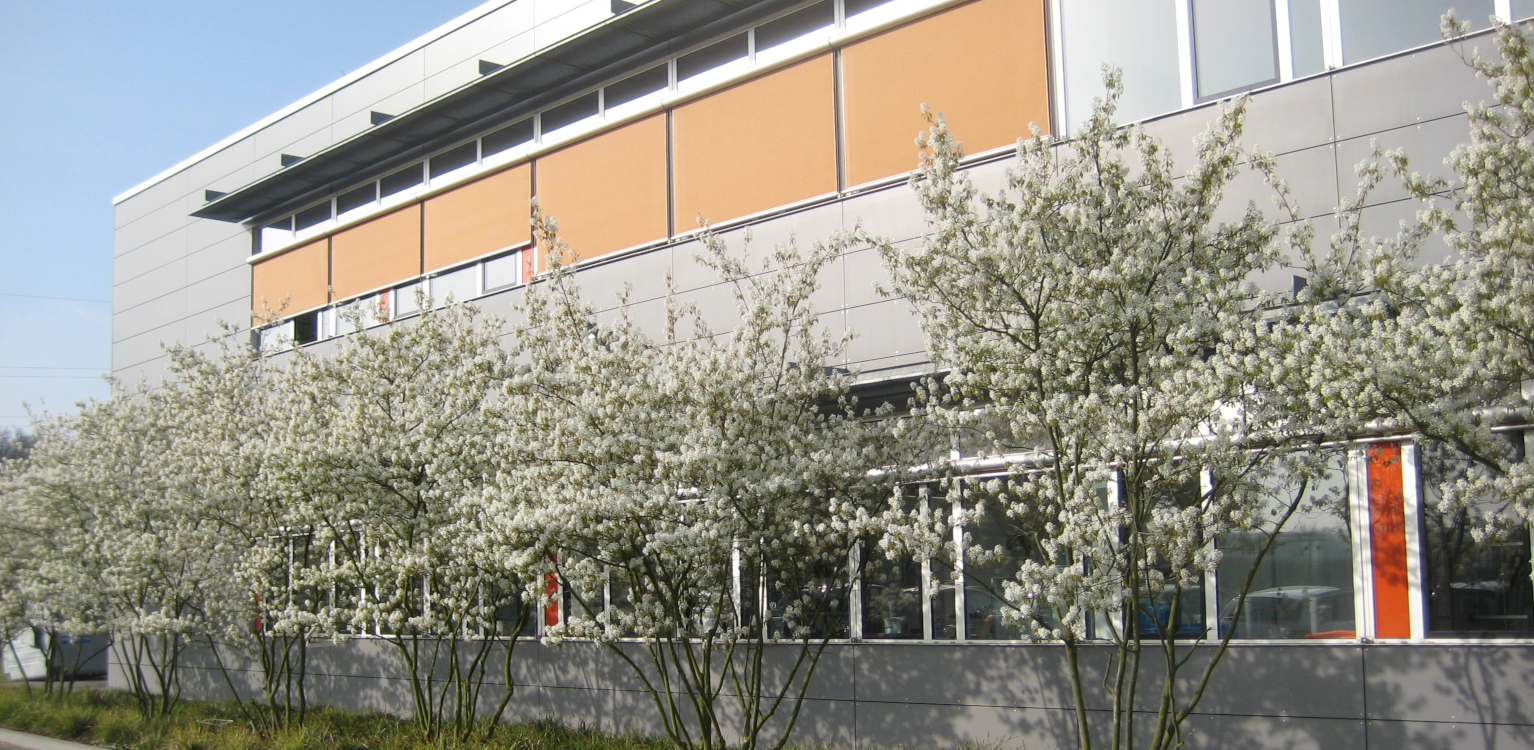
Accredited laboratory for stable isotope and radiocarbon analysis for origin and authenticity testing of biogenic products

Agroisolab GmbH
JülichNew on Amplifa
About Agroisolab
Agroisolab GmbH is a commercial stable isotope laboratory based in Jülich, founded in 2002 as a spin-off of Forschungszentrum Jülich. Its core business is the authenticity and origin testing of agricultural and natural products using stable isotope analysis of the bio-elements hydrogen, carbon, nitrogen, oxygen and sulfur, as well as the radiocarbon method (14C) for verification of biobased carbon. The service portfolio also includes elemental composition analyses, chemical fingerprinting, metabolomics profiling via DART-TOF and element quantification by X-ray fluorescence (XRF). For origin determination, the laboratory operates more than 150 product-specific databases, including those for agricultural raw materials, food, wood and textiles. The equipment includes 14 isotope ratio mass spectrometers (IRMS), elemental analyzers, patented high-temperature pyrolysis systems (1550 °C), gas chromatographs, CRDS laser spectrometers and liquid scintillation counters. Since 2006, the laboratory has been accredited to DIN EN ISO/IEC 17025; its customers include customs and legal authorities, traders, producers, retail and associations worldwide.
- Site
- Jülich
- Processes
- Stable isotope analysis (IRMS) – 13C/12C, 15N/14N, 34S/32S, 2H/1H, 18O/16O, High-temperature pyrolysis (1550 °C, patented) with IRMS – 2H/1H (org.), High-temperature pyrolysis (1550 °C, patented) with IRMS – 18O/16O (org.), Elemental analysis (EA) with IRMS – 13C/12C, 15N/14N, Elemental analysis (EA, chromium mode) with IRMS – 2H/1H (liquid), Multiflow equilibration with IRMS – 18O/16O (liquid), Gas chromatography (GC) combustion with IRMS – 13C/12C, Gas chromatography (GC) pyrolysis with IRMS – 2H/1H (org.)
- Materials
- Water, Sugar, Raw proteins, Fat, Organic compounds, Wood, Cotton (textile), Meat (food)
- Certificates
- DIN EN ISO/IEC 17025:2018, DIN EN ISO/IEC 17025:2018 (DAkkS), Interlaboratory tests/proficiency tests (including IAEA)
- Founded
- 2002
- Industries
- Agricultural raw materials, Food (e.g. meat), Wood/timber, Textiles (e.g. cotton), Customs and legal authorities, Trade/producers/retail
- 01
Sample receipt and sample preparation (including freeze-drying)
- 02
Elemental analysis or pyrolysis/gas chromatography
- 03
Isotope measurement via IRMS, CRDS or liquid scintillation counting
- 04
Database comparison and evaluation (origin, authenticity, adulteration)
- 05
Report of findings
Analysis Methods
Stable Isotope Mass Spectrometry
Determination of the isotope ratios of 13C/12C, 15N/14N, 34S/32S, 2H/1H and 18O/16O in water and organic samples such as sugar, raw proteins and fat.
High-Temperature Pyrolysis 1550 °C (patented)
In-house developed, patented pyrolysis tubes for isotope analysis of 2H/1H and 18O/16O in organic compounds.
Radiocarbon Analysis (Liquid Scintillation Counting)
Measurement of the biobased carbon content for verification of sustainability and biomass share.
Gas Chromatography-Isotope Ratio Mass Spectrometry
Compound-specific isotope analysis of 13C/12C and 2H/1H via GC combustion or GC pyrolysis.
Cavity Ringdown Laser Spectroscopy
Specifically for determination of 2H/1H in water samples.
Metabolomics Profiling (DART-TOF)
Profiling for verification of wood species and other biological products.
X-ray Fluorescence (Low-level XRF)
Quantification of the elemental composition as a supplement to isotope analysis.
Site
Jülich
DELaboratory and headquarters
- Materials
- Water, sugar, raw proteins, fat, organic compounds, wood, textiles, food
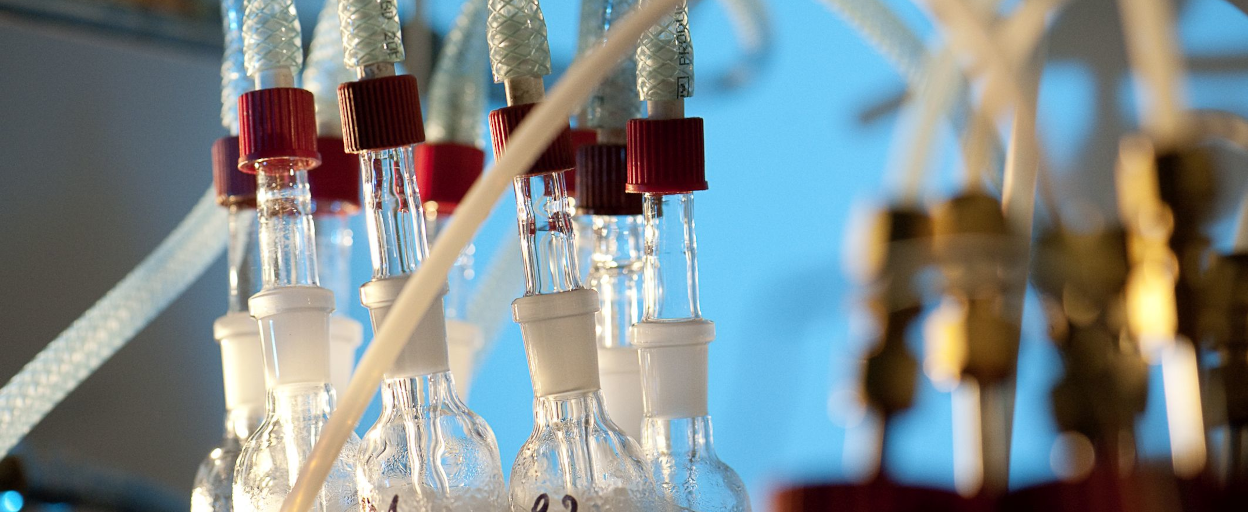
- 14 isotope ratio mass spectrometers (IRMS, Horizon, NU-Instruments)
- 7 elemental analyzers (Isoprime, Elementar)
- 4 high-temperature elemental analyzers (1550 °C, patented)
- 3 gas chromatographs GC(HT)
- Equilibration system Multiflow (Elementar)
- Cavity Ringdown laser spectrometer (Los Gatos Research)
- 3 Max elemental analyzers
- 5 liquid scintillation counters (14C)
- DART-TOF mass spectrometer
- Low-level XRF
- Freeze-drying systems
- Zero-blank autosampler (AILTECH, ZBREV20)
Inside the production

Industries
Processes & technical limits
| Processes | Tolerance | Max. part | Weight | Lot size | Materials |
|---|---|---|---|---|---|
| Stable isotope analysis (IRMS) – 13C/12C, 15N/14N, 34S/32S, 2H/1H, 18O/16OTesting | – | – | – | – | Water, Sugar, Raw proteins, Fat, Organic compounds |
| High-temperature pyrolysis (1550 °C, patented) with IRMS – 2H/1H (org.)Testing | – | – | – | – | Organic samples |
| High-temperature pyrolysis (1550 °C, patented) with IRMS – 18O/16O (org.)Testing | – | – | – | – | Organic samples |
| Elemental analysis (EA) with IRMS – 13C/12C, 15N/14NTesting | – | – | – | – | – |
| Elemental analysis (EA, chromium mode) with IRMS – 2H/1H (liquid)Testing | – | – | – | – | Water |
| Multiflow equilibration with IRMS – 18O/16O (liquid)Testing | – | – | – | – | Water |
| Gas chromatography (GC) combustion with IRMS – 13C/12CTesting | – | – | – | – | – |
| Gas chromatography (GC) pyrolysis with IRMS – 2H/1H (org.)Testing | – | – | – | – | Organic samples |
| Radiocarbon measurement (14C) with liquid scintillation counters – biobased carbon /Testing | – | – | – | – | – |
| Cavity Ringdown Spectroscopy (CRDS) – 2H/1H in waterTesting | – | – | – | – | Water |
| Elemental composition analysisTesting | – | – | – | – | – |
| Chemical fingerprintingTesting | – | – | – | – | – |
| Metabolomics analysis via DART-TOF (including wood species verification)Testing | – | – | – | – | Wood, Textiles (e.g. cotton), Food |
| Low-level XRF – quantification of elementsTesting | – | – | – | – | – |
| Origin analysis/authenticity testing (geographical origin, batch identity,Testing | – | – | – | – | Agricultural raw materials, Food (e.g. meat), Wood, Textiles (e.g. cotton) |
| Testing of organic vs. conventional farming (stable isotope method)Testing | – | – | – | – | – |
| Adulteration detection (adulteration, e.g. vanilla, sugar, water, fermentation base)Testing | – | – | – | – | – |
| Forensic marking with stable isotopes (product tracking)Testing | – | – | – | – | – |
| Freeze-drying for isotope analysis (sample preparation)Testing | – | – | – | – | – |
12 Anlagen & Maschinen
| Machine | Manufacturer / model | Quantity | Working area | Year built | Site |
|---|---|---|---|---|---|
| Isotope ratio mass spectrometer (IRMS) | NU-Instruments Horizon | 14 | – | – | Jülich |
| Elemental analyzer (EA) | Elementar Isoprime | 7 | – | – | Jülich |
| High-temperature elemental analyzer (1550 °C) | Agroisolab patented | 4 | – | – | Jülich |
| Gas chromatograph (GC(HT)) | – | 3 | – | – | Jülich |
| Equilibration system | Elementar Multiflow | – | – | – | Jülich |
| Cavity Ringdown laser spectrometer (CRDS) | Los Gatos Research | – | – | – | Jülich |
| Max elemental analyzer | Max | 3 | – | – | Jülich |
| Liquid scintillation counter (14C) | – | 5 | – | – | Jülich |
| DART-TOF mass spectrometer | – | – | – | – | Jülich |
| Low-level XRF | – | – | – | – | Jülich |
| Freeze-drying system | – | – | – | – | Jülich |
| Zero-blank autosampler | AILTECH ZBREV20 | – | – | – | Jülich |
Additional services
Quality & Accreditation
The laboratory has been accredited to DIN EN ISO/IEC 17025:2018 since 2006 (DAkkS, register number D-PL-14370-01-00) for stable isotope and radiocarbon measurements. The method is regularly verified in interlaboratory tests and proficiency testing, including with IAEA standards; in addition, Agroisolab conducts its own free interlaboratory tests for more than 30 isotope laboratories.
| Evidence | Jülich |
|---|---|
| DIN EN ISO/IEC 17025:2018 (DAkkS) | |
| Interlaboratory tests/proficiency tests (including IAEA) |
History
- 2002
Founded as a spin-off of Forschungszentrum Jülich
- 2006
Laboratory accredited to DIN EN ISO/IEC 17025
- 2025
Current accreditation certificate D-PL-14370-01-00 of DAkkS, valid from 25.08.2025