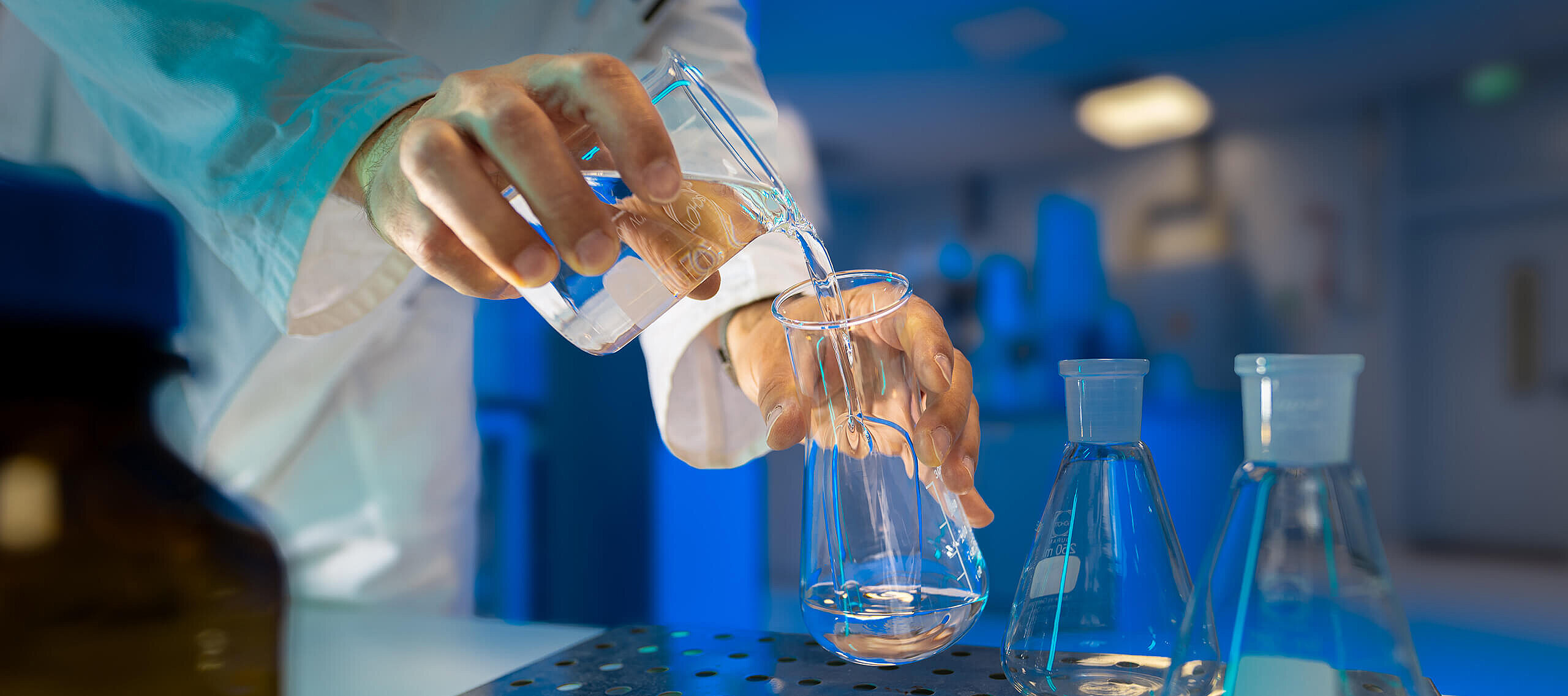
Manufacturer of inorganic specialty chemicals: silicas, sulfur compounds and zeolitic molecular sieves, custom-made in Bad Köstritz.

Chemiewerk Bad Köstritz GmbH
Bad KöstritzNew on Amplifa
Specialty Chemicals from Bad Köstritz
Chemiewerk Bad Köstritz GmbH (CWK) is a manufacturer of inorganic specialty chemicals and has been producing for over 190 years at its site in Bad Köstritz, Thuringia. The portfolio comprises the three business fields silicas (silica gel and silica sol based on amorphous silicon dioxide), sulfur compounds (thiosulfates, sulfites, concentrated sulfuric acid and sulfur dioxide) as well as zeolitic molecular sieves under the Köstrolith® brand. Production takes place in several independently operating plants, including a sulfur combustion plant, a plant for micronized silica gel and a molecular sieve production plant; product parameters such as particle size, pore volume, concentration or pH value are adjusted to the specific application. The products are used, among other things, for substance separation, drying, water treatment, as fillers, binders or reducing agents in industries such as agriculture, construction, energy and environment, refractory and ceramics, catalysts and semiconductors as well as food and beverages. An in-house research and development department also creates tailor-made materials to customer specifications.
- Site
- Bad Köstritz
- Processes
- Production of silica gel (Köstropur®, Köstrosorb®) from amorphous silicon dioxide, particle sizes, Micronized silica gel (own plant since 2004, sol-gel processes for highest purity), Production of silica sol (Köstrosol®): colloidal dispersions of silicon dioxide particles in, Production of thiosulfates: sodium thiosulfate (solution 30 %, pentahydrate crystals, anhydrous, Production of sulfites: ammonium sulfite, potassium sulfite, ammonium hydrogensulfite,, Production of concentrated sulfuric acid (96 %) and SO2 with low metal contents in the, Production of zeolitic molecular sieves (Köstrolith®): types A, X and Y, active component contents, Thermal regeneration of used molecular sieves
- Materials
- Amorphous silicon dioxide (silica gel/silica sol), Sodium thiosulfate, Ammonium thiosulfate, Potassium thiosulfate, Ammonium sulfite, Potassium sulfite, Ammonium hydrogensulfite, Potassium hydrogensulfite
- Certificates
- DIN EN ISO 9001:2015, DIN EN ISO 14001:2015, DIN EN ISO 50001:2018, ISO 9001, ISO 14001, ISO 50001
- Founded
- 1831
- Industries
- Construction & Wood, Energy & Environment, Refractory & Ceramics, Catalysts & Semiconductors, Agriculture & Plants, Food & Beverages
- 01
Research & development and custom material development
- 02
Production of raw materials (sodium silicate or sulfur combustion to SO2)
- 03
Synthesis in self-contained production plants (sol-gel processes, thiosulfate-
- 04
Modification and micronization to customer specification
- 05
Quality control
- 06
Filling into canisters, drums, IBCs, big bags, sacks or tank trucks
- 07
Worldwide distribution
Product Groups and Processes
Amorphous silicon dioxide (silica gel)
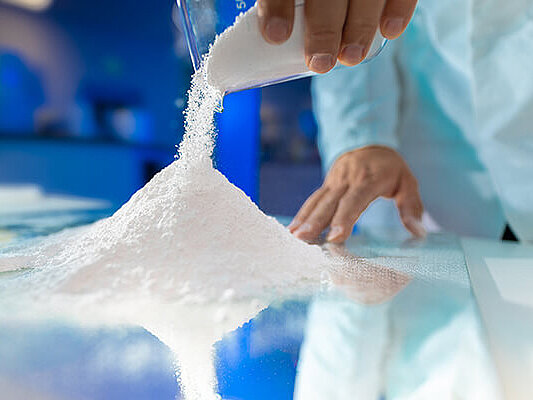
Köstropur® and Köstrosorb® silica gels with particle sizes of 2–25 µm for fillers, adsorbents, matting agents and catalyst carriers.
Silica sol (Köstrosol®)
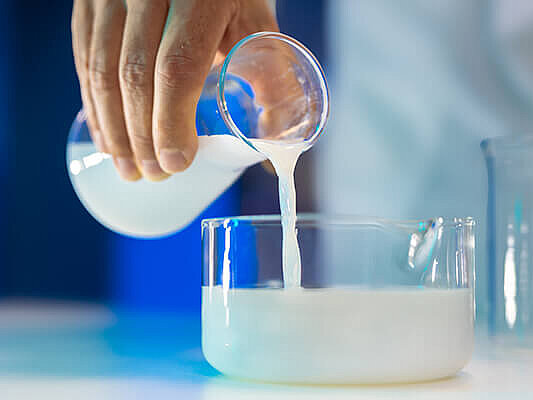
Colloidal dispersions of SiO2 particles (3–100 nm, 7–50 % concentration) as binders, polishing slurries or flocculants.
Thiosulfates
Sodium, ammonium and potassium thiosulfates as solution, pentahydrate or anhydrous form for antichlor, photo chemistry and liquid fertilizers.
Sulfites and hydrogensulfites
Ammonium and potassium sulfite solutions with customer-specific concentrations as reducing agents and auxiliaries in the pulp and food industries.
Sulfuric acid (96 %)
Concentrated sulfuric acid with low metal contents from the sulfur combustion plant, among other things for battery manufacturing.
Sulfur dioxide
By-product of the sulfur combustion plant as a starting material for sulfur compounds.
Zeolitic molecular sieves
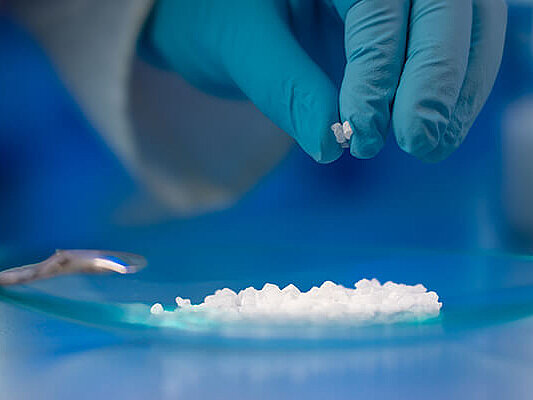
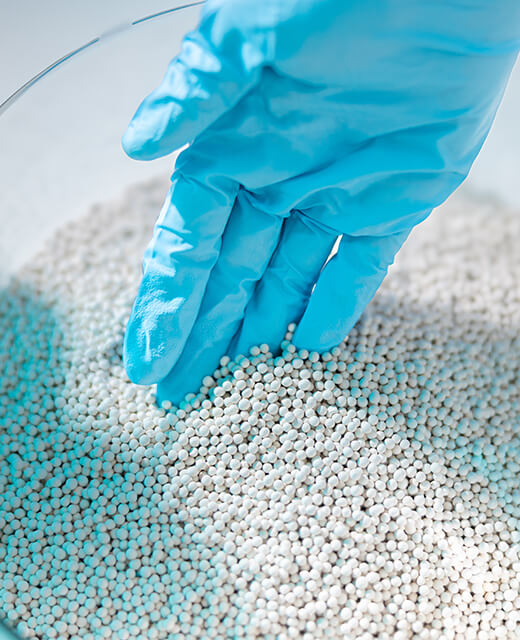
Zeolites of types A, X and Y (active component contents 80–100 %, grain sizes 1–5 mm, also binder-free) for substance separation, gas drying and oxygen generation.
Sodium silicate
High-purity starting material for the production of the silica products.
Production Site
Bad Köstritz
DEProduction site with Heinrichshall industrial park
- Lot size
- Canisters, drums, IBCs, big bags, sacks up to tank trucks
- Materials
- Silica products, sulfur compounds, zeolites
- Sulfur combustion plant (2022)
- Silica sol plant (2014)
- Molecular sieve production plant (1989, expanded 2008)
- Plant for micronized silica gel (2004)
- Several independently operating silica plants
Products
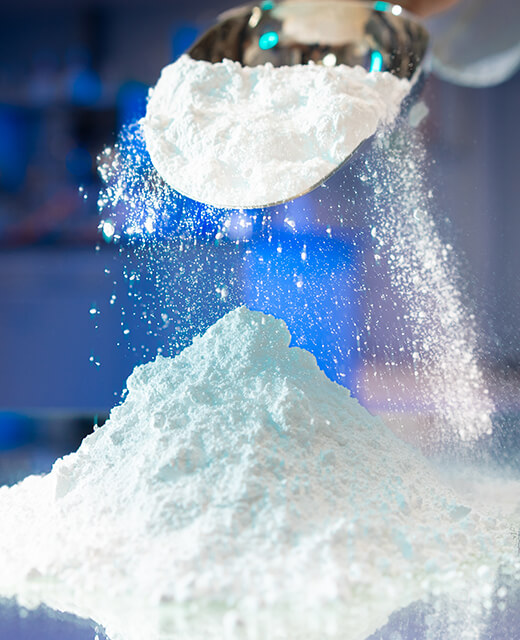
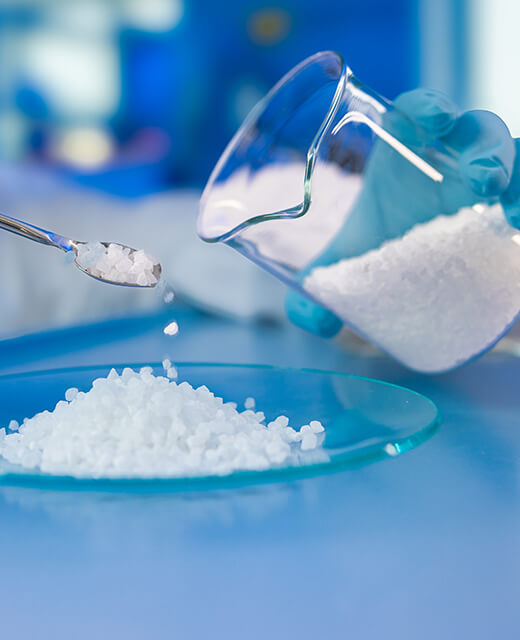
Inside the production
Industries
Processes & technical limits
| Processes | Tolerance | Max. part | Weight | Lot size | Materials |
|---|---|---|---|---|---|
| Production of silica gel (Köstropur®, Köstrosorb®) from amorphous silicon dioxide, particle sizesChemistry/Specialty Chemicals | – | – | – | – | amorphous silicon dioxide (SiO2) |
| Micronized silica gel (own plant since 2004, sol-gel processes for highest purity)Chemistry/Specialty Chemicals | – | – | – | – | amorphous silicon dioxide (SiO2) |
| Production of silica sol (Köstrosol®): colloidal dispersions of silicon dioxide particles inChemistry/Specialty Chemicals | – | – | – | – | silicon dioxide (SiO2), high-purity alkali silicate |
| Production of thiosulfates: sodium thiosulfate (solution 30 %, pentahydrate crystals, anhydrousChemistry/Specialty Chemicals | – | – | 10 kg (sack) – 1000 kg (big bag) / tank truck | – | sodium thiosulfate, ammonium thiosulfate, potassium thiosulfate, sulfur, sulfur dioxide, caustic soda, caustic potash, ammonia |
| Production of sulfites: ammonium sulfite, potassium sulfite, ammonium hydrogensulfite,Chemistry/Specialty Chemicals | – | – | – | 20-l canister – tank truck | ammonium sulfite, potassium sulfite, ammonium hydrogensulfite, potassium hydrogensulfite |
| Production of concentrated sulfuric acid (96 %) and SO2 with low metal contents in theChemistry/Specialty Chemicals | – | – | – | tank truck | sulfuric acid, sulfur dioxide |
| Production of zeolitic molecular sieves (Köstrolith®): types A, X and Y, active component contentsChemistry/Specialty Chemicals | – | – | – | – | zeolites (crystalline aluminosilicates) |
| Thermal regeneration of used molecular sievesChemistry/Specialty Chemicals | – | – | – | – | zeolites (molecular sieves) |
| Sphere manufacturing of customer-specific powdersChemistry/Specialty Chemicals | – | – | – | – | zeolite powder |
| REACH-compliant import of zeolitesChemistry/Specialty Chemicals | – | – | – | – | zeolites |
| Development and production of tailor-made specialty chemicals, customer-specific specificationsEngineering | – | – | – | – | silica products, zeolites, sulfur compounds |
6 Anlagen & Maschinen
| Machine | Manufacturer / model | Quantity | Working area | Year built | Site |
|---|---|---|---|---|---|
| Sulfur combustion plant | – | 1 | – | 2022 | Bad Köstritz |
| Silica sol plant | – | 1 | – | 2014 | Bad Köstritz |
| Molecular sieve production plant | – | – | – | 1989 | Bad Köstritz |
| Molecular sieve plant (capacity expansion) | – | – | – | 2008 | Bad Köstritz |
| Plant for micronized silica gel | – | 1 | – | 2004 | Bad Köstritz |
| Several independently operating silica plants and processes | – | – | – | – | Bad Köstritz |
Additional services
Quality & Certification
The integrated management system is certified according to DIN EN ISO 9001:2015, ISO 14001:2015 and ISO 50001:2018 (TÜV Thuringia, valid until 2027-07-15). The product and process level is safeguarded by effective control mechanisms, for example the continuous measurement of metal contents in sulfuric acid.
| Evidence | Bad Köstritz |
|---|---|
| ISO 9001 | |
| ISO 14001 | |
| ISO 50001 |
Company History
- 1831
Opening of the Heinrichshall brine works on August 3, 1831
- 1848
Expansion of the brine works into a chemical factory
- 1871
Conversion into a joint-stock company; start of production of sulfur compounds
- 1927
Sale to Zschimmer and Schwarz OHG
- 1948
Conversion of the chemical works into a state-owned enterprise
- 1962
Shift of the production focus from sulfuric acid to silica products
- 1969
Assignment to the Bitterfeld combine, establishment of an in-house research department
- 1989
Commissioning of the molecular sieve production plant
- 1991
Acquisition by the Leopold and Dr. Ottow families; construction of a modern industrial park until 1999
- 1999
Expansion of the Heinrichshall industrial park in 1999/2000
- 2004
Commissioning of the new plant for micronized silica gel
- 2008
Expansion of the molecular sieve plant for higher capacities
- 2014
Commissioning of the new silica sol plant
- 2021
Construction of the new sulfur combustion plant, commissioning in February 2022