
Independent commercial laboratory for food analysis, food law consulting and environmental analysis in Nuremberg.
Chemisches Institut Burkon Partnerschaft
Raudtener Straße 19, 90475 Nuremberg · GermanyNew on Amplifa
About Chemisches Institut Burkon
The Chemisches Institut Burkon Partnerschaft is an independent, privately run commercial laboratory in Nuremberg that has offered food analysis and food law consulting for over 50 years. Its service portfolio includes sensory, physico-chemical, chemical, microbiological, immunological and molecular-biological analyses as well as labelling checks under European and German law. The analysis portfolio includes nutritional values, vitamins, additives, pesticide residues (including QuEChERS screening), mycotoxins, process and environmental contaminants such as acrylamide, MOSH/MOAH and 3-MCPD, as well as allergens. In addition, the institute offers operational hygiene consulting with site inspections and surface germ indicators, crisis management including express analyses (e.g. MOSH/MOAH within 5 working days), food law expert report preparation and, via its sister company IfU Burkon GmbH, environmental and workplace analysis. The laboratories are accredited to DIN EN ISO/IEC 17025:2018; the L2 microbiology laboratory is GMP-certified. Its customer base comprises companies from primary production through the food industry to retail.
- Site
- Nuremberg
- Processes
- Chemical food analysis (nutritional values, elements, vitamins, additives), Microbiological analyses (indicator organisms, spoilage organisms, pathogenic bacteria, S2, Pesticide residue analysis (QuEChERS screening and individual methods), MOSH/MOAH analysis (automated), Mycotoxin analysis (aflatoxins, ochratoxin A, patulin, fusarium toxins), Molecular-biological and immunological allergen testing (gluten, nuts, soy, mustard, egg,, Sensory analyses, Labelling checks under European and German law
- Materials
- Food Analysis, Pesticide Residue Analysis, Mycotoxin Analysis, MOSH/MOAH Analysis, Allergen Analysis
- Certificates
- DIN EN ISO/IEC 17025:2018, GMP certification (L2 microbiology laboratory), QS approval pesticides (O+G), BNN approval pesticides (O+G), Fruitmonitoring approval pesticides, GMP certification L2 microbiology laboratory, Fruitmonitoring approval
- Founded
- 1972 (acqu
- Industries
- Food industry, Retail, Primary production, Food industry (from producers to nationally operating companies up to
- 01
Sample intake
- 02
Sensory, chemical, microbiological and molecular-biological analysis
- 03
Interpretation and food law conformity assessment
- 04
Consulting, expert report preparation, crisis management
Analysis Parameters and Methods
Food Analysis
Sensory, physico-chemical, chemical, microbiological, immunological and molecular-biological analyses of food.
Pesticide Residue Analysis
QuEChERS screening and individual methods such as glyphosate, ethylene oxide and chlormequat/mepiquat.
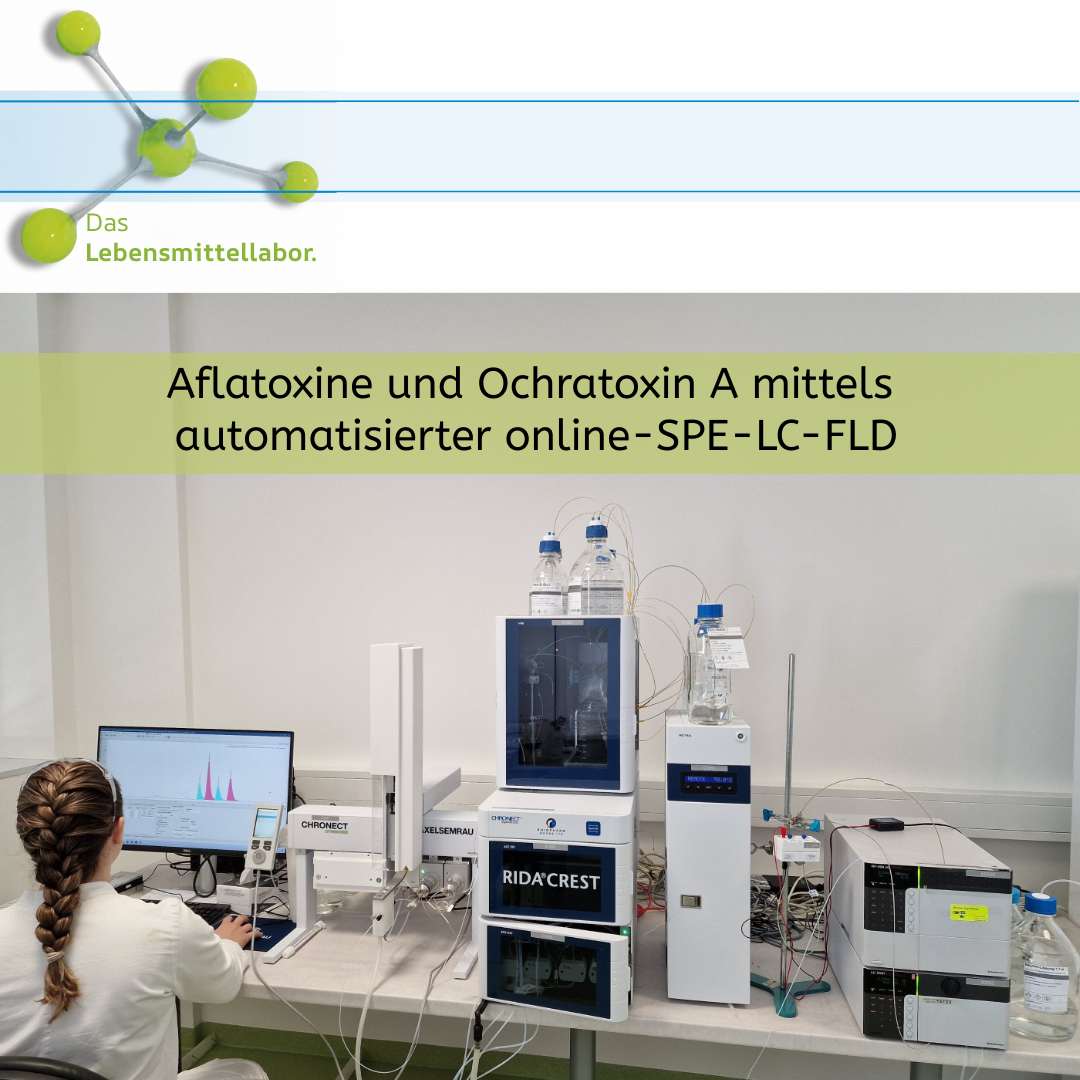
Mycotoxin Analysis
Determination of aflatoxins, ochratoxin A, patulin and fusarium toxins.
MOSH/MOAH Analysis
Automated mineral oil hydrocarbon analysis with results within 5 working days.
Allergen Analysis
Molecular-biological and immunological testing for gluten, nuts, soy, mustard, egg and milk.
Locations
Nuremberg
DEHeadquarters with laboratory and office facilities
- Materials
- Food, food contact materials, drinking water
- Chemical analysis
- Microbiological S2 laboratory
- Sensory analysis
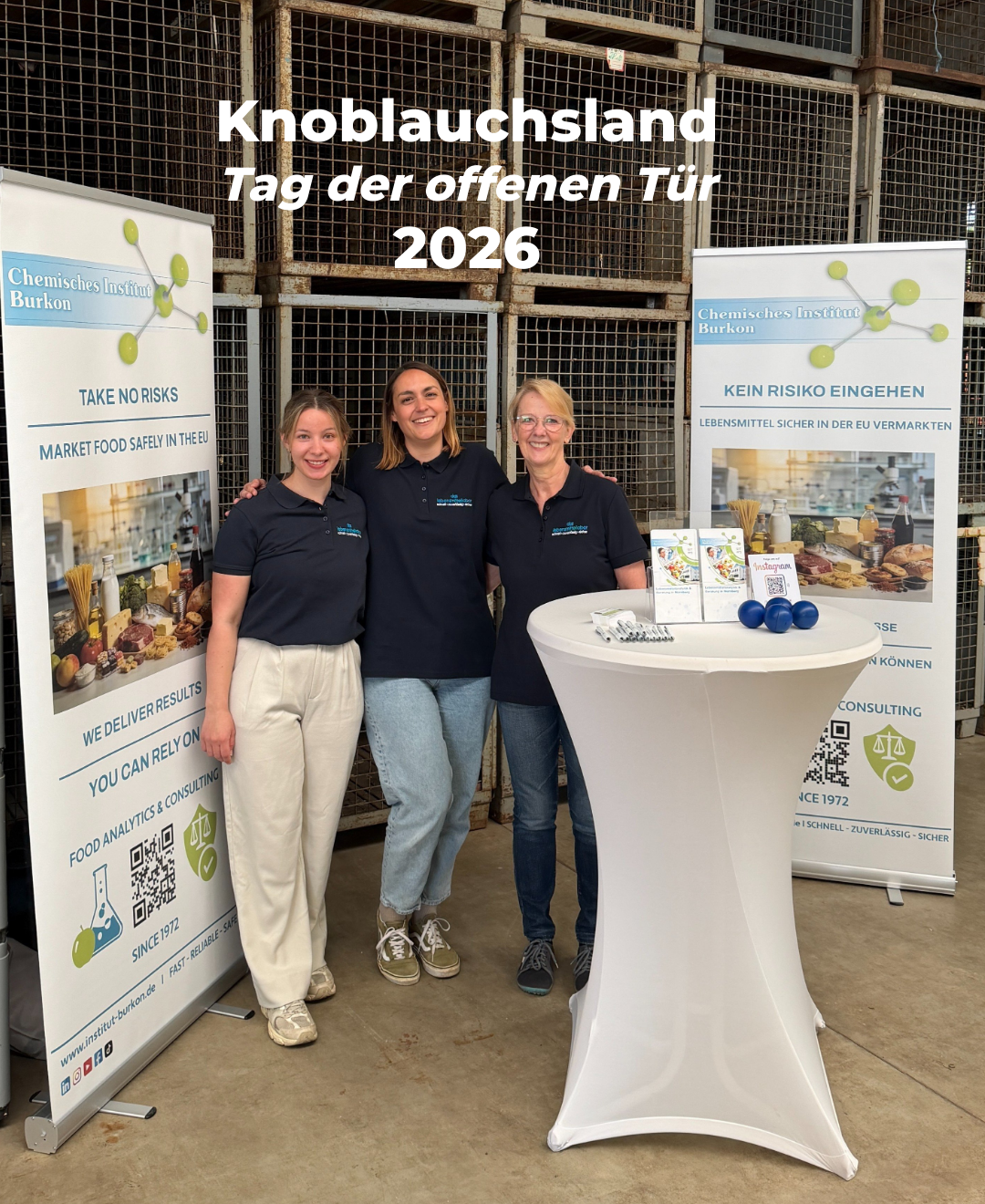
Inside the production
Industries
Processes & technical limits
| Processes | Tolerance | Max. part | Weight | Lot size | Materials |
|---|---|---|---|---|---|
| Chemical food analysis (nutritional values, elements, vitamins, additives)Testing | – | – | – | – | Food |
| Microbiological analyses (indicator organisms, spoilage organisms, pathogenic bacteria, S2Testing | – | – | – | – | Food |
| Pesticide residue analysis (QuEChERS screening and individual methods)Testing | – | – | – | – | Food |
| MOSH/MOAH analysis (automated)Testing | – | – | – | – | Food, Oils, Fats |
| Mycotoxin analysis (aflatoxins, ochratoxin A, patulin, fusarium toxins)Testing | – | – | – | – | Food |
| Molecular-biological and immunological allergen testing (gluten, nuts, soy, mustard, egg,Testing | – | – | – | – | Food |
| Sensory analysesTesting | – | – | – | – | Food |
| Labelling checks under European and German lawTesting | – | – | – | – | – |
| Food law consulting & expert report preparationTesting | – | – | – | – | – |
| Operational hygiene consulting, site inspections, surface germ indicatorsTesting | – | – | – | – | – |
| Environmental and workplace analysis (emissions, immissions, indoor air, hazardous substances,Testing | – | – | – | – | – |
| Drinking water analysis (sampling, analysis via accredited partner laboratory)Testing | – | – | – | – | Drinking water |
| Special analyses (isotope/NMR/XRF/IR analyses, foreign body analyses)Testing | – | – | – | – | – |
Additional services
Quality and Accreditation
The laboratories are accredited to DIN EN ISO/IEC 17025:2018; the L2 microbiology laboratory is GMP-certified. For pesticide analysis, approvals are held from QS, BNN and Fruitmonitoring; customer support is provided by state-certified food chemists and a publicly appointed and sworn commercial chemist.
| Evidence | Nuremberg |
|---|---|
| DIN EN ISO/IEC 17025:2018 | |
| GMP certification L2 microbiology laboratory | |
| QS approval pesticides (O+G) | |
| BNN approval pesticides (O+G) | |
| Fruitmonitoring approval |
Company History
- 1947
Founding of Labor Dr. Neef in Nuremberg/Johannis as a clinical-chemical laboratory, later a food chemistry institute specialising in meat and sausage products and hygiene inspections
- 1972
Hans-Peter Burkon joins Labor Dr. Neef as a co-owner and institute director
- 1975
Relocation to Nuremberg/Altenfurt and expansion of the analytical scope to all relevant food categories as well as food contact materials
- 1978
Acquisition by Hans-Peter Burkon and renaming to Chemisches Institut Burkon
- 1983
Construction of a new building to expand laboratory and office space
- 1987
Founding of the Institute for Environmental and Workplace Analysis
- 1994
Renaming to Institut für Umwelt- und Arbeitsplatzanalytik Burkon GmbH
- 2005
Commissioning of additional laboratory rooms in the existing building
- 2009
Dr. Alexander Burkon joins as deputy institute director
- 2013
Start of planning for a new building at Raudtener Straße 19
- 2014
Start of construction work at Raudtener Straße 19
- 2015
Renaming to Chemisches Institut Burkon Partnerschaft and relocation to Raudtener Straße 19
- 2022
50th anniversary
- 2023
Expansion and move into new laboratory and office facilities