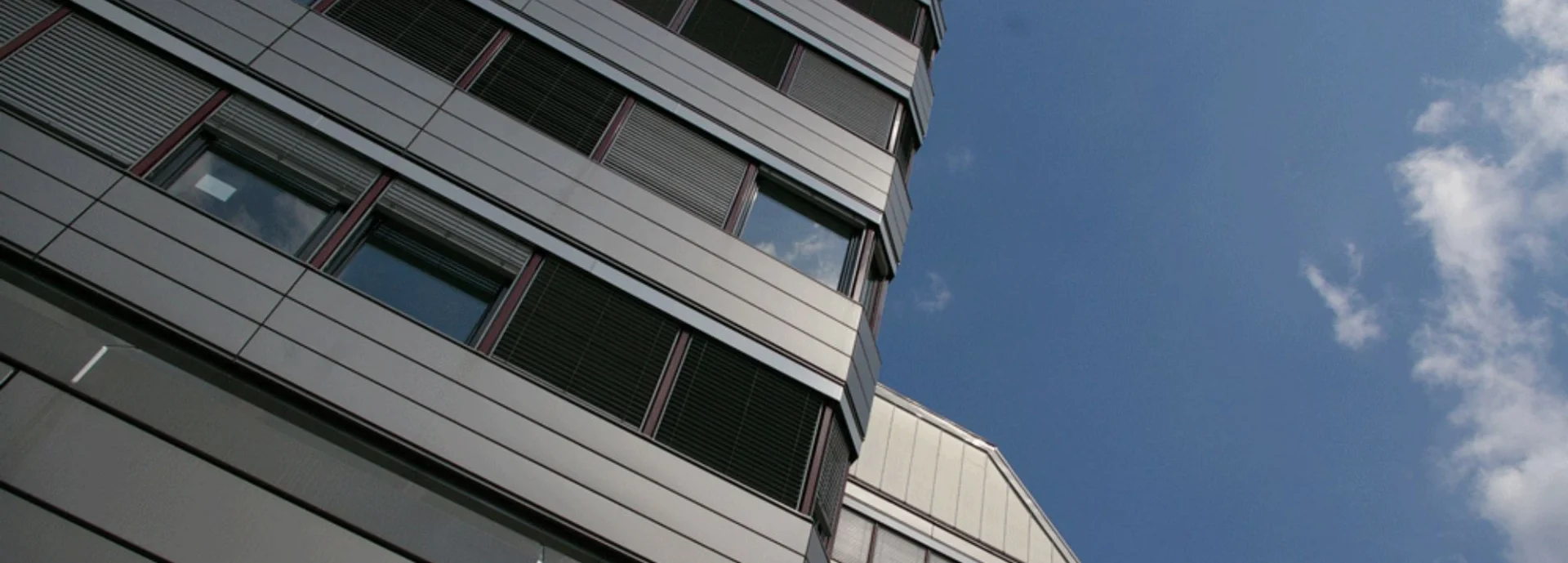
University Center for Polymer Research: Production, Processing, Testing and Recycling of Plastics and Composite Materials

Department Kunststofftechnik der Montanuniversität Leoben
Leoben (AT) · Center for Plastics Engineering, Otto Glöckel-Straße 2New on Amplifa
About the Department of Polymer Engineering
The Department of Polymer Engineering is an institution of Montanuniversität Leoben and bundles five polymer research institutes in the Center for Plastics Engineering, Otto Glöckel-Straße 2 in Leoben (Austria). Since 1969, the Department has educated polymer engineers and has been a research partner for industry and science for over 50 years. Its projects cover the full breadth of polymer research: from production and processing through to application and recycling of polymers. The Chair of Processing of Composites develops processing technologies for polymer-based fibre-reinforced composites, including resin infusion, resin injection, pultrusion, compression moulding, winding processes and tape laying, complemented by process simulation. The Chair of Materials Science and Testing of Polymers performs mechanical, fracture-mechanical, fatigue and thermal testing and determines material data for injection moulding simulations. Industry sectors include aerospace, energy, medicine, lightweight construction and the circular economy; close cooperations exist with the Polymer Competence Center Leoben (PCCL), Joanneum Research, AIT and ofi.
- Site
- Leoben
- Processes
- Resin infusion (Liquid Composite Molding), Resin injection, Pultrusion, Compression moulding of composites, Winding processes (continuous, with external winding axis), Tape laying, Cutting (textile cutter), Process simulation and development of processing technologies for polymer-based
- Materials
- Polymers (general), Bio-based polymers and composite materials, Epoxy resin (including bio-based), Short-fibre-reinforced thermoplastics, Carbon fibre-reinforced plastics (CFRP), Hemp fibres as reinforcement fibre, Ceramic matrix silicon carbide, Ceramic matrix boron nitride carbide
- Certificates
- AAQ accreditation
- Founded
- 1969
- Industries
- Plastics engineering / Polymer research, Composite materials / Lightweight construction, Aerospace (composite components), Energy, Medicine/Bionics, Recycling / Circular economy
- 01
Material and materials development
- 02
Process development and simulation (resin infusion, pultrusion, winding,
- 03
Component manufacturing at laboratory scale
- 04
Materials testing and material characterization
- 05
Material data for simulation
- 06
Recycling and circular economy
- 07
Teaching and education
- 08
Industrial cooperation and knowledge transfer
Materials and Processes
Polymers (general)
Basis of research from production through processing to application and recycling.
Epoxy resin (including bio-based)
Used in resin infusion, resin injection and research into bio-based thermosets.
Short-fibre-reinforced thermoplastics
Subject of fracture-mechanical, thermo-mechanical and fatigue investigations.
Carbon fibre-reinforced plastics (CFRP)
Research into lightweight applications, damage detection and surface optics.
Bio-based polymers and composite materials
Development of sustainable materials for high-performance applications with recycling and repair potential.
Hemp fibres as reinforcement fibre
Near-natural reinforcement fibre in composite projects (HempFibEx).
Ceramic matrix silicon carbide
Use of textile fibre-reinforced ceramic composites in the BeyondRecycle project.
Ceramic matrix boron nitride carbide
Alternative ceramic matrix for lightweight, hard and resilient materials.
Sites
Leoben (Center for Plastics Engineering)
ATHeadquarters, research, teaching, testing laboratories; all institutes under one roof
- Lot size
- Single parts to small series at research scale
- Materials
- Polymers, epoxy resins, fibre-reinforced composites, ceramic matrix composites
- Resin infusion equipment and resin injection unit (LCMLab)
- Hydraulic down-acting press and vacuum chamber (PressLab)
- Pultrusion line (ContiLab)
- 2 × 6-axis articulated-arm robots (AutoLab, ContiLab)
- Textile cutter (AutoLab)
- External winding axis (ContiLab)
- Tape laying test rig, roving test rig, peel test rig (ContiLab)
- Permeability measurement cells, capacitive and optical (LCMLab)
- Oven (LCMLab)
- Simulation and CAD tools (Abaqus, Ansys, TexGen, PAM-RTM, CATIA V6, SolidWorks, Creo)
Components and Research Topics
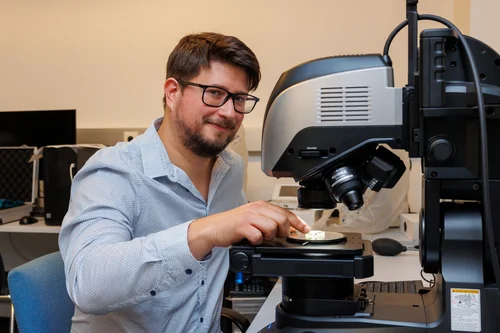
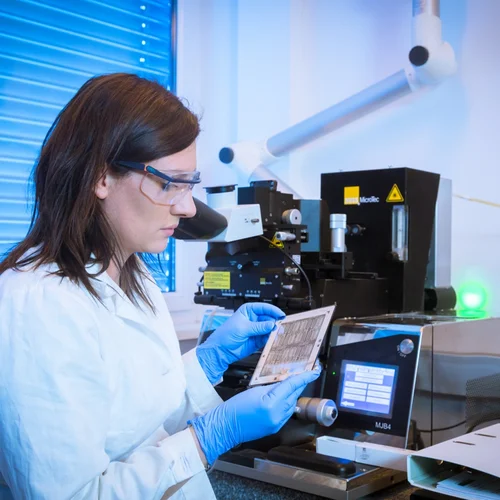
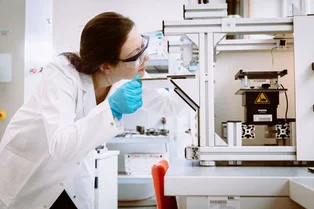
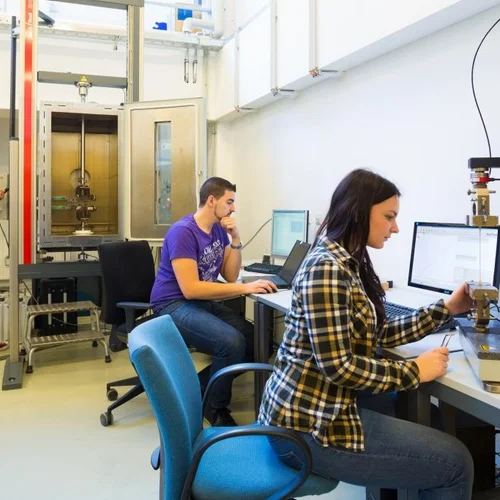
Inside the production
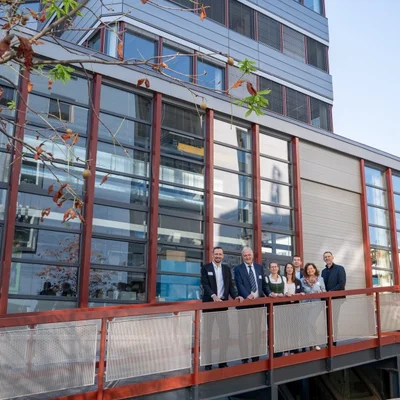
Industries
Processes & technical limits
| Processes | Tolerance | Max. part | Weight | Lot size | Materials |
|---|---|---|---|---|---|
| Resin infusion (Liquid Composite Molding)Joining | – | – | – | – | Epoxy resin, fibre-reinforced plastics |
| Resin injectionJoining | – | – | – | – | Epoxy resin, fibre-reinforced plastics |
| PultrusionPlastics | – | – | – | – | fibre-reinforced plastics |
| Compression moulding of compositesPlastics | – | – | – | – | fibre-reinforced plastics |
| Winding processes (continuous, with external winding axis)Plastics | – | – | – | – | fibre-reinforced plastics |
| Tape layingPlastics | – | – | – | – | fibre-reinforced plastics |
| Cutting (textile cutter)Plastics | – | – | – | – | Textiles, fibre mats |
| Process simulation and development of processing technologies for polymer-basedEngineering | – | – | – | – | fibre-reinforced plastics |
| Materials testing of polymers (mechanical, fracture-mechanical, fatigue, thermal,Testing | – | – | – | – | Plastics, fibre-reinforced plastics |
| Material data determination for injection moulding simulation (rheology, thermal and mechanicalTesting | – | – | – | – | Thermoplastics |
| Research into additive manufacturing of polymers (including stereolithography, fused depositionAdditive | – | – | – | – | Polymers |
| Surface functionalization of polymers and carbon materials (including oxygen plasma treatment)Surface | – | – | – | – | Carbon fibres, Plastics, silica nanoparticles |
| Pipe production from engineering plastics (extrusion, including large-diameter pipes up to OD 2500Plastics | – | 2500 mm (pipe outer diameter) | approx. 100,000 t of plastic/year | – | Polypropylene, Polyethylene, engineering plastics |
| Injection moulding of moulded parts (fittings for pipeline construction)Plastics | – | – | – | – | Polypropylene, Polyethylene, engineering plastics |
| Electrofusion fitting production (embedding wires moulded-in/machined flush)Plastics | – | – | – | – | Polyethylene |
| Semi-finished product production (sheets, rods, welding rods, geomembranes, concrete protectionPlastics | – | – | – | – | engineering plastics |
| Cleanroom production (ISO Class 5) for piping systems for ultrapure mediaPlastics | – | – | – | – | engineering plastics |
14 Anlagen & Maschinen
| Machine | Manufacturer / model | Quantity | Working area | Year built | Site |
|---|---|---|---|---|---|
| 6-axis articulated-arm robot | – | 2 | – | – | Leoben (AutoLab and ContiLab) |
| Textile cutter | – | 1 | – | – | Leoben (AutoLab) |
| Hydraulic down-acting press | – | 1 | – | – | Leoben (PressLab) |
| Resin injection unit | – | 1 | – | – | Leoben (LCMLab) |
| Oven | – | 1 | – | – | Leoben (LCMLab) |
| Pultrusion line | – | 1 | – | – | Leoben (ContiLab) |
| External winding axis | – | 1 | – | – | Leoben (ContiLab) |
| Tape laying test rig | – | 1 | – | – | Leoben (ContiLab) |
| Roving test rig | – | 1 | – | – | Leoben (ContiLab) |
| Peel test rig | – | 1 | – | – | Leoben (ContiLab) |
| Permeability measurement cells (capacitive and optical) | – | 2 | – | – | Leoben (LCMLab) |
| Vacuum equipment / vacuum chamber | – | – | – | – | Leoben (LCMLab, PressLab) |
| Injection moulding machines | – | – | – | – | AGRU Kunststofftechnik, Bad Hall |
| Cleanroom production facility (ISO Class 5) | – | – | – | 2016 | AGRU Kunststofftechnik, Bad Hall (Plant V) |
Additional services
Reference customers
Testing and Quality
Materials testing covers mechanical, fracture-mechanical, dynamic-mechanical and thermal testing methods, fatigue testing, lifetime prediction and damage detection by acoustic emission. Material data for injection moulding simulations is determined rheologically, thermally and mechanically.
| Evidence | Leoben (Center for Plastics Engineering) |
|---|---|
| AAQ accreditation |
History
- 1969
10 July: National Council resolution establishing the polymer engineering degree programme; studies begin in the winter semester 1969/70
- 1971
Jan Koppelmann appointed professor and head of the Institute for Chemical and Physical Technology of Polymers
- 1973
Werner Knappe appointed professor and head of the Institute for Plastics Processing
- 1975
The first 7 students graduate as polymer engineers
- 1976
Foundation of the Association of Leoben Polymer Engineers (VLK)
- 1989
Foundation of the Board of Trustees for Polymer Engineering; appointment of Günter R. Langecker; division into the Institutes for Chemistry of Polymers and Materials Science and Testing of Polymers
- 1991
Appointment of Reinhold W. Lang (materials science) and foundation of the Institute for Design in Plastics and Composite Materials under Rudolf Wörndle
- 2002
Foundation of the Polymer Competence Center Leoben (PCCL)
- 2008
Clemens Holzer appointed professor of plastics processing and head of the IKV
- 2009
Resolution to develop polymer engineering into a European Center of Excellence
- 2010
Merger of the institutes into the Department of Polymer Engineering; opening of the Center for Plastics Engineering, Otto Glöckel-Straße 2; appointments of Walter Friesenbichler (injection moulding) and Ralf Schledjewski (composite materials)
- 2012
Foundation of the Christian Doppler Laboratory for functional polymer-based printing inks (Thomas Grießer)
- 2013
Foundation of the Christian Doppler Laboratory for highly efficient composite processing (with FACC as industrial partner); Gerald Pinter takes over as head of the department
- 2023
Death of chair founder Ralf Schledjewski
- 2026
Opening of the Center for Digital Printing Technologies at the Chair of Chemistry of Polymers (30 September)