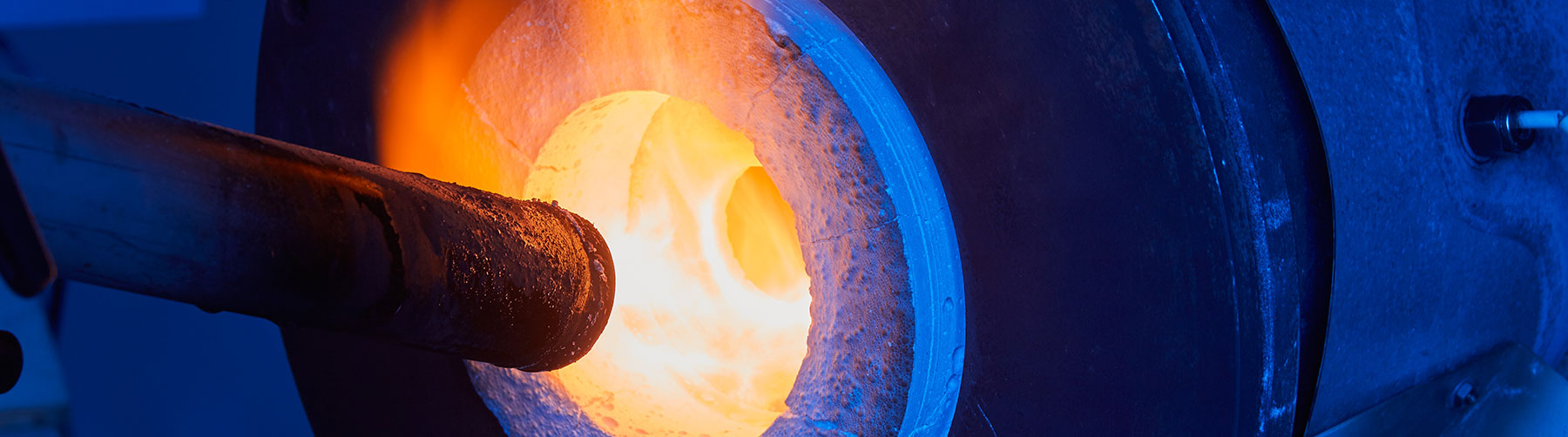
Accredited testing laboratory for refractory and ceramic materials: chemical, physical, mineralogical and high-temperature testing
DIFK Deutsches Institut für Feuerfest und Keramik GmbH
Höhr-GrenzhausenNew on Amplifa
About DIFK
DIFK Deutsches Institut für Feuerfest und Keramik GmbH in Höhr-Grenzhausen is a laboratory specialized in materials testing of refractory and ceramic raw materials, products and system solutions. Its portfolio includes more than 100 standardized testing methods: chemical analyses (XRF, combustion analysis, ICP-OES, ion chromatography), physical testing at room temperature, high-temperature testing up to 1700 °C, mineralogical analyses (XRD incl. Rietveld, in-situ XRD up to 1100 °C), microscopic microstructure analysis (FE-SEM/EDS) and corrosion testing against melts, slags and reducing gas atmospheres. Tested are shaped and unshaped refractory materials, nitride-bonded silicon carbide, silicate materials and ceramic materials. The laboratory is accredited by DAkkS according to DIN EN ISO/IEC 17025:2018 and works according to international standards such as DIN, EN, ISO, ASTM and JIS. Customers come from iron and steel, non-ferrous metallurgy, glass, cement and lime, chemical industry, power generation, waste incineration, and the ceramics and raw materials industries. In addition to testing, the company develops customer-specific testing methods, especially at temperatures above 1000 °C, and provides consulting on refractory materials and their applications.
- Site
- Höhr-Grenzhausen
- Processes
- Chemical analysis (XRF element determination), Combustion analysis C, S, N (IR spectrometry), Trace analysis by ICP-OES, Ion chromatography (anion analysis, e.g. fluoride, chloride), Wet-chemical analysis incl. ICP-OES, Liquid-phase chemical analysis: ICP-OES, atomic absorption analysis, ion chromatography, X-ray diffractometry (XRD) – qualitative phase analysis, Quantitative phase analysis (Rietveld analysis and/or external/internal standard)
- Materials
- Refractory raw materials, Refractory products and linings, Ceramic materials, Shaped and unshaped refractory materials, Nitride-bonded silicon carbide (SiC with/without nitride phase), Silicate materials / silica, X-ray fluorescence analysis, ICP-OES spectrometry
- Certificates
- DIN EN ISO/IEC 17025:2018, DIN EN ISO/IEC 17025:2018 (DAkkS)
- Industries
- Iron and steel, Non-ferrous metallurgy, Glass, Cement and lime, Chemical industry, Power generation
- 01
Sample intake and consultation on method selection
- 02
Sample preparation
- 03
Chemical analysis (XRF, combustion analysis, ICP-OES, IC)
- 04
Mineralogical analysis (XRD, FE-SEM/EDS)
- 05
Physical testing at room temperature
- 06
High-temperature and corrosion testing up to 1700 °C
- 07
Report and evaluation
Materials & Testing Methods
X-ray fluorescence analysis
Element determination of all common ceramic and refractory materials from lithium to uranium.
ICP-OES spectrometry
Trace analysis and wet-chemical evaluation of ceramic and refractory samples.
X-ray diffractometry
Qualitative and quantitative phase analysis incl. Rietveld and in-situ XRD up to 1100 °C.
Field emission scanning electron microscopy
Microstructure analysis, wear mechanisms and material defects with elemental analysis.
High-temperature testing
Testing of thermal and mechanical properties up to 1700 °C under oxidizing, reducing or protective atmosphere.
Corrosion testing
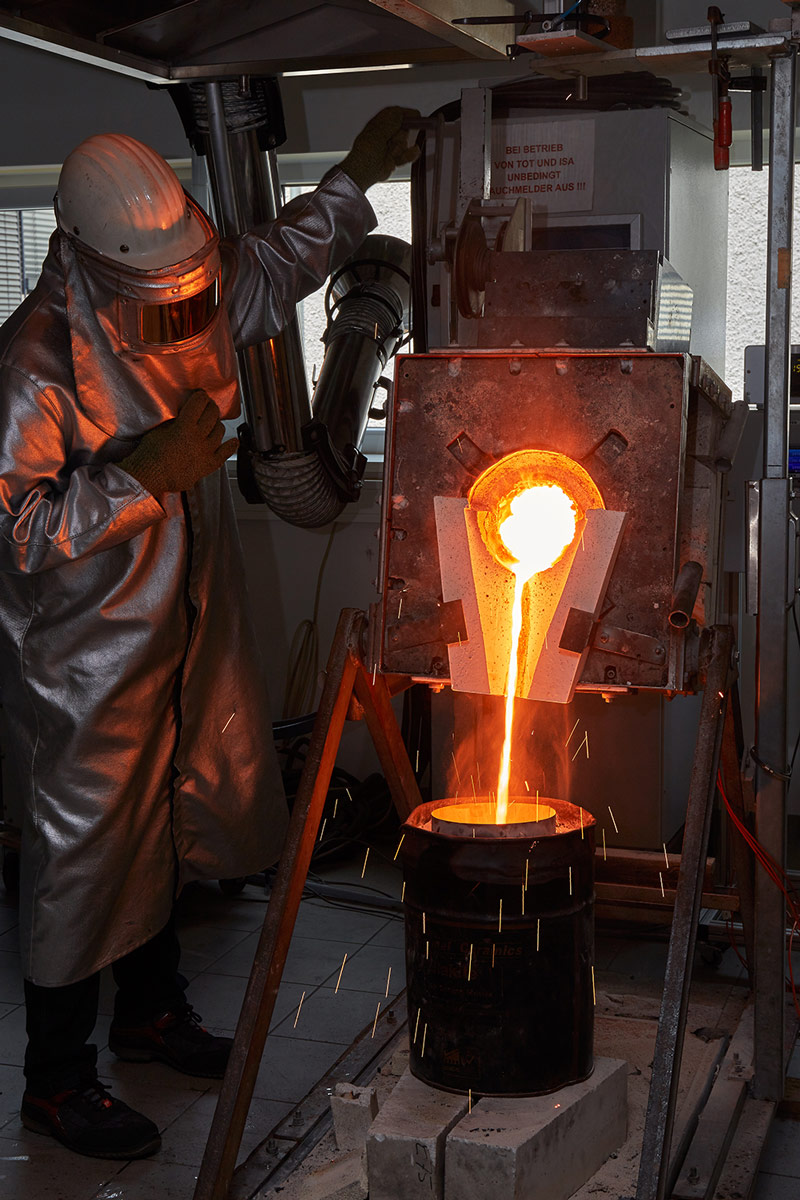
Wear evaluation of refractory linings against iron, steel and non-ferrous melts, slags as well as CO, H2 and synthesis gas atmospheres.
Location
Höhr-Grenzhausen
DETesting laboratory
- Materials
- Refractory raw materials and products, ceramics, nitride-bonded SiC, silicate materials
- Leco CS744 (C/S combustion analyzer)
- Leco RC612 (C phase characterization)
- Leco TN 400 (nitrogen analysis)
- X-ray fluorescence spectrometer (XRF)
- ICP-OES spectrometer
- Ion chromatograph
- High-resolution X-ray diffractometer (XRD)
- FE-SEM with EDS
- Reflected light, transmitted light and polarization microscopes
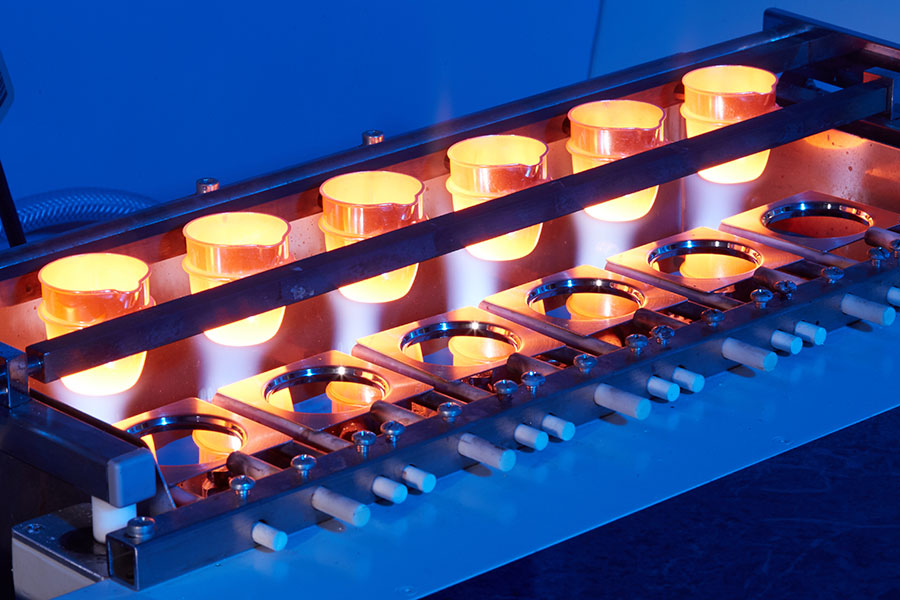
- Atmosphere-controlled furnaces up to 1700 °C
Testing Services
Inside the production
Industries
Processes & technical limits
| Processes | Tolerance | Max. part | Weight | Lot size | Materials |
|---|---|---|---|---|---|
| Chemical analysis (XRF element determination)Testing | – | – | – | – | Ceramics, Refractory materials |
| Combustion analysis C, S, N (IR spectrometry)Testing | – | – | – | – | Nitride-bonded silicon carbide, Ceramics, Refractory materials |
| Trace analysis by ICP-OESTesting | – | – | – | – | Ceramics, Refractory materials |
| Ion chromatography (anion analysis, e.g. fluoride, chloride)Testing | – | – | – | – | Ceramics, Refractory materials |
| Wet-chemical analysis incl. ICP-OESTesting | – | – | – | – | – |
| Liquid-phase chemical analysis: ICP-OES, atomic absorption analysis, ion chromatographyTesting | – | – | – | – | – |
| X-ray diffractometry (XRD) – qualitative phase analysisTesting | – | – | – | – | – |
| Quantitative phase analysis (Rietveld analysis and/or external/internal standard)Testing | – | – | – | – | – |
| Crystallite size estimationTesting | – | – | – | – | – |
| SWeRFcs analysis on silicate/silica materialsTesting | – | – | – | – | Silicate materials, Silica |
| In-situ XRD at temperatures up to 1100 °CTesting | – | – | – | – | – |
| Degree of crystallinity (XRD)Testing | – | – | – | – | – |
| Microscopic analysis – structure analysis (reflected light, transmitted light, polarizationTesting | – | – | – | – | – |
| FE-SEM with EDS (elemental analysis) – microstructure analysis, wear mechanisms, material defectsTesting | – | – | – | – | – |
| Wear mechanisms: infiltration, phase transformation, material degradation analysisTesting | – | – | – | – | – |
| Grain size determinationTesting | – | – | – | – | – |
| Physical testing at room temperature: bulk density (H2O method, Hg method), true densityTesting | – | – | – | – | shaped refractory materials, unshaped refractory materials, Ceramics |
| Refractoriness under load (compressive strength under load at temperature)Testing | – | – | – | – | Refractory materials |
| Thermal conductivity (up to 1700 °C)Testing | – | – | – | – | Refractory materials |
| Hot compressive strengthTesting | – | – | – | – | Refractory materials |
| Creep in compressionTesting | – | – | – | – | Refractory materials |
| Thermal shock resistanceTesting | – | – | – | – | Refractory materials |
| Abrasion resistance up to 1400 °C / hot abrasion resistanceTesting | – | – | – | – | Refractory materials |
| Hot modulus of rupture – air / protective gasTesting | – | – | – | – | Refractory materials |
| Simultaneous thermal analysisTesting | – | – | – | – | Refractory materials |
| Hot stage microscopyTesting | – | – | – | – | Refractory materials |
| DilatometryTesting | – | – | – | – | Refractory materials |
| Permanent linear changeTesting | – | – | – | – | Refractory materials |
| Corrosion testing of refractory materials against melts, slags and reducingTesting | – | – | – | – | Refractory linings |
| CO resistance testingTesting | – | – | – | – | Refractory materials |
| Cup testTesting | – | – | – | – | – |
| Finger testTesting | – | – | – | – | – |
| Bethlehem/Höganäs testTesting | – | – | – | – | – |
| CIREP testTesting | – | – | – | – | – |
| ALCOA dipping testTesting | – | – | – | – | – |
| Customer-specific testing methods, especially at temperatures > 1000 °C / tests up to 1700 °CTesting | – | – | – | – | Refractory materials |
| Consulting on refractory materials, products and applications as well as selection of suitableEngineering | – | – | – | – | – |
10 Anlagen & Maschinen
| Machine | Manufacturer / model | Quantity | Working area | Year built | Site |
|---|---|---|---|---|---|
| IR spectrometer C/S (combustion analyzer) | Leco CS744 | – | – | – | Höhr-Grenzhausen |
| IR spectrometer C (carbon phase characterization) | Leco RC612 | – | – | – | Höhr-Grenzhausen |
| Nitrogen combustion analyzer (thermal conductivity) | Leco TN 400 | – | – | – | Höhr-Grenzhausen |
| X-ray fluorescence spectrometer (XRF) | – | – | – | – | Höhr-Grenzhausen |
| ICP-OES spectrometer | – | – | – | – | Höhr-Grenzhausen |
| Ion chromatograph | – | – | – | – | Höhr-Grenzhausen |
| X-ray diffractometer (XRD, high-resolution) | – | – | – | – | Höhr-Grenzhausen |
| Field emission scanning electron microscope (FE-SEM) with EDS | – | – | – | – | Höhr-Grenzhausen |
| Reflected light, transmitted light and polarization microscopes, stereo microscope | – | – | – | – | Höhr-Grenzhausen |
| Atmosphere-controlled furnaces for corrosion testing (up to 1700 °C) | – | – | – | – | Höhr-Grenzhausen |
Additional services
Quality & Accreditation
The laboratory is accredited by DAkkS according to DIN EN ISO/IEC 17025:2018; the testing methods follow international standards such as DIN, EN, ISO, ASTM, JIS, ABNT, API, UOP and CIR.
| Evidence | Höhr-Grenzhausen |
|---|---|
| DIN EN ISO/IEC 17025:2018 (DAkkS) |
History
More than 40 years of experience in refractory materials testing