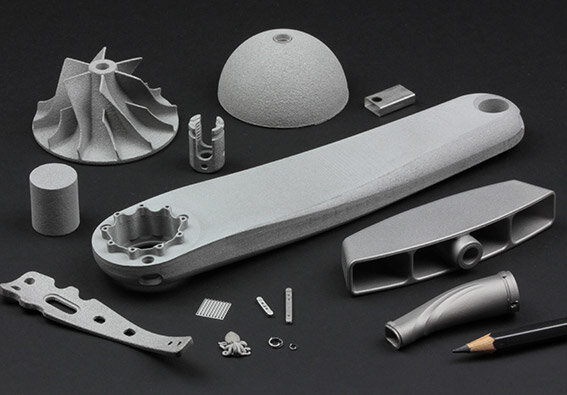
Manufacturing of complex titanium components using Metal Injection Molding, 3D printing and powder metallurgical processes
Element22 GmbH
Kiel · GermanyNew on Amplifa
About Element22
Element22 GmbH, based in Kiel, is a technology company specialized in titanium and manufactures complex components using Metal Injection Molding (MIM), additive manufacturing and other powder metallurgical shaping processes such as tape casting, diffusion bonding and extrusion. The portfolio covers the complete process chain from Design for Manufacturing and process simulation through injection molding, thermal debinding and sintering to surface treatments such as anodizing, glass bead blasting, polishing and diffusion hardening. Materials are primarily commercially pure titanium and Ti6Al4V per ASTM F2885-17 and F2989-13; in addition, filaments and pellets for 3D printing are offered. The components, with part weights of 0.01 to 200 g, are used among other things in medical technology, aerospace, mobility, high-end consumer products and hydrogen electrolysis. Since 2017, production capacity has been around 60 tonnes of finished product per year; lot sizes range from prototypes of 10 parts up to more than one million parts per year. Production at the Kiel site operates on renewable energy with a certified quality management system.
- Site
- Kiel
- Processes
- Metal Injection Molding (MIM), Cold Metal Fusion (CMF, SLS-based), Metal Binder Jetting (MBJ), Lithography-based Metal Manufacturing (LMM), Fused Pellet Fabrication (FPF, pellet printing), Fused Filament Fabrication (FFF/FDM, filament printing), Tape casting, Diffusion Bonding
- Materials
- Ti6Al4V, Unalloyed Titanium (commercially pure titanium), Titanium powder (fine powder, MIM feedstock), Ti6Al4V PEL4-01A (pellets), Ti6Al4V FIL01A (filament), Ceramics (for diffusion bonding), Ti6Al4V (ASTM F2885-17), Commercially pure titanium (ASTM F2989-13)
- Certificates
- ISO 9001:2015, EN 9100:2018 (equivalent to AS9100D), EN ISO 13485:2016, EN 9100:2018
- Founded
- 2011
- Industries
- Medical technology (CRM, orthopedics, spine, dental), Aerospace, Mobility & transport, High-end consumer products, Renewable energies / hydrogen electrolysis, High-end consumer products (mobile phones, watch cases, golf clubs)
- 01
Design for Manufacturing
- 02
Process simulation (molding/sintering)
- 03
Tooling procurement (in cooperation with toolmakers)
- 04
Injection molding or 3D printing / alternative shaping
- 05
Thermal debinding (debind)
- 06
Sintering
- 07
Surface treatment
- 08
Quality inspection & qualification
Materials & Processes
Ti6Al4V (ASTM F2885-17)
Titanium alloy for MIM and 3DP components with high static and dynamic strength requirements, among other things implantable.
Commercially pure titanium (ASTM F2989-13)
Unalloyed titanium for MIM components for surgical implant applications.
Titanium fine powder / MIM feedstock
Fine powder as the basis for MIM feedstock, filaments and pellets.
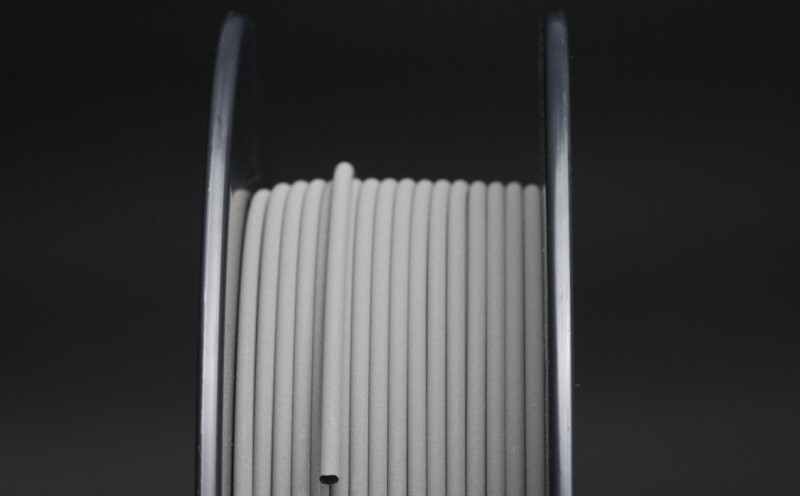
Ti6Al4V filament (FIL01A)
MIM-based filament for FFF/FDM printing followed by debind & sinter.
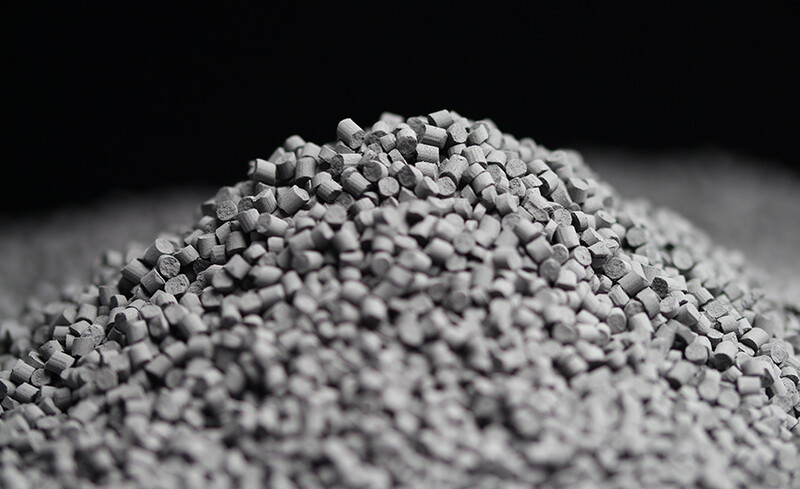
Ti6Al4V pellets (PEL4-01A)
Granulate based on MIM feedstock for pellet extrusion 3D printers.
Ceramics
Used in diffusion bonding of metal and ceramic parts.
Locations
Kiel
DEProduction and administration
- Part weight / size
- 0.01–200 g (MIM)
- Lot size
- Prototypes (10–100 parts), small series (100–5.000), series (5.000 to >1 Mio.)
- Materials
- Titanium, Ti6Al4V
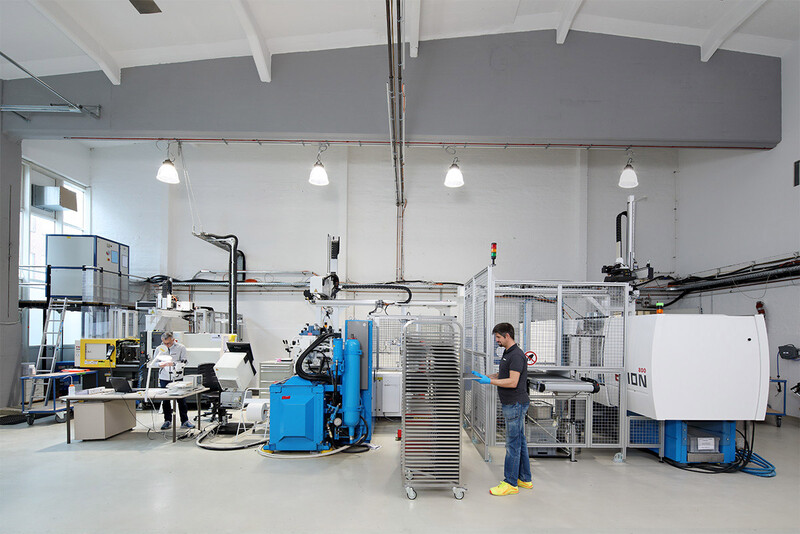
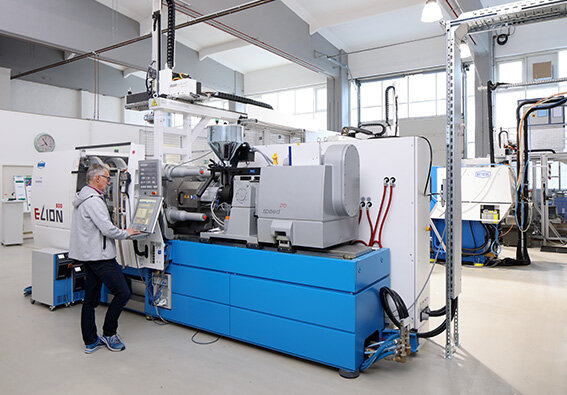
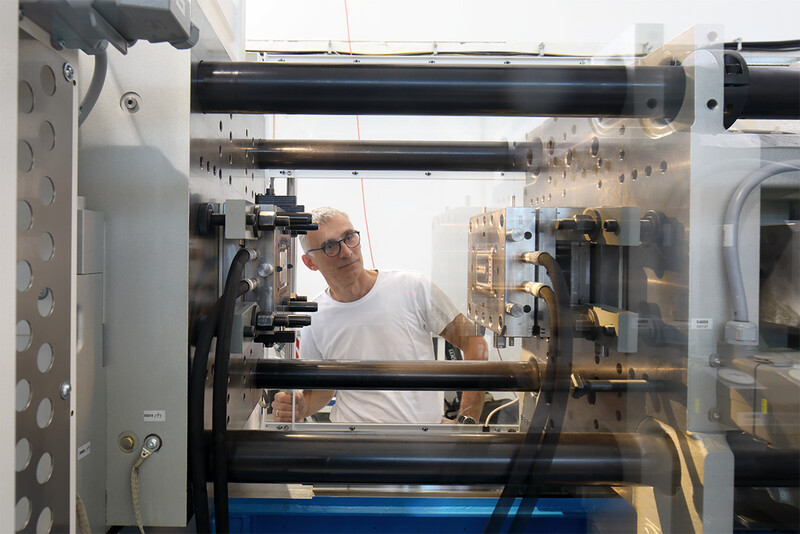
- Injection molding machines (MIM) with pick-and-place robotics
- Debind & sinter furnaces (TiGEN / MUT Advanced Heating)
- SLS 3D printers (Cold Metal Fusion)
- LMM printing technology (Lithography Metal Printing)
Components
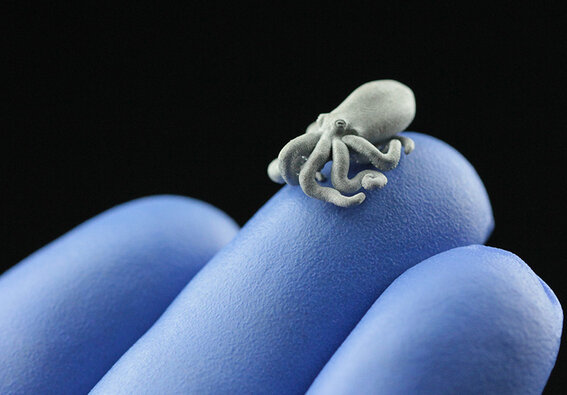
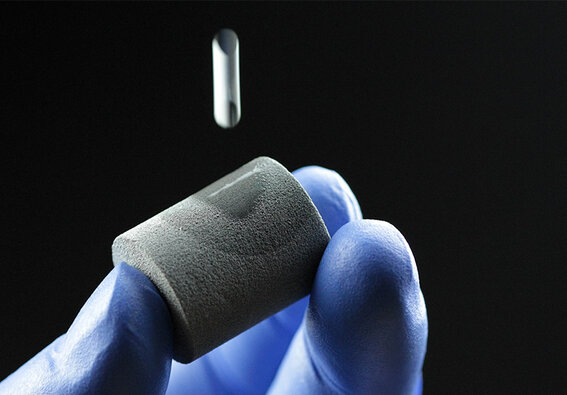
Inside the production
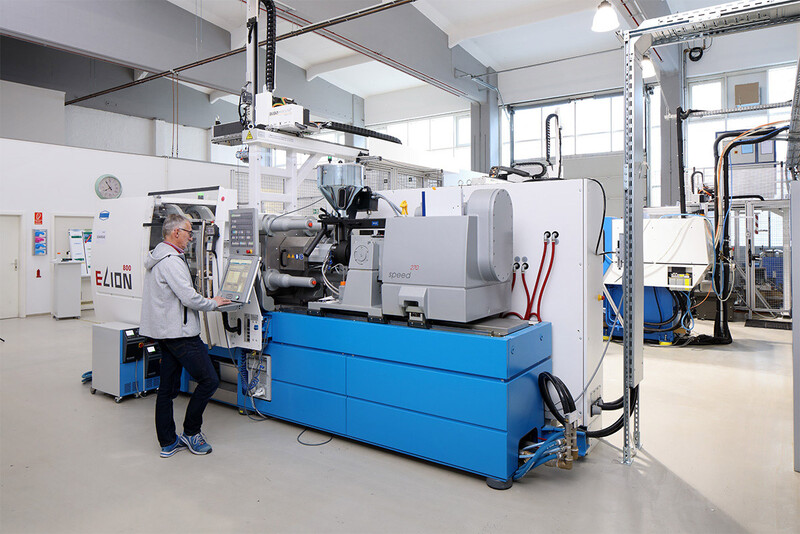
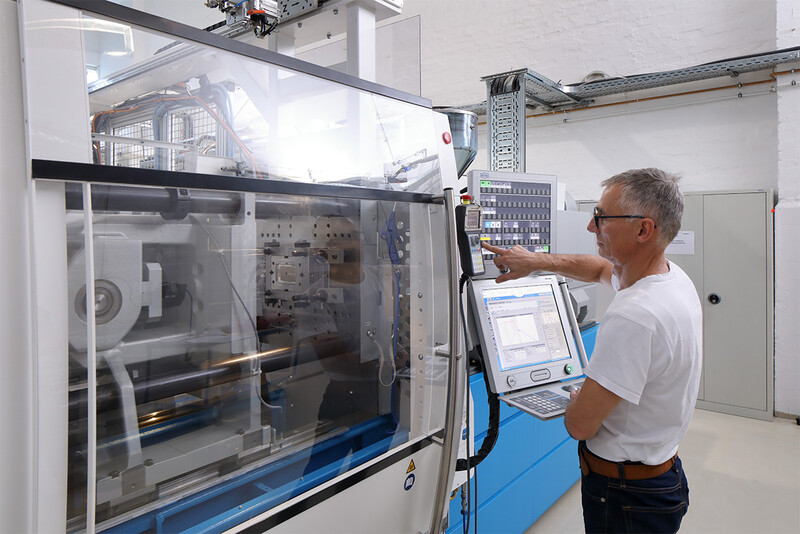
Industries
Processes & technical limits
| Processes | Tolerance | Max. part | Weight | Lot size | Materials |
|---|---|---|---|---|---|
| Metal Injection Molding (MIM)Casting | +/-0.4% of nominal dimension · Ra 1 µm (as sintered) | – | 0.01 g – 200 g | 10 parts (prototypes) – >1 million parts/year | Titanium, Ti6Al4V |
| Cold Metal Fusion (CMF, SLS-based)Additive | – | – | – | – | Titanium, Ti6Al4V |
| Metal Binder Jetting (MBJ)Additive | – | – | – | – | Titanium |
| Lithography-based Metal Manufacturing (LMM)Additive | – | – | – | – | Titanium |
| Fused Pellet Fabrication (FPF, pellet printing)Additive | – | – | – | – | Titanium, Ti6Al4V |
| Fused Filament Fabrication (FFF/FDM, filament printing)Additive | – | – | – | – | Ti6Al4V |
| Tape castingCasting | – | – | – | – | Titanium and titanium alloys |
| Diffusion BondingJoining | – | – | – | – | Metal, ceramics (titanium and alloys) |
| Porous parts and coatingsSurface | – | – | – | – | Titanium and titanium alloys |
| Extrusion (profile extrusion)Forming | – | – | – | – | Titanium and titanium alloys |
| Thermal Debinding & Sintering (also as a service for 3DP parts)Heat treatment | – | – | – | – | Titanium and alloys, Ti6Al4V |
| Oxide Diffusion Hardening (ODH)Heat treatment | – | – | – | – | Titanium |
| Nitride Diffusion Hardening (NDH)Heat treatment | – | – | – | – | Titanium |
| Anodizing (anodizing/coloring of titanium)Surface | – | – | – | – | Titanium |
| Surface finishing (bead blasting, mechanical polishing, brushing, tumbling)Surface | – | – | – | – | Titanium |
| Design for Manufacturing (DFM)Engineering | – | – | – | – | Titanium |
| Molding SimulationEngineering | – | – | – | – | Ti6Al4V, Titanium |
| Sintering simulationEngineering | – | – | – | – | Titanium |
| Quality & qualification (dimensional reports, microstructure analysis, chemical/mechanical analysis)Testing | – | – | – | – | Titanium, Ti6Al4V |
| Molding tools (injection molding tools: multi-cavity, micro MIM, insert molding, multi-slider,Engineering | – | – | – | – | Steel (tool) |
| 3DP materials: filament and pellets (Ti6Al4V)Plastics | – | – | – | – | Ti6Al4V |
| Laser cutting for porous titanium materials (project, PEM electrolysis components)Machining | – | – | – | – | Titanium (porous) |
5 Anlagen & Maschinen
| Machine | Manufacturer / model | Quantity | Working area | Year built | Site |
|---|---|---|---|---|---|
| Debind & sinter furnaces (thermal debinding and sintering) | MUT Advanced Heating GmbH / Titanium Generation (TiGEN) | – | – | – | Kiel |
| SLS 3D printers (for Cold Metal Fusion) | – | – | – | – | Kiel |
| LMM printing technology (Lithography Metal Printing) | – | – | – | – | Kiel |
| Injection molding machines (MIM) with pick-and-place robotics | – | – | – | – | Kiel |
| Laser cutting system (porous titanium materials, project with Fraunhofer ILT) | – | – | – | – | Kiel |
Additional services
Quality
Element22 has a quality management system certified to ISO 9001:2015, EN ISO 13485:2016 and EN 9100:2018. Inspection is carried out with high-precision measuring equipment including dimensional reports, microstructure analysis, chemical and mechanical analysis, hardness and fatigue testing.
| Evidence | Kiel |
|---|---|
| ISO 9001:2015 | |
| EN ISO 13485:2016 | |
| EN 9100:2018 |
History
- 1980er
Development of the technological fundamentals of the titanium MIM process by Fraunhofer IFAM Bremen and Helmholtz-Zentrum Geesthacht
- 2006
First implantable titanium MIM parts approved in Europe, Asia and South America
- 2011
Founding of Element22 GmbH by CEO Matthias Scharvogel
- 2012
First FDA approval of a Ti6Al4V MIM part for implantation in the USA
- 2014
Start of development of simulation tools for molding and sintering
- 2017
Founding of the joint venture Titanium Generation GmbH with MUT Advanced Heating; capacity expansion to approx. 60 t/year
- 2019
Scale-up of series production
- 2020
Implementation of several 3D printing technologies and certification to EN/AS 9100