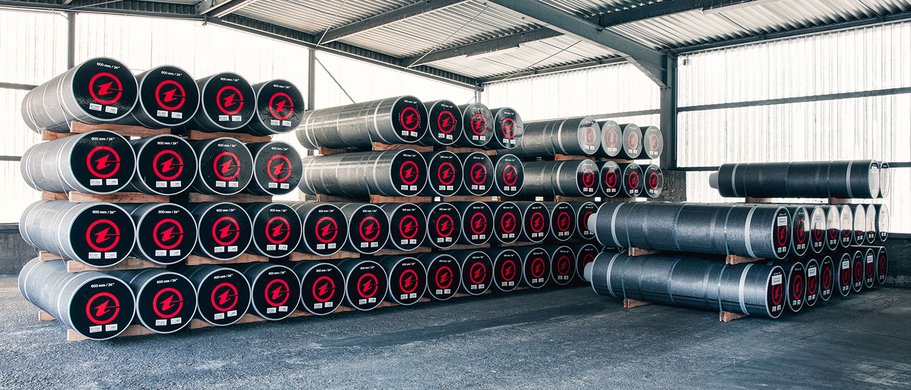
Manufacture of large-format graphite electrodes for electric steel production in Grevenbroich.

ERFTCARBON GmbH
41515 Grevenbroich (headquarters and production)New on Amplifa
About ERFTCARBON
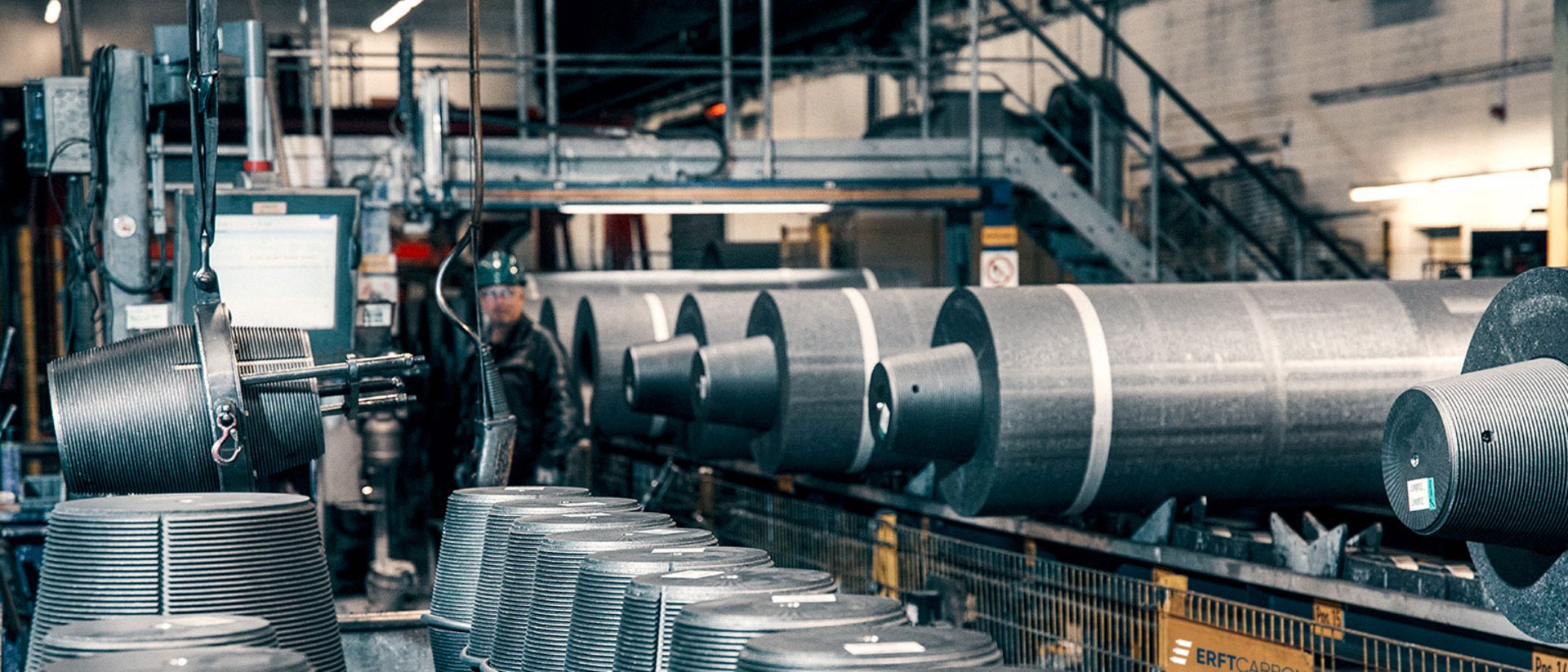
ERFTCARBON GmbH, headquartered in Grevenbroich, is a European manufacturer of large-format graphite electrodes for the electric steel industry. Founded in 1917 and employing around 200 people, the company produces electrodes that enable the melting of steel scrap in the electric arc furnace using electrical energy, thereby supporting scrap-based, resource-conserving steel production. Production ranges from needle coke through shaping by the vacuum vibration method, baking in the ring furnace, impregnation with coal tar pitch in the autoclave, annealing, graphitization at up to 3,000 °C, to machining with internal threads at the end faces. Customers in the steel industry worldwide are supplied from the headquarters in Grevenbroich. An integrated management system certified to ISO 9001, ISO 14001, ISO 45001 and ISO 50001 accompanies the entire production chain; in 2025, following its membership in the Japanese Tokai Carbon group, the company was acquired by a financial investor.
- Site
- Grevenbroich
- Processes
- Molding (shaping of graphite electrodes by the vacuum vibration method), Baking of graphite electrodes (ring furnace, over 900 °C, approx. 1 month), Impregnation with hot liquid tar pitch (autoclave/pressure vessel), Annealing (re-baking, approx. 700 °C, conversion of tar pitch into pitch coke), Graphitization (resistance heating up to 3,000 °C, conversion of amorphous carbon into graphite), Machining of graphite electrodes (machining, milling of internal threads at the end faces), Manufacture of large-format graphite electrodes for electric steel production, Technical service
- Materials
- Needle coke, Coal tar pitch, Coke breeze (mineral coal coke), Graphite, Pitch coke, Steel (electric steel from steel scrap, application of the products)
- Certificates
- ISO 9001, ISO 14001, ISO 50001, ISO 45001, EcoVadis Silver Medal, ISO 9001 (since 1992), ISO 14001 (since 2001), ISO 50001 (since 2012), ISO 45001 (since 2020)
- Founded
- 1917
- Employees
- 200
- Industries
- Electric steel industry, Steel production, Steel recycling/circular economy
- 01
Coke milling and sieving/fractionation
- 02
Mixing with hot coal tar pitch (enclosed mixing system)
- 03
Molding by the vacuum vibration method (vibration press)
- 04
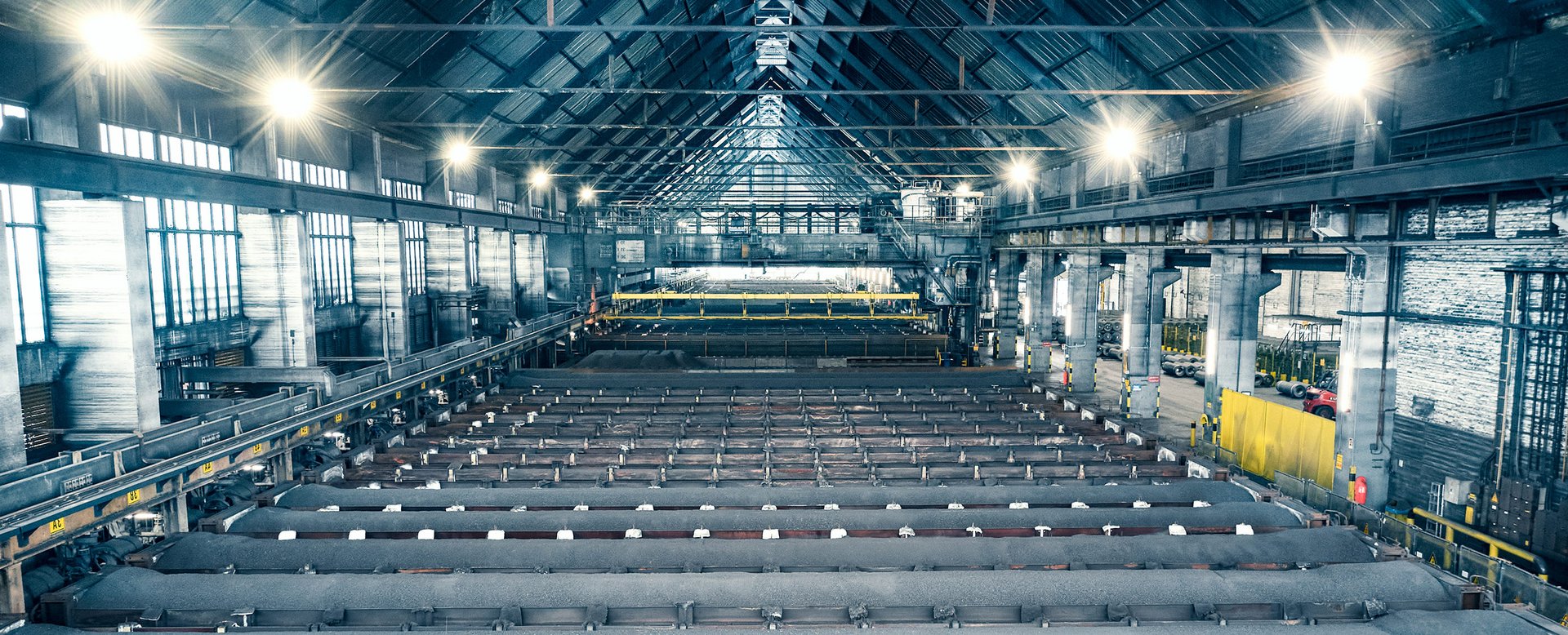
Baking in the ring furnace (> 900 °C, approx. 1 month)
- 05
Impregnation with hot tar pitch in the autoclave
- 06
Annealing in the annealing furnace (approx. 700 °C)
- 07
Graphitization by resistance heating (up to 3,000 °C)
- 08
Machining (internal threads, nipples)
- 09
Packaging and delivery
Raw materials and processes
Needle coke
Main raw material of the graphite electrodes; is milled, sieved, fractionated and mixed with tar pitch to form the "green mass".
Coal tar pitch
Binder that is added hot-liquid during mixing and reapplied during impregnation in autoclaves.
Coke breeze (mineral coal coke)
Packing material in the baking chamber and graphitization furnace as oxidation protection and for uniform heat transfer; is reprocessed and returned to the process.
Pitch coke
Forms during annealing through conversion of the penetrated tar pitch at approx. 700 °C.
Graphite
Final material of the electrodes; forms at temperatures up to 3,000 °C through conversion of amorphous into crystalline carbon.
Sites
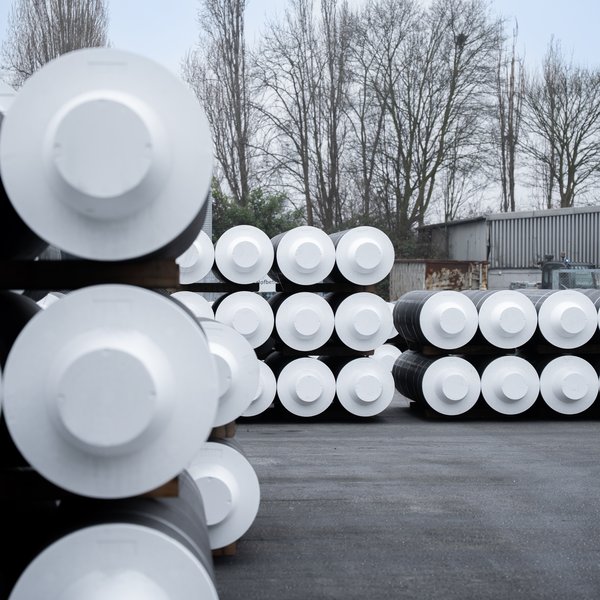
Grevenbroich
DEHeadquarters and production site (graphite electrode manufacturing)
- Materials
- Needle coke, coal tar pitch, coke breeze (mineral coal coke), graphite
- Ring furnace (natural gas fired)
- Autoclave (pressure vessel for impregnation)
- Annealing furnace (natural gas fired)
- Graphitization furnace (resistance heating up to 3,000 °C)
- Vibration press (vacuum vibration method)
- Enclosed mixing system
- Milling plant (coke milling)
- Sieving plant (coke sieving/fractionation)
Products
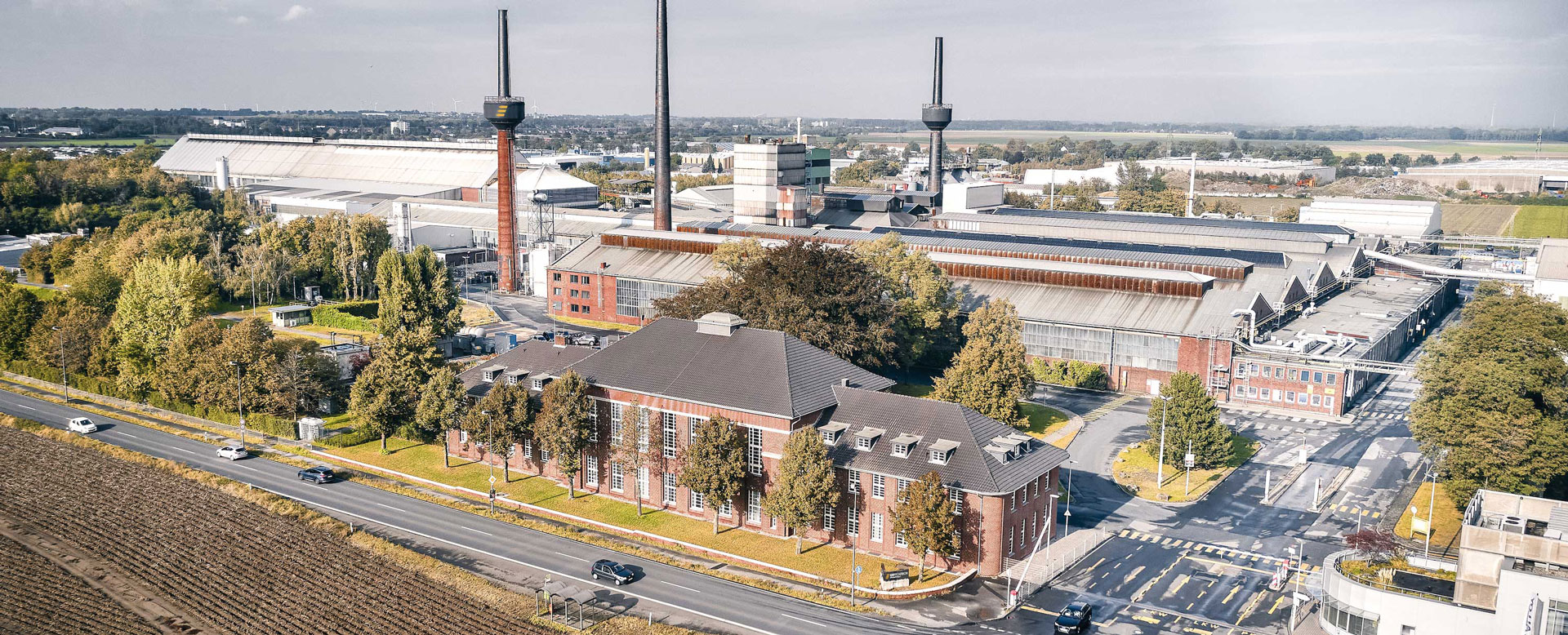
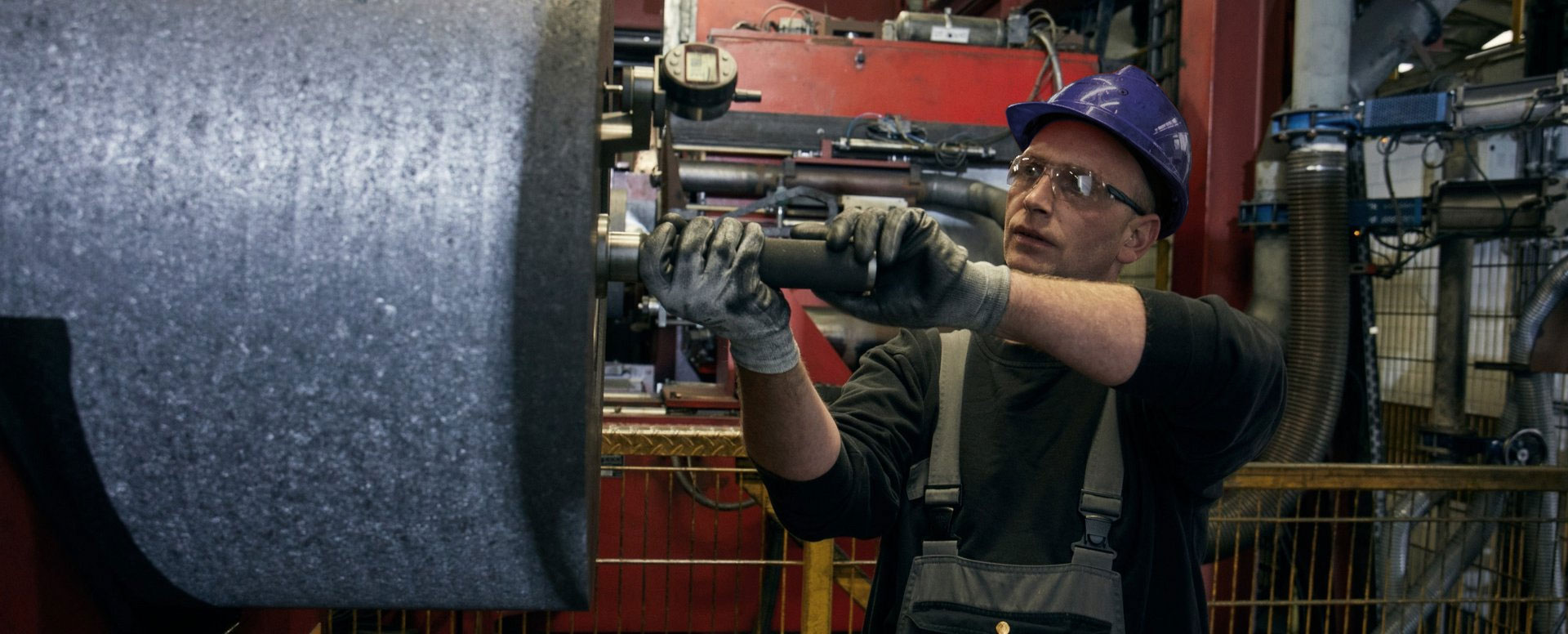
Inside the production
Industries
Processes & technical limits
| Processes | Tolerance | Max. part | Weight | Lot size | Materials |
|---|---|---|---|---|---|
| Molding (shaping of graphite electrodes by the vacuum vibration method)Forming | – | – | – | – | Needle coke, Coal tar pitch |
| Baking of graphite electrodes (ring furnace, over 900 °C, approx. 1 month)Heat treatment | – | – | – | – | Graphite, Coke breeze (packing material) |
| Impregnation with hot liquid tar pitch (autoclave/pressure vessel)Surface | – | – | – | – | Tar pitch |
| Annealing (re-baking, approx. 700 °C, conversion of tar pitch into pitch coke)Heat treatment | – | – | – | – | Graphite |
| Graphitization (resistance heating up to 3,000 °C, conversion of amorphous carbon into graphite)Heat treatment | – | – | – | – | Carbon |
| Machining of graphite electrodes (machining, milling of internal threads at the end faces)Machining | – | – | – | – | Graphite |
| Manufacture of large-format graphite electrodes for electric steel productionCasting | – | – | – | – | Needle coke, Coal tar pitch |
8 Anlagen & Maschinen
| Machine | Manufacturer / model | Quantity | Working area | Year built | Site |
|---|---|---|---|---|---|
| Ring furnace (natural gas fired) | – | – | – | – | Grevenbroich |
| Autoclave (pressure vessel for impregnation) | – | – | – | – | Grevenbroich |
| Annealing furnace (natural gas fired) | – | – | – | – | Grevenbroich |
| Graphitization furnace (resistance heating up to 3,000 °C) | – | – | – | – | Grevenbroich |
| Vibration press (vacuum vibration method, shaping) | – | – | – | – | Grevenbroich |
| enclosed mixing system | – | – | – | – | Grevenbroich |
| Milling plant (coke milling) | – | – | – | – | Grevenbroich |
| Sieving plant (coke sieving/fractionation) | – | – | – | – | Grevenbroich |
Additional services
Quality and certifications
An integrated management system with standardized processes and intensive process control accompanies the entire production chain from raw material receipt to shipping. Checks in every phase as well as documented product and process parameters ensure consistent product quality.
| Evidence | Grevenbroich |
|---|---|
| ISO 9001 (since 1992) | |
| ISO 14001 (since 2001) | |
| ISO 50001 (since 2012) | |
| ISO 45001 (since 2020) | |
| EcoVadis Silver Medal |
Company history
- 1917
Foundation of Erftwerk AG; production of anodes for aluminium electrolysis
- 1950
Expansion of the production portfolio to include cathodes, carbon electrodes and blast furnace bricks
- 1975
Start of graphite electrode production
- 1991
Spin-off of the carbon and graphite activities into VAW Carbon GmbH
- 1998
Acquisition by a financial investor, renamed ERFTCARBON GmbH
- 2005
Sale of the company to TOKAI CARBON Co., Ltd.
- 2006
Focus on large-format graphite electrodes for the electric steel industry
- 2010
Renamed TOKAI ERFTCARBON GmbH
- 2017
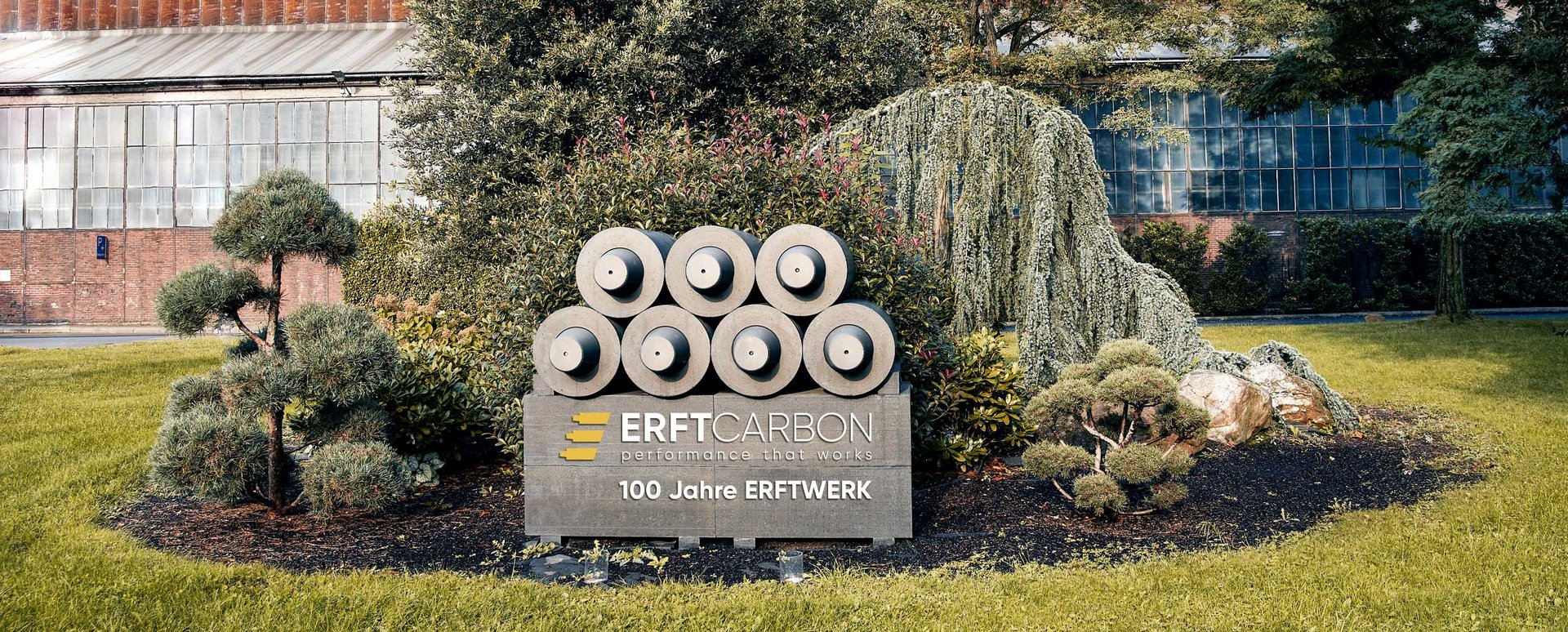
100th company anniversary
- 2025
Acquisition by a financial investor (advised by DUBAG Investment Advisory GmbH), renamed back to ERFTCARBON GmbH