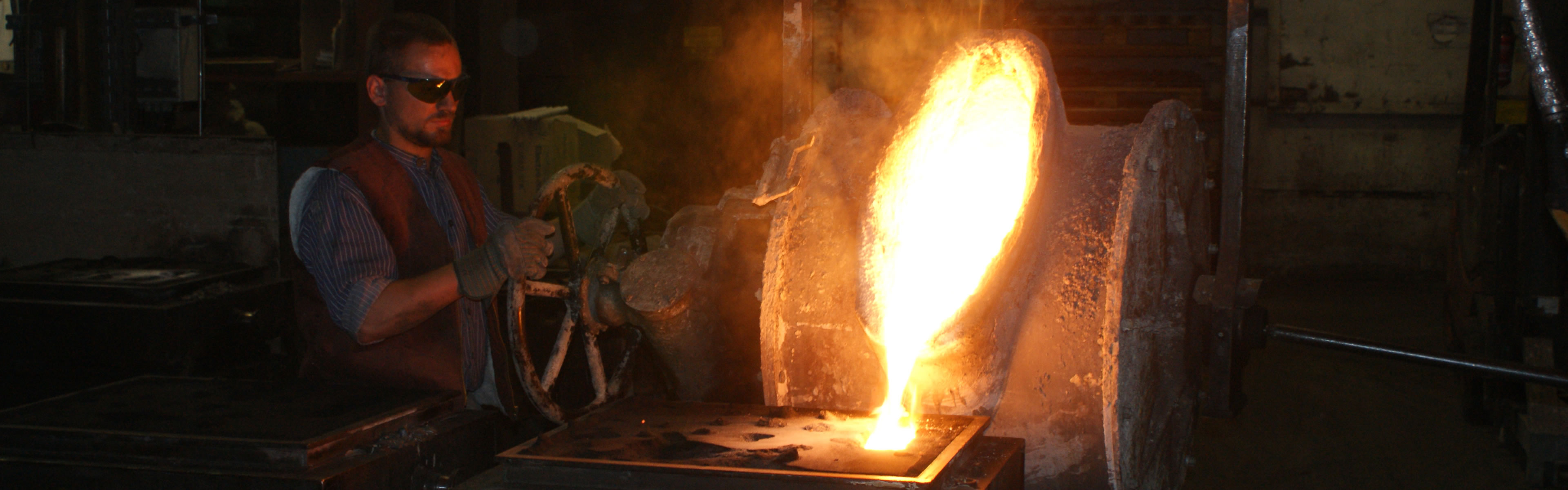
Cast iron castings and glass moulds from our own foundry in Radeberg near Dresden
Gießerei Radeberg GmbH
RadebergNew on Amplifa
About Gießerei Radeberg
Gießerei Radeberg GmbH produces castings at its plant in Radeberg near Dresden from cast iron with lamellar graphite, spheroidal graphite and vermicular graphite, as well as from heat-resistant SiMo, austenitic and wear-resistant cast iron. A traditional focus is glass mould casting: founded in 1860 as a glass mould factory and iron foundry, the company develops its own materials for the glass industry and manufactures glass moulds for machines used in hollow glass production. In addition, the foundry produces castings for the engine industry and mechanical engineering – from delicate to heavy, compact components. The value chain covers the entire process from pattern making (wood or plastic) through machine moulding, hand moulding, core making (cold-box and furan resin processes) and induction melting operations to fettling, heat treatment, painting and quality assurance. In addition, the team of around 80 employees supports customers with casting-suitable design and material selection.
- Site
- Radeberg
- Processes
- Glass mould casting, Machine moulding (contour impulse moulding machine), Machine moulding (vibration press moulding machine), Core making using the cold-box process, Core making using the furan resin process, Hand moulding using the furan resin process, Melting operations (induction melting), Pattern making (patterns made of wood or plastic)
- Materials
- Cast iron with spheroidal graphite EN-GJS-400-15, Cast iron with spheroidal graphite EN-GJS-500-7, Cast iron with spheroidal graphite EN-GJS-600-3, Cast iron with spheroidal graphite EN-GJS-700-2, Cast iron with spheroidal graphite EN-GJS-400-18-LT, Cast iron with spheroidal graphite EN-GJS-350-22-LT, ADI EN-GJS-900-8 (DIN EN 1564), ADI EN-GJS-1000-5 (DIN EN 1564)
- Certificates
- Own metallographic laboratory, Ultrasonic testing, Spectrometric melt analysis, Tensile and impact testing, ISO 9001
- Founded
- 1860
- Employees
- approx. 80
- Industries
- Glass industry, Engine industry, Mechanical engineering
- 01
Pattern making
- 02
Machine moulding
- 03
Hand moulding
- 04
Core making
- 05
Melting operations
- 06
Casting
- 07
Fettling
- 08
Heat treatment
- 09
Painting
- 10
Quality assurance
Materials and Processes
Cast iron with lamellar graphite (EN-GJL-150 to 300)
Standard material for mechanical engineering components and base material for glass mould casting.
Cast iron with spheroidal graphite (EN-GJS-400-15 to 700-2, LT grades)
Tough cast material for the engine industry and mechanical engineering.
ADI cast iron EN-GJS-900-8 and 1000-5 (DIN EN 1564)
Bainitic cast iron with high strength for heavily stressed components.
SiMo cast iron EN-GJS-SiMo40-10 and SiMo50-10
Heat-resistant grades for thermally stressed glass moulds.
Austenitic cast iron EN-GJSA-XNiCr20-2, XNiSiCr35-5-2, XNiMn13-7
Corrosion-resistant materials for glass moulds and special applications.
Wear-resistant cast iron EN-GJN-HB555 (XCr23, Ni-Hard4)
For highly wear-stressed components.
Cast iron with vermicular graphite R-35
Proprietary material for the glass industry.
Grey cast iron materials R-25 and R-26 for the glass industry
Unalloyed and low-alloy grey cast iron for glass moulds.
Spheroidal graphite cast iron materials R-40, R-58, R-59, R-72 for the glass
Low-alloy spheroidal graphite grades with special properties for glass mould casting.
Location
Radeberg
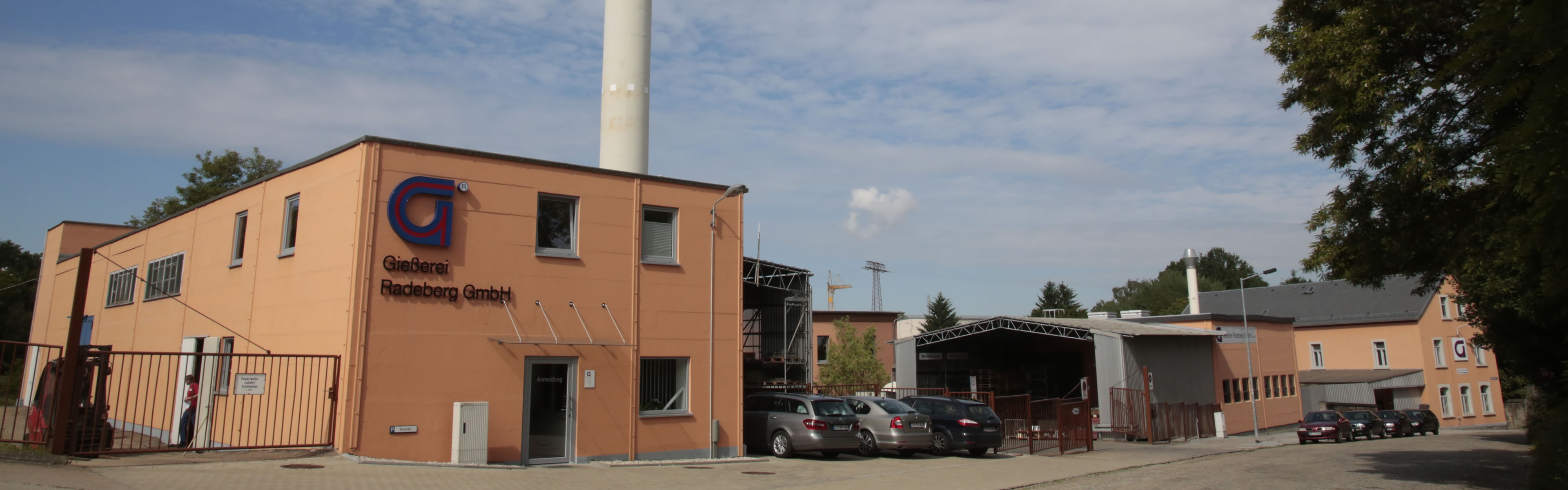
DEFoundry and headquarters
- Materials
- Grey cast iron, spheroidal graphite cast iron, vermicular graphite cast iron, SiMo, austenitic and wear-resistant cast
- Contour impulse moulding machine Formtec (650 x 550 x 250/200 mm)
- Vibration press moulding machine (max. 1000 x 630 x 250/200 to 300/300 mm)
- Core shooting machines KSA12 and KSA25 (cold-box, Reißaus & Baumgart)
- Continuous mixer furan resin process (3–5 t/h) plus mechanised hand moulding (Wöhr)
- 3 medium-frequency induction crucible furnaces ABB (500 kW, 500 kg)
- 4 electrically heated hearth car furnaces (stress-relief annealing, ferritising annealing, soft annealing)
- Sand blasting system
- Paint spraying system
Castings
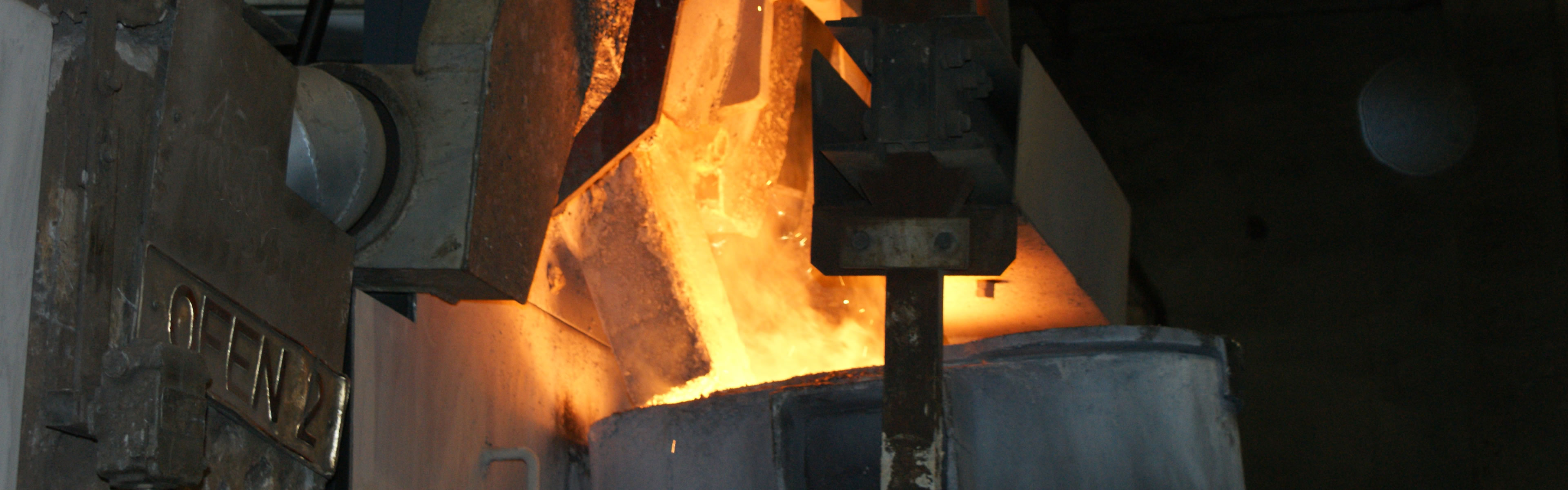
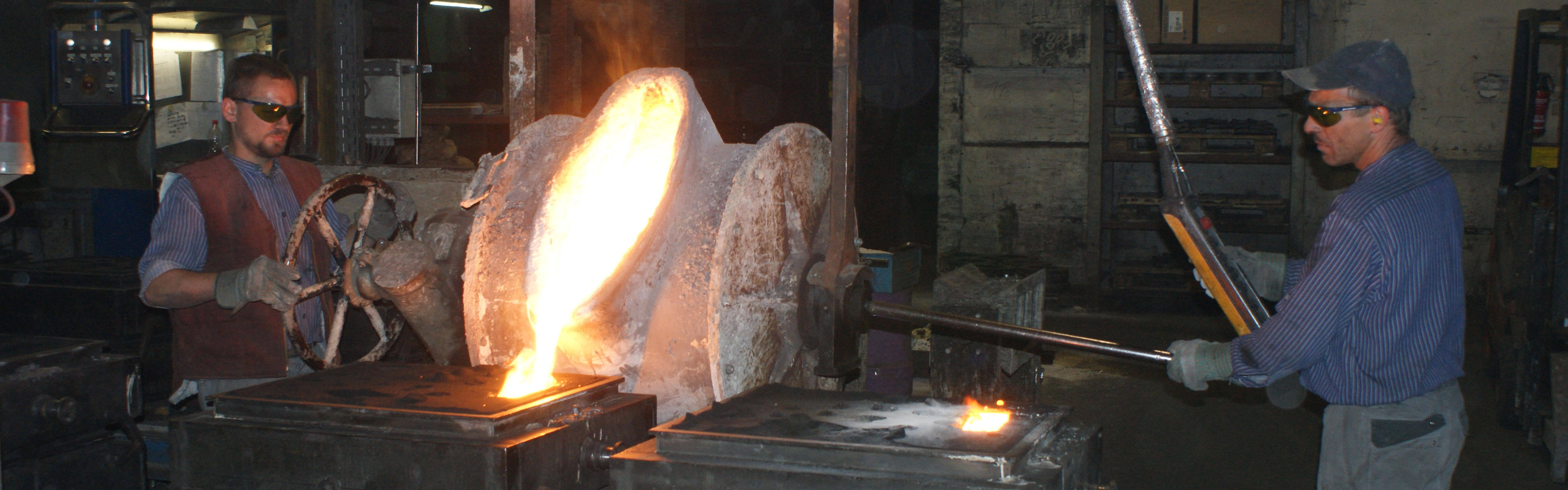
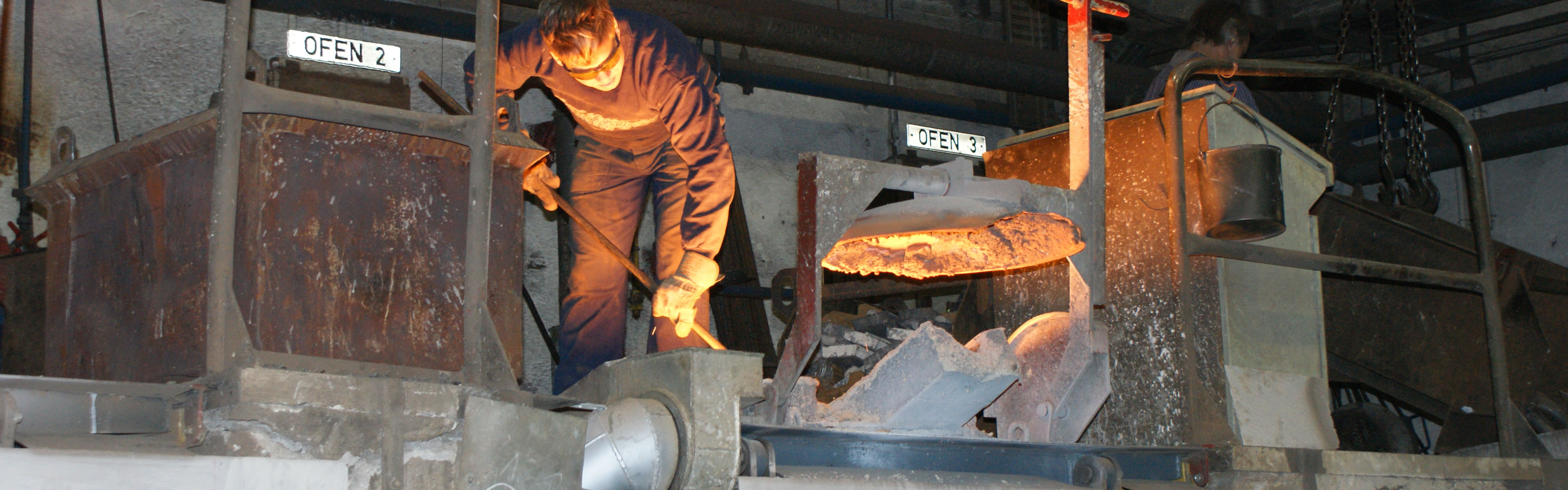
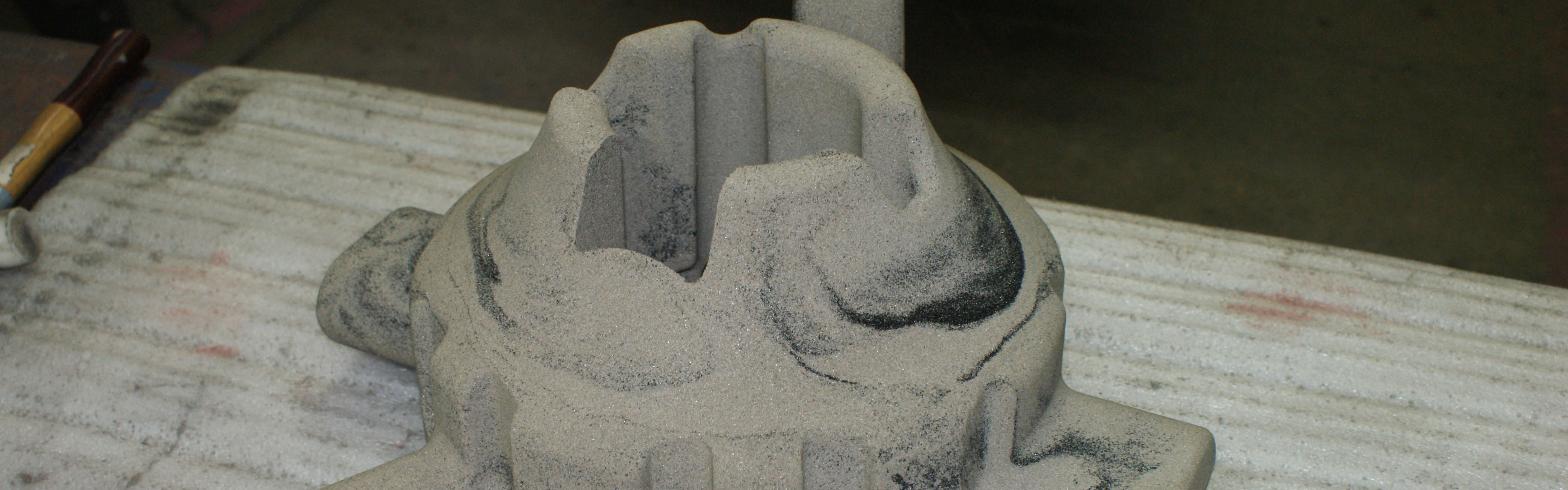
Inside the production
Industries
Processes & technical limits
| Processes | Tolerance | Max. part | Weight | Lot size | Materials |
|---|---|---|---|---|---|
| Glass mould castingCasting | – | – | – | – | Cast iron with lamellar graphite (R-25, R-26), Cast iron with vermicular graphite (R-35), Cast iron with spheroidal graphite (R-40, R-58, R-59, R-72) |
| Machine moulding (contour impulse moulding machine)Casting | – | 650 mm × 250 / 200 mm | – | – | – |
| Machine moulding (vibration press moulding machine)Casting | – | max. 1000 x 630 mm × 250 / 200 to 300 / 300 mm | – | – | – |
| Core making using the cold-box processCasting | – | – | – | – | Special sand (chromite, zircon) |
| Core making using the furan resin processCasting | – | – | – | – | Special sand (chromite, zircon) |
| Hand moulding using the furan resin processCasting | – | – | – | – | – |
| Melting operations (induction melting)Casting | – | – | – | – | Cast iron with spheroidal graphite, Cast iron with lamellar graphite, SiMo-alloyed cast iron, austenitic cast iron |
| Pattern making (patterns made of wood or plastic)Engineering | – | – | – | – | Wood, Plastic |
| Fettling (sand blasting and manual finishing)Surface treatment | – | – | – | – | – |
| Painting (casting primer using spraying process)Surface treatment | – | – | – | – | – |
| Heat treatment (stress-relief annealing, ferritising annealing or soft annealing)Heat treatment | – | – | – | – | – |
| Quality assurance (thermoanalytical and spectrometric analysis, ultrasonic testing)Testing | – | – | – | – | – |
| Casting-suitable design support and material selection consultingEngineering | – | – | – | – | – |
20 Anlagen & Maschinen
| Machine | Manufacturer / model | Quantity | Working area | Year built | Site |
|---|---|---|---|---|---|
| Contour impulse moulding machine | Formtec | 1 | Flask size 650 x 550 x 250 / 200 mm | – | Radeberg |
| Vibration press moulding machine | – | 1 | max. 1000 x 630 x 250 / 200 to 300 / 300 mm | – | Radeberg |
| Core shooting machine (cold-box) | Reißaus & Baumgart KSA12 | 1 | 12 l | – | Radeberg |
| Core shooting machine (cold-box) | Reißaus & Baumgart KSA25 | 1 | 25 l | – | Radeberg |
| Continuous mixer (furan resin process) | Reißaus & Baumgart | 1 | 3-5 t/h | – | Radeberg |
| Continuous mixer (furan resin, mechanised hand moulding) | Wöhr 12/24+/h | 1 | – | – | Radeberg |
| Medium-frequency induction crucible furnace | ABB Dortmund | 3 | Capacity 500 kg, power 500 kW | – | Radeberg |
| Sand blasting system | – | – | – | – | Radeberg |
| Paint spraying system | – | – | – | – | Radeberg |
| Electrically heated hearth car furnace (heat treatment) | – | 4 | – | – | Radeberg |
| Thermal analysis instruments (TA measuring stations for base iron and finished iron) | Technical Service Kuehn | – | – | – | Radeberg |
| Spark spectrometer | Spectro MaXx LMX09 | – | – | – | Radeberg |
| Tensile testing machine | Hegewald & Peschke inspect table 250 | – | – | – | Radeberg |
| Pendulum impact tester | VEB Leipzig PSW 150 | – | – | – | Radeberg |
| Hardness testing machine | Otto Wolpert-Werke DiaTestor2Rc | – | – | – | Radeberg |
| Mobile shear pin hardness tester | Hegewald & Peschke | – | – | – | Radeberg |
| Rebound hardness tester | Krautkämer Branson DynaMIC | – | – | – | Radeberg |
| Microscope (metallographic laboratory, microstructure examinations, micrograph images) | Carl Zeiss Jena Neophot 32 incl. camera | – | – | – | Radeberg |
| Ultrasonic testing device | Krautkämer Branson USN 52 R | – | – | – | Radeberg |
| Ultrasonic wall thickness gauge | Sonotec Sonowall50 | – | – | – | Radeberg |
Additional services
Quality
Before casting, melts are analysed thermoanalytically and spectrometrically; finished parts undergo, depending on requirements, ultrasonic testing, hardness measurement, tensile and impact tests as well as metallographic examinations in the company's own laboratory.
| Evidence | Radeberg |
|---|---|
| Own metallographic laboratory | |
| Ultrasonic testing | |
| Spectrometric melt analysis | |
| Tensile and impact testing | |
| ISO 9001 |
History
- 1860
Founded as A. Geißler KG (glass mould factory and iron foundry) in Radeberg with a focus on glass mould making.
- 1974
Nationalisation as VEB Gießerei und Glasformenbau Radeberg following the division of Germany.
- 1990
Taken over by the Treuhand as Gießerei und Glasformenbau Radeberg GmbH i.A.
- 1993
Reprivatisation of the company.