Development, manufacturing and service of high- and medium-frequency generators for industrial induction heating

Himmelwerk Hoch- und Mittelfrequenzanlagen GmbH
TübingenNew on Amplifa
Induction heating from the Tübingen manufacturer
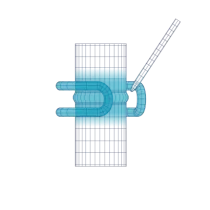
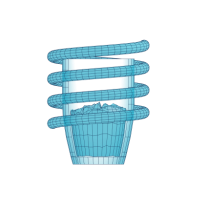
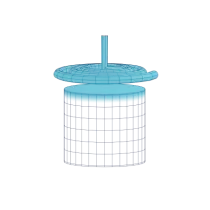
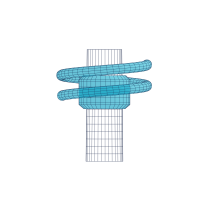
Himmelwerk is a medium-sized manufacturer of induction heating systems based in Tübingen. The company develops and manufactures high- and medium-frequency converters with power ratings of 2 to 250 kW in the frequency range from 4 kHz to 2 MHz, as well as water-cooled inductors and external circuits, spectral pyrometers, recooling systems and induction melting furnaces. Since 1950, more than 19,000 generators have been delivered to 79 countries. Applications include brazing, forming, melting, surface treatment, sealing, joining, heat treatment, indirect heating and special solutions for electrically conductive materials such as steel, stainless steel, aluminium, brass, copper, titanium and graphite. In addition to system manufacturing, Himmelwerk offers process development in its own application laboratory, IT-supported simulation, worldwide service, AI-based process monitoring (Smart Upgrade) as well as training and financing solutions. Customers include industry, automotive suppliers, foundries and research institutions, including the Max Planck Institute for Plasma Physics in Garching.
- Site
- Tübingen
- Processes
- Brazing (induction), Forming (induction heated), Melting (induction), Surface treatment (induction), Sealing (induction), Joining (induction), Heat treatment (induction, e.g. hardening/induction hardening), Indirect heating (induction)
- Materials
- Steel, Stainless steel, Aluminium, Brass, Copper, Titanium, Graphite, Non-ferrous metals
- Certificates
- DIN EN ISO 9001:2015, ISO 9001
- Founded
- 1879
- Industries
- Industry (cross-sector induction heating), Automotive/suppliers, Foundry/metal processing, Research (nuclear fusion, plasma physics), Automotive/suppliers (implied: brazing, hardening, joining), Foundry/metal processing (melting, heat treatment)
- 01
Process development and application laboratory
- 02
IT-supported simulation
- 03
Development and manufacture of the induction systems
- 04
Custom inductor manufacturing with 100% inspection
- 05
Commissioning and automation (Smart Automation)
- 06
Maintenance, service and training (Himmelwerk Care)
Materials & Applications
Steel
Induction heating for brazing, hardening, joining and forming.
Stainless steel
Conductive material for heat treatment and joining processes.
Aluminium
Can be induction-heated for brazing, joining and forming.
Brass
Used in brazing and induction heat treatment.
Copper
Material well suited to induction heating, also as a non-ferrous metal in the melting process.
Titanium
Induction heating for joining and heat treatment.
Graphite
Electrically conductive material for induction heating processes.
Non-ferrous metals
Melted in the induction melting furnace using special crucibles.
Location
Tübingen
DEHeadquarters, development, manufacturing, sales, service, application laboratory
- Lot size
- Prototype/single-unit production through to large series
- Materials
- Steel, stainless steel, aluminium, brass, copper, titanium, graphite, non-ferrous metals
- HF converters HU/HU S/SINUS
- MF converters MU/MU R
- Melting furnace SINUS 10 kW (1/2 MHz)
- Recooling systems e-Chilly/Sigma/SMC
- Spectral pyrometer (50–3000 °C, 5 ms)
- Smart Upgrade (AI-based process monitoring)
Inside the production
Industries
Processes & technical limits
| Processes | Tolerance | Max. part | Weight | Lot size | Materials |
|---|---|---|---|---|---|
| Brazing (induction)Joining | – | – | – | Prototype/single-unit production – Large series | Steel, Stainless steel, Aluminium, Brass, Copper, Titanium, Graphite, electrically conductive materials |
| Forming (induction heated)Forming | – | – | – | Prototype/single-unit production – Large series | Steel, Stainless steel, Aluminium, Brass, Copper, Titanium, Graphite |
| Melting (induction)Casting | – | – | – | Prototype/single-unit production – Large series | Non-ferrous metals, Metals (turnings, fine chips, metal sections) |
| Surface treatment (induction)Surface | – | – | – | Prototype/single-unit production – Large series | Steel, Stainless steel, Aluminium, Brass, Copper, Titanium, Graphite |
| Sealing (induction)Joining | – | – | – | Prototype/single-unit production – Large series | Steel, Stainless steel, Aluminium, Brass, Copper, Titanium, Graphite |
| Joining (induction)Joining | – | – | – | Prototype/single-unit production – Large series | Steel, Stainless steel, Aluminium, Brass, Copper, Titanium, Graphite |
| Heat treatment (induction, e.g. hardening/induction hardening)Heat treatment | – | – | – | Prototype/single-unit production – Large series | Steel, Stainless steel, Aluminium, Brass, Copper, Titanium, Graphite |
| Indirect heating (induction)Heat treatment | – | – | – | Prototype/single-unit production – Large series | Steel, Stainless steel, Aluminium, Brass, Copper, Titanium, Graphite |
| Special solutions (induction heating)Heat treatment | – | – | – | Prototype/single-unit production – Large series | Steel, Stainless steel, Aluminium, Brass, Copper, Titanium, Graphite |
| Temperature ranges for induction heating up to 300 °C, up to 600 °C, up to 1000 °C, above 1000 °CHeat treatment | – | – | – | Prototype/single-unit production – Large series | Steel, Stainless steel, Aluminium, Brass, Copper, Titanium, Graphite |
12 Anlagen & Maschinen
| Machine | Manufacturer / model | Quantity | Working area | Year built | Site |
|---|---|---|---|---|---|
| High-frequency converter (induction generator) | Himmelwerk HU | – | Power up to 5 kW; frequency range 4 kHz–2 MHz; over 90% efficiency, water-cooled | – | Tübingen |
| High-frequency converter (induction generator) | Himmelwerk HU S | – | Power from 25 kW; frequency range 4 kHz–2 MHz | – | Tübingen |
| High-frequency converter (induction generator) | Himmelwerk SINUS | – | Power up to 25 kW; frequency range 4 kHz–2 MHz | – | Tübingen |
| Medium-frequency converter (induction generator) | Himmelwerk MU | – | Power up to 250 kW; frequency range 4 kHz–2 MHz | – | Tübingen |
| Medium-frequency converter (induction generator) | Himmelwerk MU R | – | Power up to 15 kW; frequency range 4 kHz–2 MHz | – | Tübingen |
| Induction melting furnace (crucible tilting furnace) with HF converter | Himmelwerk SINUS 10 kW // 1 or 2 MHz | – | 10 kW, 1 or 2 MHz; for melting metal samples (turnings/fine chips, non-ferrous metals in special | – | Tübingen |
| Cooling water recooling system | Himmelwerk e-Chilly (1S, 2S, 4S, 5S, 4S-3, 5S-3, 6S-3) | – | Cooling capacity 530–6800 W; tank volume 6.4–26 l; pressure 4.5/5.3 bar; flow rate 5/16 l/min | – | Tübingen |
| Cooling water recooling system | Himmelwerk Sigma | – | – | – | Tübingen |
| Cooling water recooling system | Himmelwerk SMC cooler (compact, mobile, bifrequent) | – | – | – | Tübingen |
| Spectral pyrometer (non-contact temperature measurement) | Himmelwerk | – | Operating range 50–3000 °C; response time 5 ms; light-chopper method | – | Tübingen |
| Custom-made inductors & external circuits | Himmelwerk | – | Water-cooled; custom adaptation to workpiece; frequency tuning via capacitor configuration | – | Tübingen |
| AI-based monitoring solution for induction systems (Smart Upgrade, retrofit) | Himmelwerk Smart Upgrade | – | – | – | Tübingen |
Additional services
Reference customers
Quality
All inductors are manufactured to OEM quality and undergo 100 percent inspection, including electrical testing. The quality management system is certified to DIN EN ISO 9001:2015.
| Evidence | Tübingen |
|---|---|
| ISO 9001 |
History
- 1879
Gottlob Himmel founds a mechanical-optical workshop in Tübingen, among other things for automated ignition of gas lamps.
- 1950
Construction of the first tube-based high-frequency generator.
- 1983
The first semiconductor converter, type HU1, leaves production.
- 1994
Delivery of the first HGL (120 kW) to the Max Planck Institute for Plasma Physics IPP Garching; start of the nuclear fusion research cooperation.
- 2009
Move to the new company building on Jopestraße in Tübingen.
- 2020
Induction 4.0: AI-based monitoring software is integrated directly into the induction systems.