Turnkey solar production lines, special machinery and DESERT module technology for the photovoltaic industry

J.v.G. technology GmbH
Freystadt (headquarters) · Poland (own solar module production line, 60 MW)New on Amplifa
About J.v.G. technology
J.v.G. technology GmbH, headquartered in Freystadt (Bavaria), is a mechanical engineering company that has specialized in systems for solar module production since 1997. The company manufactures and integrates complete turnkey production lines including stringers, bussing machines, laminators, layup and framing stations as well as testing machines such as sun simulators and Hi-Pot testers. In addition to plant engineering, J.v.G. offers factory planning, business plans, training, ramp-up support, spare parts supply and the trade in refurbished production machines. With its self-developed DESERT and DESERT+ technology, modules for hot desert climates are produced; own production lines in Europe (Poland, 60 MW) and research cooperations with Fraunhofer and the EU contribute to development. Customers are operators of solar module factories worldwide.
- Site
- Freystadt
- Processes
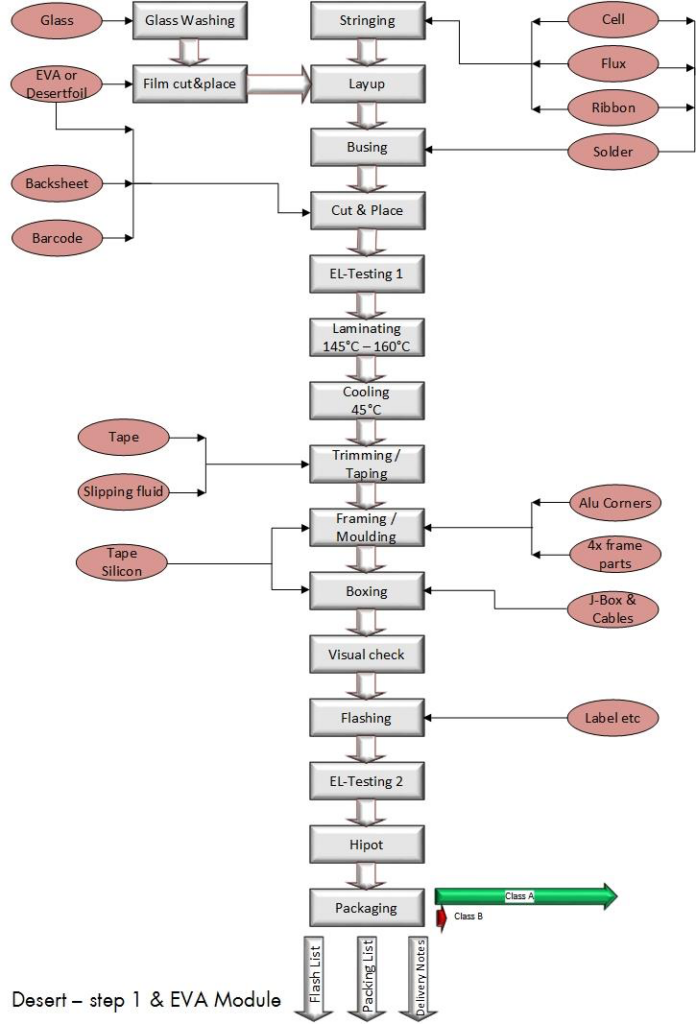
- Turnkey solar module production line (complete PV manufacturing), Stringer – soldering of solar cells into strings (infrared soldering process), Bussing – soldering of busbar connections (IR/contact soldering, induction soldering), Lamination (vacuum, heat, pressure; EVA crosslinking), Layup (strings onto glass with encapsulation film), Framing with silicone sealing and corner connectors, Taping (edge protection with adhesive tape), Trimming (removal of excess material after lamination)
- Materials
- Silicon (solar cells), EVA (ethylene vinyl acetate) encapsulation film, TPO (thermoplastic polyolefin), PVB, TPU, Copper (ribbon/busbars), Aluminium (module frame), Solar glass (tempered, low-iron glass)
- Founded
- 1997
- Industries
- Photovoltaics/solar industry, Solar module manufacturing, Mechanical engineering
- 01
Consulting and business plan
- 02
Factory and line layout planning
- 03
Machine manufacturing and line integration
- 04
Installation and commissioning
- 05
Training and ramp-up support
- 06
Spare parts and after-sales service
Materials and Processes
Silicon (solar cells)
Base material of the solar cells, which are interconnected into strings in the stringer.
EVA encapsulation film
Standard encapsulation film that bonds glass, cells and backsheet during lamination.
DESERT process film
Proprietary film technology for long-lasting modules in hot climates.
Alternative encapsulant films (TPO, PVB, TPU)
Plastic films as alternatives to EVA for special module requirements.
Copper (ribbon/busbars)
Connection ribbons for the electrical interconnection of the solar cells.
Aluminium (module frame)
Frame material for stability and protection of the module.
Solar glass (tempered, low-iron glass)
Front glass of the module with high light transmittance and weather resistance.
Locations
Freystadt
DEHeadquarters, engineering and machine building
- Design and construction of special machines, soldering heads and coating machines
Poland
PLOwn solar module production line (reference plant, 60 MW)
- Stringer
- Bussing machines
- Laminators
- Layup stations
- Framing machines
- Sun simulator
- Hi-Pot testing machine
Components and Equipment
Inside the production
Industries
Processes & technical limits
| Processes | Tolerance | Max. part | Weight | Lot size | Materials |
|---|---|---|---|---|---|
| Turnkey solar module production line (complete PV manufacturing)Assembly | – | – | – | – | Silicon (solar cells), Solar glass, EVA, Backsheet, Aluminium (frame), Copper (busbars) |
| Stringer – soldering of solar cells into strings (infrared soldering process)Joining | – | – | – | up to ~7000 cells/hour | Silicon (solar cells), Copper (ribbon/busbar), Flux/solder |
| Bussing – soldering of busbar connections (IR/contact soldering, induction soldering)Joining | – | 2500 mm × 1400 mm | – | ~150 modules/hour | Copper (busbars), Silicon (solar cells) |
| Lamination (vacuum, heat, pressure; EVA crosslinking)Plastics | – | – | – | ~100–600 modules/hour (depending on | EVA, TPO, PVB, TPU, Solar glass, Backsheet, Silicon (solar cells) |
| Layup (strings onto glass with encapsulation film)Assembly | – | – | – | – | Solar glass, EVA, DESERT process film |
| Framing with silicone sealing and corner connectorsAssembly | – | – | – | – | Aluminium, Silicone |
| Taping (edge protection with adhesive tape)Assembly | – | – | – | – | Polyester, Polyimide, Fiberglass adhesive tape |
| Trimming (removal of excess material after lamination)Assembly | – | – | – | – | EVA/encapsulant, Backsheet |
| Foil cutting & placing (cutting and placement of backsheet/encapsulant)Plastics | – | – | – | – | Aluminium, Stainless steel, Copper, Backsheet film |
| Performance testing with sun simulator (STC: 25°C, 1200 W/m², AM1.5)Testing | – | – | – | – | Solar modules |
| Hi-Pot high-voltage testing (insulation, dielectric and continuity test)Testing | – | – | – | – | Solar modules |
| EL testing (electroluminescence) for defect detectionTesting | – | – | – | – | Solar modules |
| Sorting and packaging of modules by power classesAssembly | – | – | – | – | Solar modules |
| DESERT technology (module production for hot desert climates)Engineering | – | – | – | – | DESERT process film |
| Business plan creation and factory planning for solar production linesEngineering | – | – | – | – | – |
15 Anlagen & Maschinen
| Machine | Manufacturer / model | Quantity | Working area | Year built | Site |
|---|---|---|---|---|---|
| Stringer (solar cell interconnection machine, IR soldering) | – | – | Cell sizes 166–210 mm, up to ~7000 cells/h | – | – |
| Automatic bussing machine | – | – | Modules up to 2500x1400 mm, cells 156–210 mm, ~150 modules/h, cycle time 20–22 s | – | – |
| PV laminator (vacuum/press lamination) | – | – | ~100–600 modules/h depending on automation level, lamination temperature ~135–180°C | – | – |
| Layup station | – | – | – | – | – |
| Foil cutter (foil cutting machine) | – | – | – | – | – |
| Foil placing station (with laser cutter, robot arm, vision system) | – | – | – | – | – |
| Trimming machine (also laser cutter and CNC router variants) | – | – | – | – | – |
| Taping machine (manual/semi-/fully automatic, CNC-controlled) | – | – | – | – | – |
| Framing machine (frame assembly, manual to fully automatic) | – | – | – | – | – |
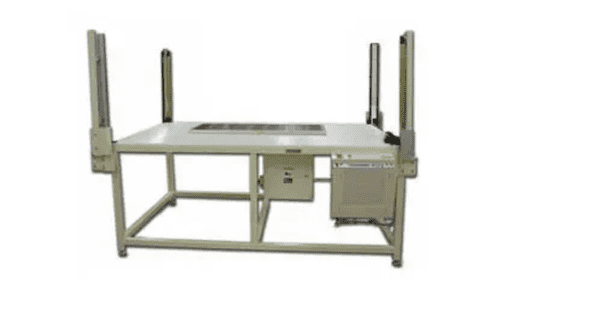
| Sun simulator (xenon arc lamp, LED solar flash, solar array simulator) | – | – | STC: 25°C, 1200 W/m², AM1.5 | – | – |
| Hi-Pot high-voltage testing machine | – | – | – | – | – |
| Sorting and packaging machine (conveyor belts, sensors, robot arms) | – | – | – | – | – |
| Glass washer (glass cutting/washing machine) | – | – | – | – | – |
| Refurbished solar production line (complete) | J.v.G. technology GmbH | – | up to 85 MW capacity, modules up to 540 W, 7–9 workers | – | – |
| Own production line (reference) | J.v.G. technology GmbH | 1 | 60 MW | – | Poland |
Additional services
History
- 1997
Design and construction of special machines, soldering heads and coating machines
- 1998
First solar module production system for the solar industry
- 2000
First subsystems in the solar sector
- 2001
Complete system for solar module production
- 2003
Consulting 'Turnkey solar systems'
- 2005
Founding of the solar technology business with new DESERT technology
- 2006
Start of the own solar module production line in Europe (Poland)
- 2009
Funding from the German federal government for first DESERT technology research
- 2016
New research project with the European Union and Fraunhofer
- 2020
Further development of DESERT+ technology with tests in Morocco and Saudi Arabia