
Engineering consultancy for structural analysis of moving structures in crane construction, conveying technology and plant engineering as well as manufacturer of the KRASTA software
Kühne BSB GmbH & Co. KG
DarmstadtNew on Amplifa
About Kühne BSB
Kühne BSB GmbH & Co. KG is an engineering consultancy in Darmstadt with around twelve employees from the disciplines of civil engineering, mechanical engineering and mechanics. The company offers static and modal analyses, fatigue strength verification, FE analysis with ANSYS as well as damage analysis and refurbishment concepts for structures made of steel and aluminium. Focus areas are crane construction (bridge cranes, container cranes, gantry cranes, vehicle-mounted cranes and tower cranes), conveying technology (excavators, belt bridges, open-pit mining equipment, rack and stacker units), steel construction (halls, platforms, high-bay warehouses) as well as special structures such as façade access equipment, radio telescopes and amusement rides. In addition to its analysis services, Kühne BSB has been developing and selling the truss analysis program system KRASTA since 1991 for the analysis of moving spatial structures, including customer-specific modules and standalone analysis programs. Over 3000 completed projects range from simple steel platforms to container bridges and radio telescopes; the resulting products are in use on all continents, including in Spain, Mexico, Sardinia and Australia. Reference customers include TAKRAF, Demag, Dematic, Liebherr-Werk Ehingen, Wolffkran and Gottwald Port Technology.
- Site
- Darmstadt
- Processes
- Static and modal analysis of moving structures (crane construction: bridge cranes, container cranes,, Analysis of conveying technology (excavators, belt bridges, belt slewing carriages, open-pit mining, Analysis of steel construction (halls, platforms, high-bay warehouses), Analysis of special plant engineering (façade access equipment, radio telescopes) and amusement, FE analysis with ANSYS (finite element system), damage analysis and refurbishment concepts, Software development: maintenance/development of KRASTA, customer-specific KRASTA modules,, Static analysis (crane construction, conveying technology, steel construction, special plant, Fatigue strength verifications
- Materials
- Steel, Aluminium
- Certificates
- Verifiable documentation of the static analysis, Fatigue strength verifications according to standards (including EN 13001-3-1,, ISO 9001
- Founded
- 1991 (sinc
- Employees
- ca. 12 (12 team
- Industries
- Crane construction, Conveying technology, Steel construction, Special plant engineering, Plant engineering, Amusement rides (Ferris wheels, roller coasters)
- 01
Concept design and design support
- 02
Static and modal analysis (KRASTA, ANSYS)
- 03
Fatigue strength verifications according to German, European and international
- 04
Structural detailing and dimensioning
- 05
Verifiable documentation
- 06
Damage analysis and refurbishment concepts for existing structures
Analysis subjects and software
Steel
Main material of the analysed structures in crane construction, conveying technology, steel construction and special plant engineering.
Aluminium
Material for moving structures, among others in steel and aluminium construction, for which KRASTA is specifically designed.
Location
Darmstadt
DEOffice/Headquarters: analysis, software development, consulting
- Materials
- Steel, Aluminium
- KRASTA
- ANSYS
Analysis projects
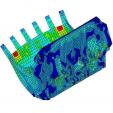
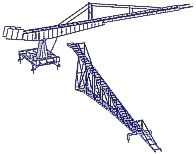
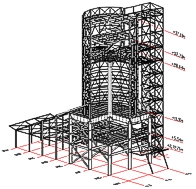
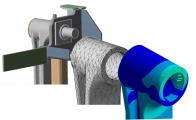
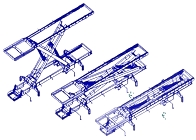
Inside the production
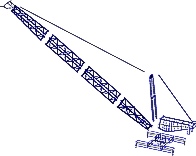
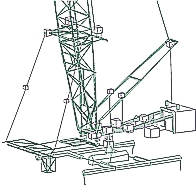
Industries
Processes & technical limits
| Processes | Tolerance | Max. part | Weight | Lot size | Materials |
|---|---|---|---|---|---|
| Static and modal analysis of moving structures (crane construction: bridge cranes, container cranes,Engineering | – | – | – | – | Steel, Aluminium |
| Analysis of conveying technology (excavators, belt bridges, belt slewing carriages, open-pit miningEngineering | – | – | – | – | Steel |
| Analysis of steel construction (halls, platforms, high-bay warehouses)Engineering | – | – | – | – | Steel |
| Analysis of special plant engineering (façade access equipment, radio telescopes) and amusementEngineering | – | – | – | – | Steel |
| FE analysis with ANSYS (finite element system), damage analysis and refurbishment conceptsEngineering | – | – | – | – | – |
| Software development: maintenance/development of KRASTA, customer-specific KRASTA modules,Engineering | – | – | – | – | – |
Additional services
Reference customers
Verifications and standards
The analyses are prepared as verifiable documentation; fatigue strength verifications are carried out according to German, European and international standards such as DIN 15018, EN 13001-3-1, EN 1993-1-9 (Eurocode 3), FEM 1.001, ISO 5049-1, DIN 22261 and AS 4100.
| Evidence | Darmstadt |
|---|---|
| Verifiable documentation of the static analysis | |
| Fatigue strength verifications according to standards (including EN 13001-3-1, | |
| ISO 9001 |
History
- 1973
The idea for KRASTA originates at the Department of Conveying Technology and Lifting Machines of the TH Darmstadt (Prof. Dr.-Ing. R. Neugebauer); development in cooperation with industry, the VDMA specialist association for conveying technology and FKM.
- 1979
KRASTA is presented to the professional public at the TU Darmstadt and has been used in industry ever since.
- 1987
Porting to IBM-compatible PCs with partly graphical-interactive input, supported by Prof. Dr.-Ing. Gerhard Wagner, Ruhr University Bochum.
- 1991
Further development, maintenance and distribution of KRASTA by Kühne BSB GmbH in close cooperation with universities and industry.
- 1996
Fully graphical input under Windows 95 and Windows NT and their successor versions.