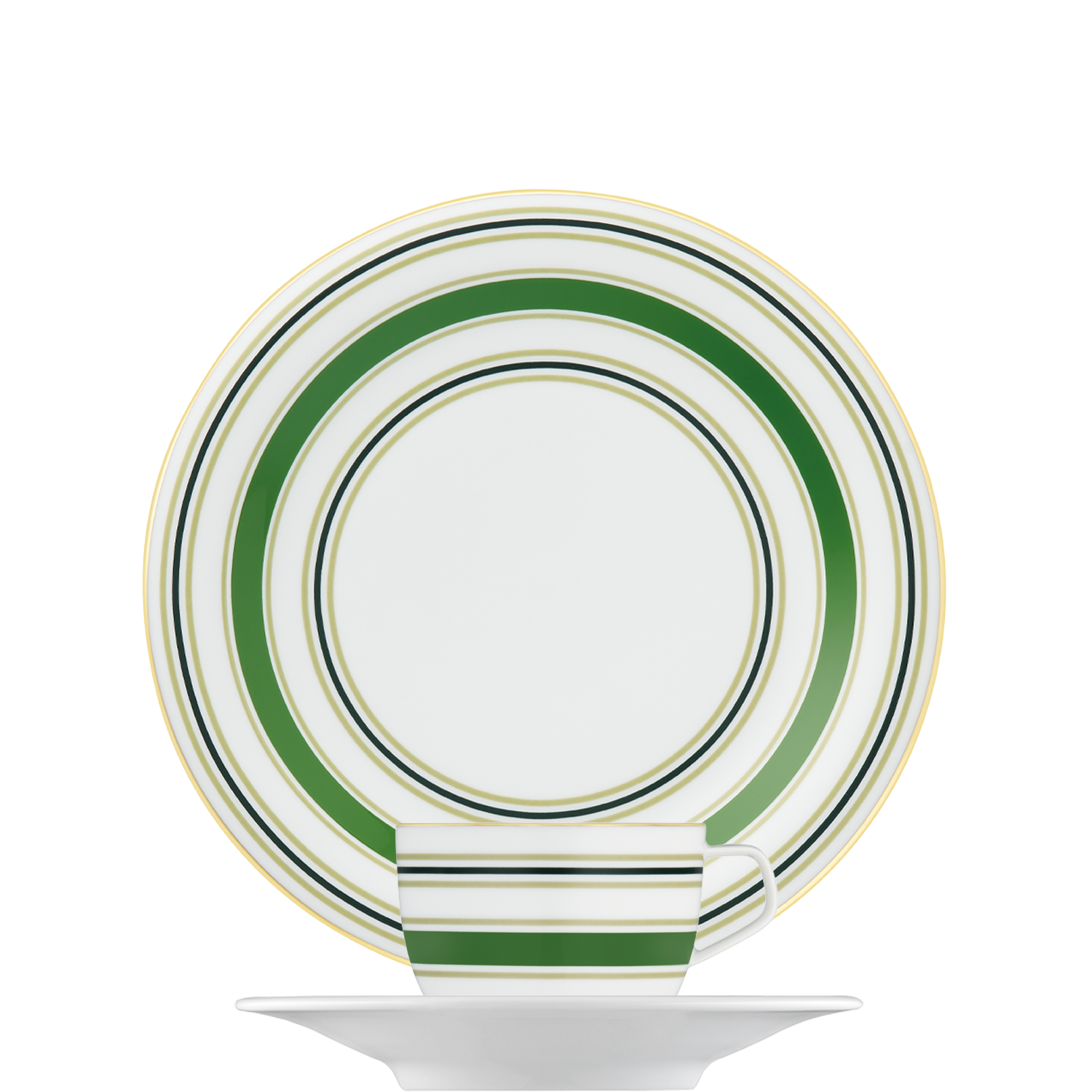
Manufactory porcelain made in-house – tableware, objects and custom pieces since 1747.

Porzellanmanufaktur FÜRSTENBERG GmbH
FürstenbergNew on Amplifa
Manufactory porcelain since 1747
Porzellanmanufaktur FÜRSTENBERG GmbH has been producing fine manufactory porcelain in Fürstenberg in the Weser Uplands of southern Lower Saxony since 1747. The product range includes tableware series (plates, cups, mugs, jugs, platters, bowls), serving accessories, porcelain figurines and objects for interior design such as vases, jars and small furniture, produced under the FÜRSTENBERG and SIEGER by FÜRSTENBERG brands. The porcelain bodies are composed of kaolin, quartz and feldspar; a large proportion of production is done by hand, from slip casting in plaster moulds through manual assembly of multi-part products to the porcelain firing with individual firing supports. In addition, glazing, hand painting, gold decoration and crystalline glazes are offered. Alongside collection items, the manufactory produces custom pieces and customisations – from its own porcelain shapes to monograms and coats of arms to individual decors – from single items to small series to large volumes. Customers include Royal Salute, the hotel restaurant Lalique (Château Lafaurie-Peyrague), Silversea Cruises and the Öffentliche Versicherung. The site comprises the production facilities next to Fürstenberg Castle, the 600 m² factory outlet and the porcelain museum in the castle.
- Site
- Fürstenberg
- Processes
- Porcelain production (manufactory porcelain, mostly handwork), Slip casting (casting liquid porcelain slip into plaster moulds), Assembly (manual assembly of multi-part porcelain products, e.g. handles, spouts, lids), Porcelain firing (kiln firing with firing supports), Glazing, Hand painting / decors (incl. gold decoration, individual decors, crystalline glazes), Custom pieces / customisation (own porcelain shapes, objects, monograms, coats of arms), Porcelain figurine and model making (bossiers, modellers, formers)
- Materials
- Porcelain (kaolin, quartz, feldspar), Plaster (working moulds), Crystalline glazes (gold and green tones), Slip casting (liquid porcelain slip), Gold decoration / hand painting
- Founded
- 1747
- Industries
- Table culture, Interior design, Hotels and gastronomy, Gift items
- 01
Concept and shape development
- 02
Slip casting in plaster moulds
- 03
Manual assembly of multi-part products
- 04
Porcelain firing with firing supports
- 05
Glazing
- 06
Hand painting / decors
- 07
Factory outlet and sales
Porcelain bodies and processes
Porcelain (kaolin, quartz, feldspar)
Base material of all tableware, objects and figurines; bodies with extremely thin walls.
Slip casting (liquid porcelain slip)
Casting of liquid porcelain slip into plaster working moulds, which are replaced after approx. 50 uses.
Plaster (working moulds)
Material of the working moulds used for slip casting.
Crystalline glazes (gold and green tones)
Used for custom pieces such as whisky bottles for Royal Salute.
Gold decoration / hand painting
Decors that run over rims and handles and can only be realised as hand painting.
Fürstenberg Manufactory
Fürstenberg
DEManufactory, production, factory outlet (600 m²), museum
- Lot size
- Single items to large volumes
- Materials
- Porcelain (kaolin, quartz, feldspar), plaster moulds, crystalline glazes
- Porcelain kiln
- Plaster moulds (working moulds for slip casting)
- Glaze mill (historical kaolin processing)
Porcelain products
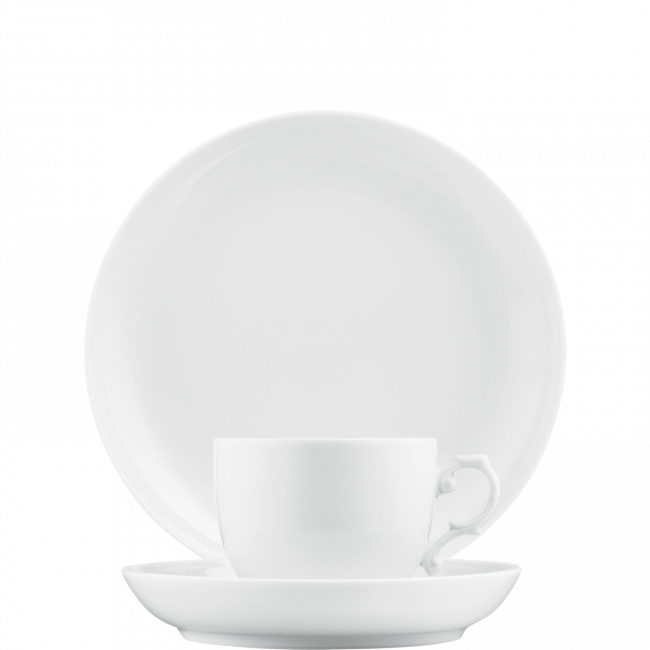
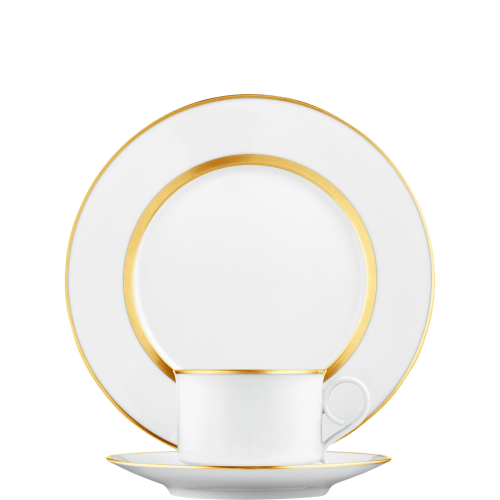
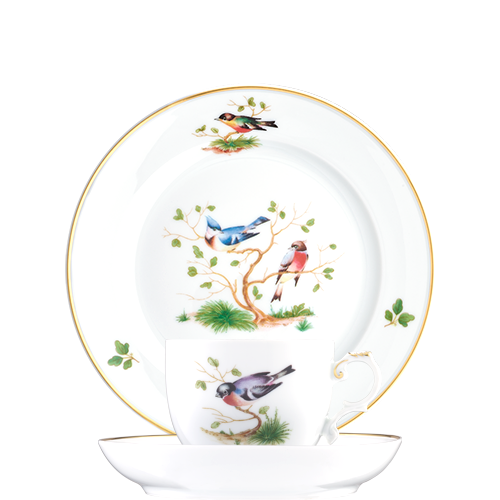
Inside the production

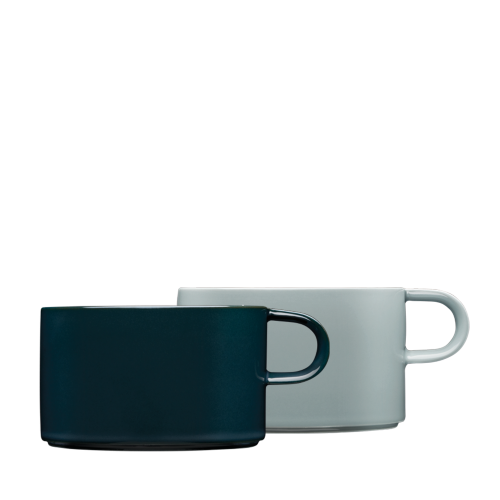
Industries
Processes & technical limits
| Processes | Tolerance | Max. part | Weight | Lot size | Materials |
|---|---|---|---|---|---|
| Porcelain production (manufactory porcelain, mostly handwork)Casting | – | – | – | Single items – Large volumes | Porcelain |
| Slip casting (casting liquid porcelain slip into plaster moulds)Casting | – | – | – | – | Porcelain (slip), Plaster (working moulds) |
| Assembly (manual assembly of multi-part porcelain products, e.g. handles, spouts, lids)Assembly | – | – | – | – | Porcelain |
| Porcelain firing (kiln firing with firing supports)Heat treatment | – | – | – | – | Porcelain |
| GlazingSurface | – | – | – | – | Porcelain |
| Hand painting / decors (incl. gold decoration, individual decors, crystalline glazes)Surface | – | – | – | – | Porcelain |
| Custom pieces / customisation (own porcelain shapes, objects, monograms, coats of arms)Engineering | – | – | – | Single items – Large volumes | Porcelain |
| Porcelain figurine and model making (bossiers, modellers, formers)Casting | – | – | – | – | Porcelain |
3 Anlagen & Maschinen
| Machine | Manufacturer / model | Quantity | Working area | Year built | Site |
|---|---|---|---|---|---|
| Porcelain kiln | – | – | – | – | Fürstenberg |
| Glaze mill | – | – | Processing of kaolin (historical, Fohlenplacken) | – | Fürstenberg |
| Plaster moulds (working moulds for slip casting, approx. 50 uses) | – | – | – | – | Fürstenberg |
Additional services
Reference customers
History of the manufactory
- 1747
Foundation of the Fürstenberg porcelain manufactory on 11 January 1747 by Duke Carl I of Brunswick-Wolfenbüttel; Johann Georg von Langen commissioned with its implementation.
- 1750
First firing of more than 100 tableware pieces in a new porcelain kiln; Fürstenberg Castle incorporated into the manufactory's operations.
- 1753
Duke Carl I decreed that all porcelain pieces be marked with the blue 'F', which remains the trademark to this day; the arcanist Johann Kilian Benckgraff brought the knowledge of porcelain production.
- 1774
First profit; opening of a sales office in Berlin.
- 1888
Conversion of the leased manufactory into a joint-stock company.
- 1906
Establishment of an external painting studio in Dresden.
- 1966
Conversion into a GmbH as a subsidiary of the Braunschweigische Staatsbank (predecessor of NORD/LB); 98% NORD/LB, 2% district of Holzminden.
- 1972
Relocation of production to new manufacturing buildings next to Fürstenberg Castle.
- 2019
Acquisition of the NORD/LB shares by the State of Lower Saxony in December 2019.