Radiation hardening testing and consulting for electronic components and materials using accelerator test facilities.

RADEC GmbH
Koblenz (AG) · Villigen (Paul Scherrer Institute)New on Amplifa
About RADEC GmbH
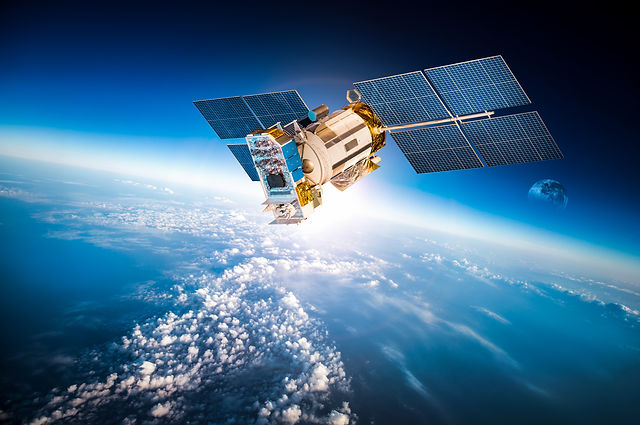
RADEC GmbH is a spin-off of the Paul Scherrer Institute (PSI) based in Koblenz in the canton of Aargau, around 30 km from Zurich. The company tests electronic components and materials for their radiation resistance (radiation hardness), using high-energy particles from particle accelerators at PSI as well as at partner facilities in Finland, Belgium and France. Its range of services includes consulting and problem analysis, 3D Monte Carlo simulations of dose values, component selection and shielding optimisation, test planning according to ESCC and MIL-STD standards, Total Ionizing Dose (TID) tests with gamma, electron and proton radiation, Single Event Effects (SEE) tests with protons and heavy ions, as well as data analysis and reporting in accordance with ECSS recommendations. Electronics hardware and software for test campaigns as well as beam tuning and optimisation are also offered; tests can be performed in remote mode with online monitoring by the customer. Customers come from the space sector, aerospace industry, military, automotive industry (autonomous driving) and energy supply.
- Site
- Koblenz
- Processes
- Radiation hardening testing of electronic components and materials (Radiation Effects Testing, TID), Total Ionizing Dose (TID) tests with gamma/electrons (Co60, ESCC 22900, MIL-STD-883 m:1019), Single Event Effects (SEE) tests with protons (ESCC 25100, MIL-STD-883 m:1020.1/1021.3, JESD57A,, Single Event Effects (SEE) tests with heavy ions (HI), Proton irradiation (Proton Irradiation Facility PIF, energy 6-230 MeV, flux 10^4-10^9 p/cm2/s,, Remote-mode irradiation tests (testing of customer samples with online monitoring), Monte Carlo simulations (3D modelling of the interaction of radiation with electronics and, Consulting and problem analysis (environmental requirements according to orbit and mission
- Materials
- Total Ionizing Dose Tests, Single Event Effects Tests, 3D Monte Carlo Simulation, Proton Irradiation Facility (PSI), Heavy-Ion Facilities (RADEF, Louvain, GANIL), Remote-Mode Tests
- Certificates
- Test standards ESCC 22900 / 25100, MIL-STD-883
- Industries
- Space/Aerospace, Aviation and Space (Aviation/Space), Military, Automotive industry (autonomous driving), Energy supply, Aerospace
- 01
Consulting and problem analysis (orbit, mission duration, ECSS-E-ST-10-04C)
- 02
3D Monte Carlo simulations (TID, ECSS-E-ST-10-12C)
- 03
Component selection and shielding optimisation
- 04
Test planning and test procedures (ESCC 22900/25100, MIL-STD-883)
- 05
Preparation of DUTs and electronics hardware
- 06
Irradiation tests (TID, SEE) at PSI and partner facilities
- 07
Data analysis, evaluation and reporting (ECSS/ESCIES)
Processes and Test Standards
Total Ionizing Dose Tests
Gamma/electron irradiation at the PSI Co60 laboratory (36–360 rad(Si)/h, ESCC 22900) as well as proton irradiation at the Proton Irradiation Facility.
Single Event Effects Tests
Tests with protons and heavy ions according to ESCC 25100, MIL-STD-883 m:1020.1/1021.3, JESD57A and JESD234.
3D Monte Carlo Simulation
Computer-based modelling of the interaction of radiation with electronics and shielding for TID dose calculation according to ECSS-E-ST-10-12C.
Proton Irradiation Facility (PSI)
Protons with 6–230 MeV, fluxes of 10^4–10^9 p/cm²/s and an irradiation area of up to 7 cm diameter.
Heavy-Ion Facilities (RADEF, Louvain, GANIL)
Irradiation with heavy ions at LET 1–60 or up to 100 MeV·cm²/mg for SEE tests.
Remote-Mode Tests
Irradiation of customer samples with online monitoring by the customer during irradiation.
Locations and Test Facilities

Koblenz
CHHeadquarters
Villigen (PSI)
CHSite at the Paul Scherrer Institute (PSI) with access to test facilities
- Part weight / size
- PIF irradiation area up to 7 cm diameter
- Proton Irradiation Facility (PIF), 6–230 MeV, flux 10^4–10^9 p/cm²/s
- Co60 gamma irradiation laboratory (36–360 rad(Si)/h, ESCC 22900 Low Rate)
- Proton beam facility 60 MeV, flux 10^14 p/cm²/s, ~1 cm diameter
Services


Inside the production
Industries
Processes & technical limits
| Processes | Tolerance | Max. part | Weight | Lot size | Materials |
|---|---|---|---|---|---|
| Radiation hardening testing of electronic components and materials (Radiation Effects Testing, TID)Testing | – | – | – | – | Electronic components, Materials |
| Total Ionizing Dose (TID) tests with gamma/electrons (Co60, ESCC 22900, MIL-STD-883 m:1019)Testing | – | – | – | – | Electronic components |
| Single Event Effects (SEE) tests with protons (ESCC 25100, MIL-STD-883 m:1020.1/1021.3, JESD57A,Testing | – | – | – | – | Electronic components |
| Single Event Effects (SEE) tests with heavy ions (HI)Testing | – | – | – | – | Electronic components |
| Proton irradiation (Proton Irradiation Facility PIF, energy 6-230 MeV, flux 10^4-10^9 p/cm2/s,Testing | – | – | – | – | Electronic components |
| Remote-mode irradiation tests (testing of customer samples with online monitoring)Testing | – | – | – | – | Electronic components |
| Monte Carlo simulations (3D modelling of the interaction of radiation with electronics andEngineering | – | – | – | – | – |
| Consulting and problem analysis (environmental requirements according to orbit and missionEngineering | – | – | – | – | Electronic components |
| Preparation of test plans and test procedures (ESCC 22900, ESCC 25100, MIL-STD-883 m:1019, 1020.1,Engineering | – | – | – | – | – |
| Production of electronics hardware and software to support radiation test campaignsAssembly | – | – | – | – | Electronic components |
| Beam optimisation (beam shaping, beam shielding, flux measurements of high-energy particles)Engineering | – | – | – | – | – |
| Data analysis, evaluation and reporting according to ECSS and ESCIES recommendationsEngineering | – | – | – | – | – |
6 Anlagen & Maschinen
| Machine | Manufacturer / model | Quantity | Working area | Year built | Site |
|---|---|---|---|---|---|
| Proton Irradiation Facility (PIF), particle accelerator | Paul Scherrer Institute (PSI) | – | Protons 6-230 MeV, flux 10^4-10^9 p/cm2/s, irradiation area up to 7 cm diameter | – | Paul Scherrer Institute, Villigen, Switzerland |
| Co60 Gamma Irradiation Laboratory (36 to 360 rad(Si)/h, ESCC 22900 Low Rate) | Paul Scherrer Institute | – | – | – | Paul Scherrer Institute, Villigen, Switzerland |
| Proton Beam Facility (energy 60 MeV, flux 10^14 p/cm2/s, ~1 cm diameter) | Paul Scherrer Institute | – | Irradiation area ~1 cm diameter | – | Paul Scherrer Institute, Switzerland |
| Radiation Effects Facility (RADEF), heavy-ion facility (LET 1-60 MeV/mg/cm2) | University of Jyväskylä | – | LET 1-60 MeV/mg/cm2 | – | University of Jyväskylä, Finland |
| Cyclotron Resource Centre, heavy-ion facility (LET 1-60 MeV/mg/cm2) | Université catholique de Louvain | – | LET 1-60 MeV/mg/cm2 | – | Louvain-la-Neuve, Belgium |
| GANIL heavy-ion facility (LET up to 100 MeV/mg/cm2) | CEA / DRF CNRS / IN2P3 | – | LET up to 100 MeV/mg/cm2 | – | France |
Additional services
Reference customers
Quality and Standards
Tests are carried out in accordance with recognised standards such as ESCC 22900, ESCC 25100, MIL-STD-883 (m:1019, 1020.1, 1021.3), JESD57A and JESD234; the PSI Co60 laboratory is designated as a certified laboratory. Reporting is carried out in accordance with ECSS and ESCIES recommendations.
| Evidence | Koblenz |
|---|---|
| Test standards ESCC 22900 / 25100, MIL-STD-883 |
History
Founded as a spin-off from the Paul Scherrer Institute (PSI), canton of Aargau; year of foundation not specified
- 2025
IEEE CANPS Award for Stefan Ritt, awarded at the IEEE NSREC in Nashville (14–18 July 2025)
Contribution to the JUICE mission