We mineralize CO₂ into carbon-negative additives (SCM) for climate-friendly cement and concrete.

Co-Reactive Project GmbH
Düsseldorf · ErkrathNew on Amplifa
About Co-Reactive
Co-Reactive is a deep-tech company founded in 2024 and based in Düsseldorf that develops a CO₂ mineralization technology based on the research of co-founder Dr. Andreas Bremen at RWTH Aachen. Using magnesium and calcium silicate minerals such as olivine, as well as secondary minerals from metallurgical processes (e.g. steel slag), the company produces CO-SCM, a carbon-negative Supplementary Cementitious Material for cement and concrete. In the process, CO₂ is bound in stable solid carbonates – around 330 kg of CO₂ per tonne – while amorphous silica with high pozzolanic activity is generated (Strength Activity Index above 100 per EN 450-1). The process comprises fine grinding of the feedstock, high-pressure/high-temperature reaction in the tubular reactor system, separation via filter press and drying in a rotary dryer. Plants are built close to emission sources such as cement works, power plants or waste incineration plants; delivery is made in big bags or silos. In 2026, the 1,000-t demonstration plant in Erkrath was opened and the company was admitted to the EIC Accelerator programme.
- Site
- Düsseldorf
- Processes
- CO₂ mineralization (carbonation of silicate minerals into Supplementary Cementitious Materials), Feedstock preparation (fine grinding of the feedstock minerals into powder), High-pressure/high-temperature reaction in the tubular reactor system (conversion into carbonates, Separation of CO-SCM from the suspension by filter press and drying in the rotary dryer, Production of CO₂-negative Supplementary Cementitious Materials (CO-SCM), CO₂ mineralization technology (feedstock preparation, reactor, separation), Delivery in big bags or silos, On-site CO₂ utilization (installation directly at emission sources)
- Materials
- CO-SCM (Supplementary Cementitious Material, carbon-negative), Olivine, Magnesium and calcium silicate minerals, Secondary minerals from metallurgical processes (steel slag), CO₂, Amorphous silica (product component), CO-SCM (Supplementary Cementitious Material), Amorphous silica
- Certificates
- EN 450-1 (Strength Activity Index > 100)
- Founded
- 2024
- Industries
- Cement and concrete industry, Construction sector, Steel industry (steel slag, GeoCRM consortium), CO₂ source operators (power plants, waste incineration, biogas plants, DAC)
- 01
Feedstock selection (silicate minerals, secondary minerals)
- 02
CO₂ source connection (proximity to source)
- 03
Fine grinding into powder
- 04
Suspension in water
- 05
High-pressure/high-temperature reaction in the tubular reactor
- 06
Separation by filter press
- 07
Drying in the rotary dryer
- 08
Delivery in big bags or silos
Materials & Processes
CO-SCM (Supplementary Cementitious Material)
Carbon-negative cement additive with high pozzolanic reactivity for clinker-efficient cement and concrete formulations.
Olivine
Magnesium silicate feedstock available on a large scale for CO₂ mineralization.
Magnesium and calcium silicate minerals
Raw material base that is converted in the reactor into carbonates and amorphous silica.
Secondary minerals from metallurgical processes (steel slag)
Upcycled industrial by-product that is processed into CO-SCM via mineralization.
Amorphous silica
Product component with high pozzolanic activity for high strength and durability.
CO₂
Input gas from cement works, power plants, waste incineration, biogas plants, DAC or pipelines.
Sites
Erkrath
DEDemonstration production plant (1,000 t CO₂-mineralizing cement substitute)
- Part weight / size
- 1,000 t annual capacity (demonstration scale)
- Lot size
- Demonstration scale
- Materials
- Olivine, silicate minerals, steel slag, CO₂
- Tubular reactor system (high pressure/high temperature)
- Filter press
- Rotary dryer
- CO₂ mineralization demonstration plant (1,000 t)
Düsseldorf
DECompany headquarters / administration
Products & Components
Inside the production
Industries
Processes & technical limits
| Processes | Tolerance | Max. part | Weight | Lot size | Materials |
|---|---|---|---|---|---|
| CO₂ mineralization (carbonation of silicate minerals into Supplementary Cementitious Materials)Engineering | – | – | 1,000 t (demonstration plant capacity) | – | Olivine, Magnesium and calcium silicate minerals, Secondary minerals from metallurgical processes, CO₂ |
| Feedstock preparation (fine grinding of the feedstock minerals into powder)Engineering | – | – | – | – | Olivine, Magnesium and calcium silicate minerals, Secondary minerals from metallurgical processes |
| High-pressure/high-temperature reaction in the tubular reactor system (conversion into carbonatesEngineering | – | – | – | – | Suspension of silicate mineral powder and water, CO₂ |
| Separation of CO-SCM from the suspension by filter press and drying in the rotary dryerSurface | – | – | – | – | CO-SCM (carbon-negative Supplementary Cementitious Material) |
4 Anlagen & Maschinen
| Machine | Manufacturer / model | Quantity | Working area | Year built | Site |
|---|---|---|---|---|---|
| Tubular reactor system (tubular reactor, high pressure/high temperature) | – | – | – | – | Erkrath (demonstration plant) |
| Filter press | – | – | – | – | Erkrath (demonstration plant) |
| Rotary dryer | – | – | – | – | Erkrath (demonstration plant) |
| CO₂ mineralization demonstration plant (1,000 t capacity) | – | 1 | – | 2026 | Erkrath |
Additional services
Quality & Standards
CO-SCM is technically validated; the Strength Activity Index exceeds 100 per EN 450-1. The company is working towards conformity with relevant standards and norms and cooperates with leading industrial partners.
| Evidence | Erkrath |
|---|---|
| EN 450-1 (Strength Activity Index > 100) |
History
- 2024
Founded based on the research of co-founder Dr. Andreas Bremen at RWTH Aachen; partnership with Orlando Kleineberg and Willi Peter.
- 2026
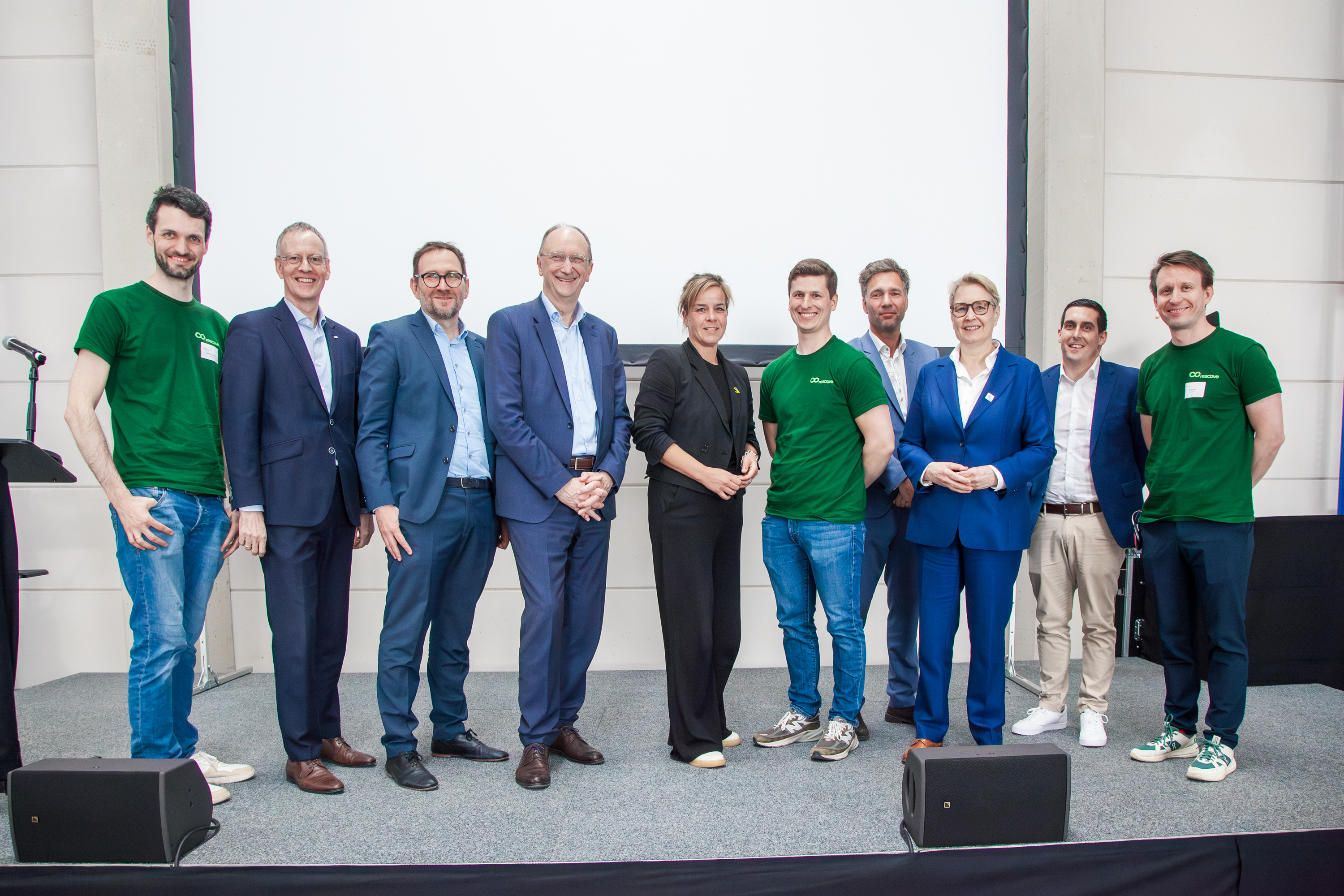
Opening of the 1,000-t demonstration plant in Erkrath.
- 2026
Selected for the EIC Accelerator programme.
- 2026
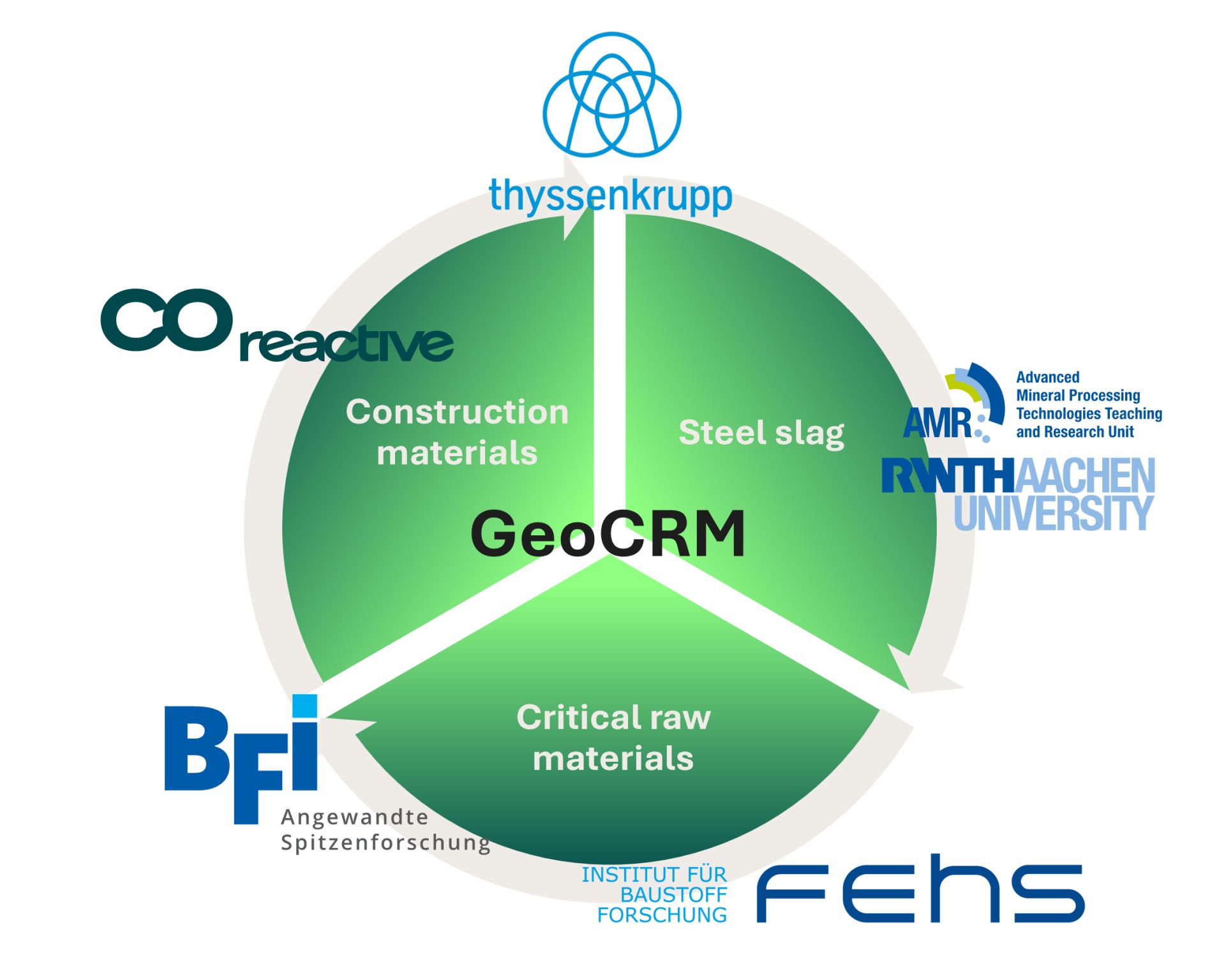
Contribution to the GeoCRM research consortium (critical raw materials and CO₂ binding from steel slag).
- 2026
EUR 6.5 million seed financing led by HTGF (with NRW.Bank, HBG Ventures, AFI Ventures, Evercurious VC) as well as BMWE grants.