Drinking water and service water supply for over one million people and industry in the western Ruhr region
RWW Rheinisch-Westfälische Wasserwerksgesellschaft mbH
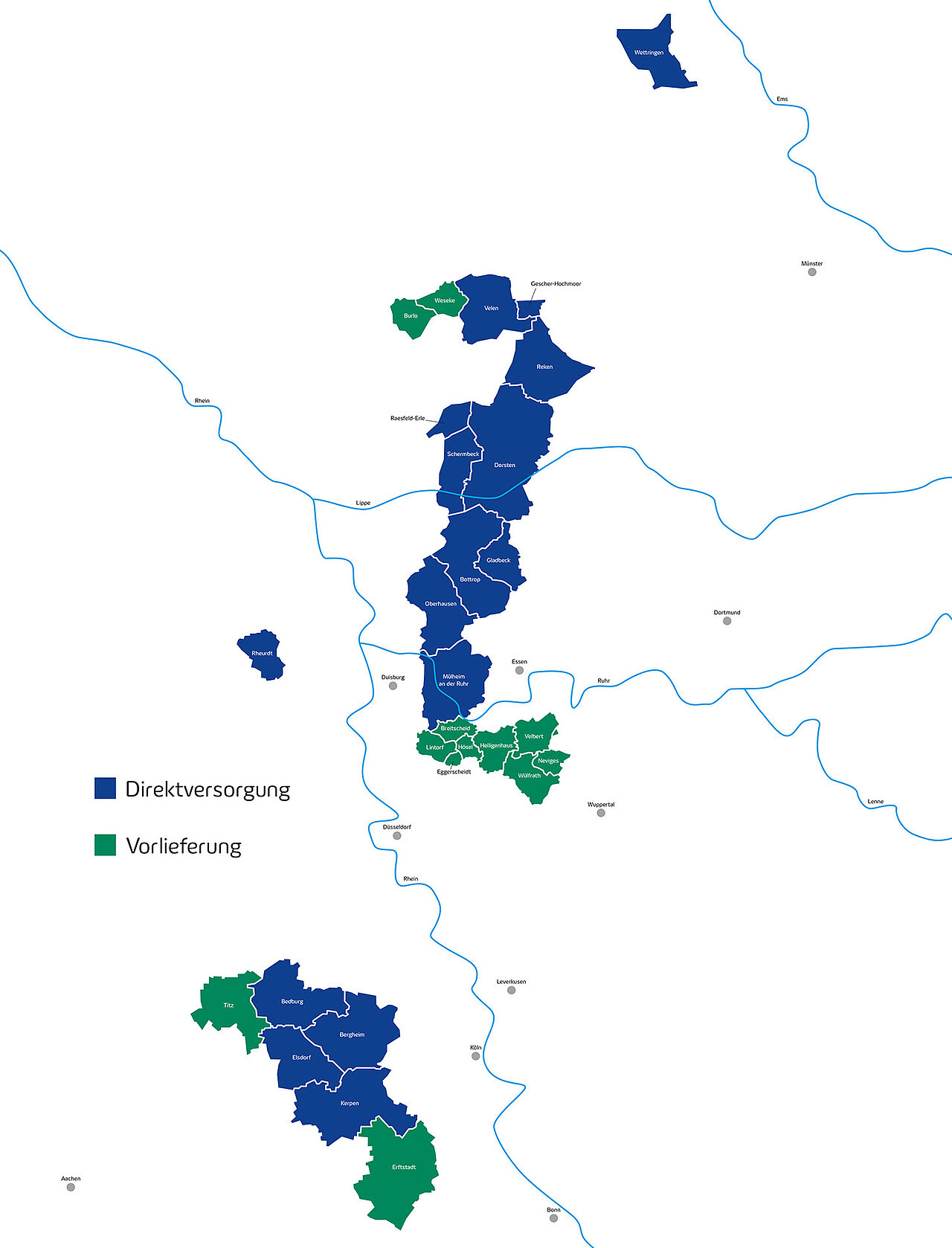
Mülheim an der Ruhr · Essen-Kettwig · Dorsten · Reken · Velen · GladbeckNew on Amplifa
About RWW
RWW Rheinisch-Westfälische Wasserwerksgesellschaft mbH, headquartered in Mülheim an der Ruhr, has supplied more than one million people as well as industrial and commercial enterprises in the western Ruhr region, the adjacent Münsterland, municipalities in the Rhein-Erft district and in the districts of Kleve and Steinfurt with drinking water and non-potable water since 1912. In 2025, the water output was 71.5 million cubic meters, of which 34.7 million cubic meters went to special customers from industry and commerce. The waterworks extract groundwater from the Halterner Sanden and Recklinghäuser Sandmergeln formations as well as surface water from the Ruhr; treatment includes, among other methods, the predominantly biological Mülheim process (ozone, activated carbon, soil passage), iron removal, manganese removal and UV disinfection. For large industrial customers, RWW operates the Seewasserwerk Dorsten "Blauer See" for service water. Via the Kahlenberg hydropower plant, the company generates around 15 GWh of green electricity per year. As part of the Westenergie/E.ON group, RWW employs 467 staff with revenue of 140.7 million euros (2025).
- Site
- Mülheim an der Ruhr
- Processes
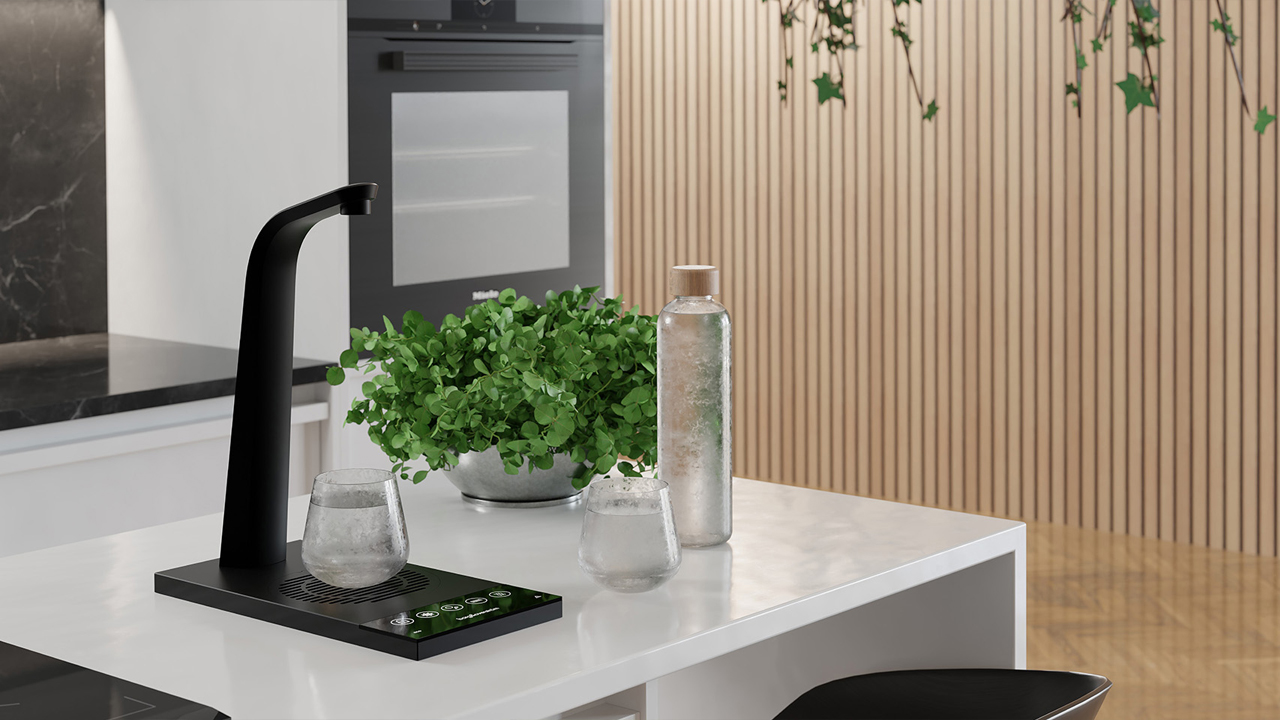
- Drinking water treatment (iron removal, manganese removal), Drinking water and non-potable water supply, Service water supply (large industrial customers), Water dispensers for businesses (rental/purchase options incl. maintenance), Tank cleaning, Valve inspection, Water loss analysis, Leak detection
- Materials
- Groundwater (Halterner Sanden / Recklinghäuser Sandmergeln), Surface water from the Ruhr, Service water (Seewasserwerk Dorsten 'Blauer See')
- Certificates
- ISO 14001, EMAS
- Founded
- 1912
- Employees
- 467
- Industries
- Water supply (private, industrial and commercial customers), Energy generation (hydropower)
- 01
Water extraction (groundwater and surface water)
- 02
Treatment (iron removal, manganese removal, Mülheim process, UV disinfection)
- 03
Control and monitoring via central control room
- 04
Distribution via pipeline network
- 05
Customer service and metering inspection
Extraction and Treatment
Groundwater (Halterner Sanden / Recklinghäuser Sandmergeln)
Extraction from wells at 80 to 120 meters depth; treatment by iron removal and manganese removal.
Surface water from the Ruhr
Treatment according to the Mülheim process with ozone, activated carbon filters and multi-day soil passage (multi-barrier system).
Service water (Seewasserwerk Dorsten 'Blauer See')
Supply of large industrial customers from a reservoir with a volume of around 280,000 m³.
Waterworks and Locations
Mülheim-Styrum/Ost
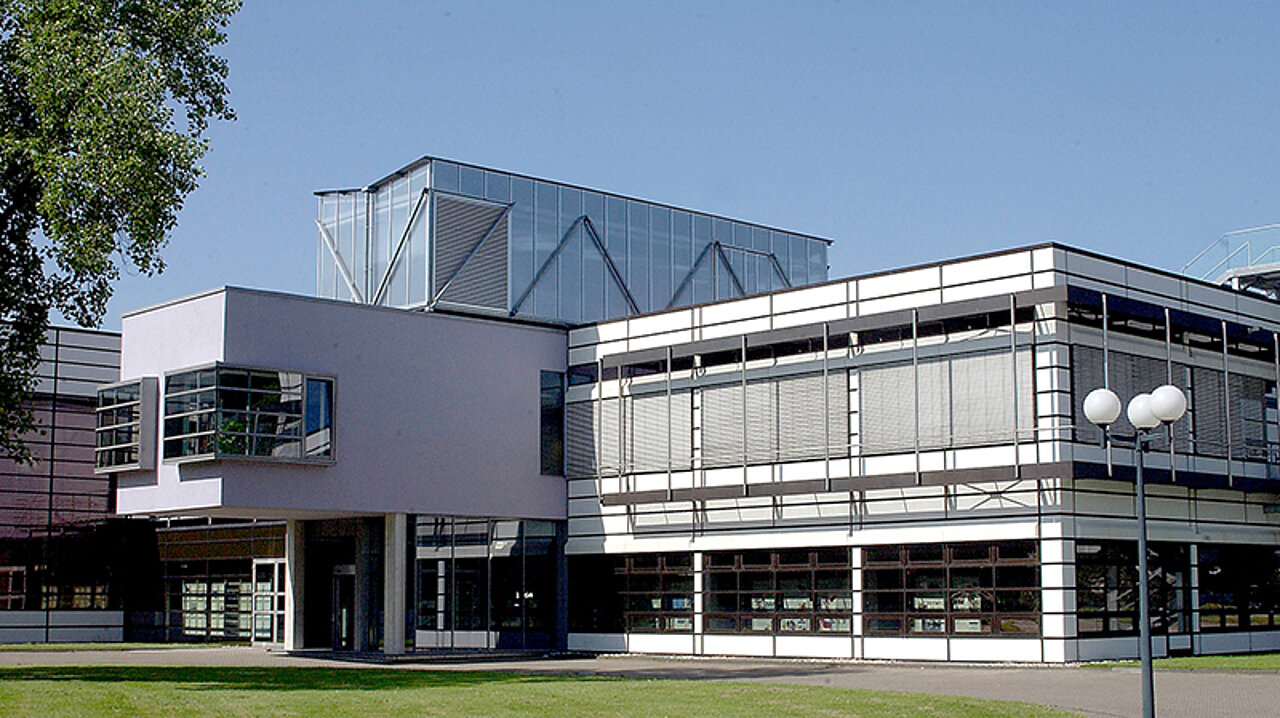
DERuhr waterworks (drinking water), central control room, testing laboratory, main workshops, headquarters
- Materials
- Surface water from the Ruhr
- Central control room
- Testing laboratory
- Mülheim process variant 1
- UV system
- Emergency chlorination system
- Aquatorium
Mülheim-Styrum/West
DERuhr waterworks (drinking water)
- Materials
- Surface water from the Ruhr
- Mülheim process variant 2
- UV system
- Emergency chlorination system
Essen-Kettwig
DERuhr waterworks 'vor der Brücke' (drinking water for the southern supply area)
- Materials
- Surface water from the Ruhr
- Mülheim process variant 2
- UV system
- Infiltration trench drains
- Cutoff wall
Dorsten-Holsterhausen
DEGroundwater works (drinking water)
- Materials
- Groundwater (Halterner Sanden)
- 64 wells
- Iron/manganese removal
- Sludge water treatment
Dorsten 'Blauer See'
DELake waterworks (service water for large industrial customers)
- Materials
- Surface water from Hammbach/Wienbach
- Reservoir (280,000 m³)
- Gravity-flow pipeline
Reken-Melchenberg
DEGroundwater works (drinking water) / Service Point Dorsten/Reken
- Materials
- Groundwater (Halterner Sanden)
- 6 wells
- Phosphate dosing
- Fully automated operation
Velen-Tannenbültenberg
DEGroundwater works (drinking water)
- Materials
- Groundwater (Recklinghäuser Sandmergel)
- 3 wells
- Iron removal plant
- Settling tanks
Kahlenberg
DEHydropower plant on the lock island in Mülheim (green electricity)
- Materials
- Ruhr water
- Francis double-chamber turbine
- Two Kaplan turbines
- Kahlenberg weir system
Services
Inside the production
Industries
Processes & technical limits
| Processes | Tolerance | Max. part | Weight | Lot size | Materials |
|---|---|---|---|---|---|
| Drinking water treatment (iron removal, manganese removal)Other | – | – | – | – | Water |
Additional services
Reference customers
Quality and Certification
An independent testing laboratory regularly examines the drinking water at the waterworks outlet and in the distribution network; all limit values of the Drinking Water Ordinance are undershot. The operating systems for environmental and occupational safety, information security, resilience and energy use are consolidated in an Integrated Management System (IMS).
| Evidence | Mülheim-Styrum/Ost |
|---|---|
| ISO 14001 | |
| EMAS |
History
- 1871
Foundation stone for today's Styrum/Ost Ruhr waterworks: merger of the Oberhausen waterworks and the Thyssen & Cie waterworks.
- 1912
Foundation of RWW; operation of the Styrum/Ost Ruhr waterworks has been its responsibility ever since.
- 1922-1926
Construction of the Kahlenberg hydropower plant on the lock island in Mülheim.
- 1927
Commissioning of the Dorsten-Holsterhausen groundwater works.
- 1944
RWW takes over operation of the Essen-Kettwig 'vor der Brücke' waterworks.
- 1955
Commissioning of the Mülheim-Styrum/West Ruhr waterworks and the Dorsten 'Blauer See' lake waterworks.
- 1958
Commissioning of the Velen-Tannenbültenberg groundwater works.
- 1968
Commissioning of the Reken-Melchenberg groundwater works.
- 1974
Capacity increase of the Dorsten-Holsterhausen waterworks to 29 million m³/year through the Üfter Mark well gallery.
- 1982
Operation of the Styrum/Ost Ruhr waterworks according to the Mülheim process, variant 1.
- 2018
UV system replaces chlorination at the Styrum/Ost waterworks (from March).
- 2026
Safety chlorination at the Essen-Kettwig waterworks replaced by a UV system.