
Manufacturer of thermistors and temperature sensors for a measuring range of −50 °C to 1,000 °C

株式会社芝浦電子 (Shibaura Electronics Co., Ltd.)
New on Amplifa
About Shibaura Electronics
Shibaura Electronics Co., Ltd. (株式会社芝浦電子) is a Japanese manufacturer of thermistors and temperature sensors. The company develops and manufactures sensor elements as well as complete sensor systems for temperatures from −50 °C to 1,000 °C. The products are used in multiple industries, including the automotive industry, HVAC (heating, ventilation and air conditioning), household appliances such as refrigerators, freezers and cooking appliances, plumbing and construction, OA office equipment, and industrial equipment such as machine tools and water heaters, as well as medical technology. The company presents itself with language versions in Japanese, English and Chinese and is organized as a stock corporation (株式会社). In 2026, Shibaura Electronics was recognized as a health-oriented company (健康経営優良法人2026, small and medium-sized enterprise category). Further location and key figure information is not documented in the available sources.
- Processes
- Manufacture of thermistors and temperature sensors (−50 °C to 1,000 °C)
- Materials
- Thermistor elements, Temperature sensors
- Industries
- Automotive industry, HVAC (heating, ventilation and air conditioning), Household appliances, Plumbing/construction, OA office equipment, Industrial equipment (machine tools, water heaters, cooling and
- 01
Development
- 02
Manufacture of thermistor elements
- 03
Production of temperature sensors
Materials/Processes
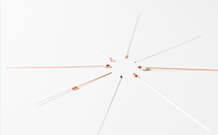
Thermistor elements
Temperature-dependent resistance elements as the core product for sensor elements.
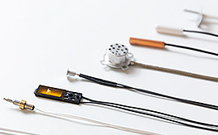
Temperature sensors
Finished sensor assemblies for measuring ranges from −50 °C to 1,000 °C.
Components
Inside the production

Industries
Additional services
History
- 2026
Recognition as a health-oriented company (健康経営優良法人2026, small and medium-sized enterprise category).
- 2026
Relocation of the company headquarters (announcement of February 2026).