Conversion of CO₂-rich blast furnace gases into chemicals such as methanol and ammonia

thyssenkrupp Carbon2Chem
Duisburg · DortmundNew on Amplifa
About thyssenkrupp Carbon2Chem®
thyssenkrupp Carbon2Chem® is a project of thyssenkrupp Decarbon Technologies funded by the Federal Ministry of Education and Research (BMBF) that deals with the utilization of CO₂-rich blast furnace gases. As part of the project, blast furnace gases from steel production are converted by chemical processes into valuable basic chemicals such as methanol, ammonia and plastics. To this end, established technologies of the Group are integrated, including flue gas cleaning systems from thyssenkrupp Uhde, PureOxyfuel cement plants from thyssenkrupp Polysius and alkaline water electrolyzers from thyssenkrupp nucera. Since 2018, the project team has been operating, together with partners from industry and science, a 2-MW pilot plant for alkaline water electrolysis at the thyssenkrupp Steel Europe site in Duisburg, where individual processes are tested under real industrial conditions. With more than 144 million euros in BMBF funding and, since 2025, a third project phase with 50 million euros in funding, the findings are being scaled up to industrial level. The goal is the decarbonization of industrial processes in hard-to-abate sectors such as steel, cement, ammonia and coking plants.
- Site
- Dortmund
- Processes
- Alkaline water electrolysis (AWE) – plant engineering for green hydrogen, Chloralkali electrolysis – plant engineering, Conversion of blast furnace gases into chemicals (methanol, ammonia, plastics) – Carbon2Chem®, Chemical plant engineering (design, construction, commissioning), Flue gas cleaning systems (thyssenkrupp Uhde), PureOxyfuel cement plants (CCUS-ready, thyssenkrupp Polysius), Green methanol production, Green ammonia production
- Materials
- Alkaline water electrolysis (thyssenkrupp nucera), Flue gas cleaning systems (thyssenkrupp Uhde), PureOxyfuel cement plants (thyssenkrupp Polysius), Chemical CO₂ conversion
- Certificates
- BMBF-funded industrial scale
- Industries
- Steel, Cement, Coking plants, Chemicals, Ammonia, Hard-to-abate sectors
- 01
Capture of blast furnace gases
- 02
Flue gas cleaning (thyssenkrupp Uhde)
- 03
Alkaline water electrolysis (thyssenkrupp nucera)
- 04
Chemical conversion into methanol/ammonia
- 05
Scaling up to industrial application
Technologies & Processes
Alkaline water electrolysis (thyssenkrupp nucera)
Production of green hydrogen on an industrial scale, including the 20-MW standard module scalum.
Flue gas cleaning systems (thyssenkrupp Uhde)
Cleaning of industrial exhaust gas streams as a precursor stage for CO₂ utilization.
PureOxyfuel cement plants (thyssenkrupp Polysius)
CCUS-capable cement plants for separating CO₂ from exhaust gases.
Chemical CO₂ conversion
Conversion of CO₂-rich blast furnace gases into methanol, ammonia and plastics.
Sites
Duisburg
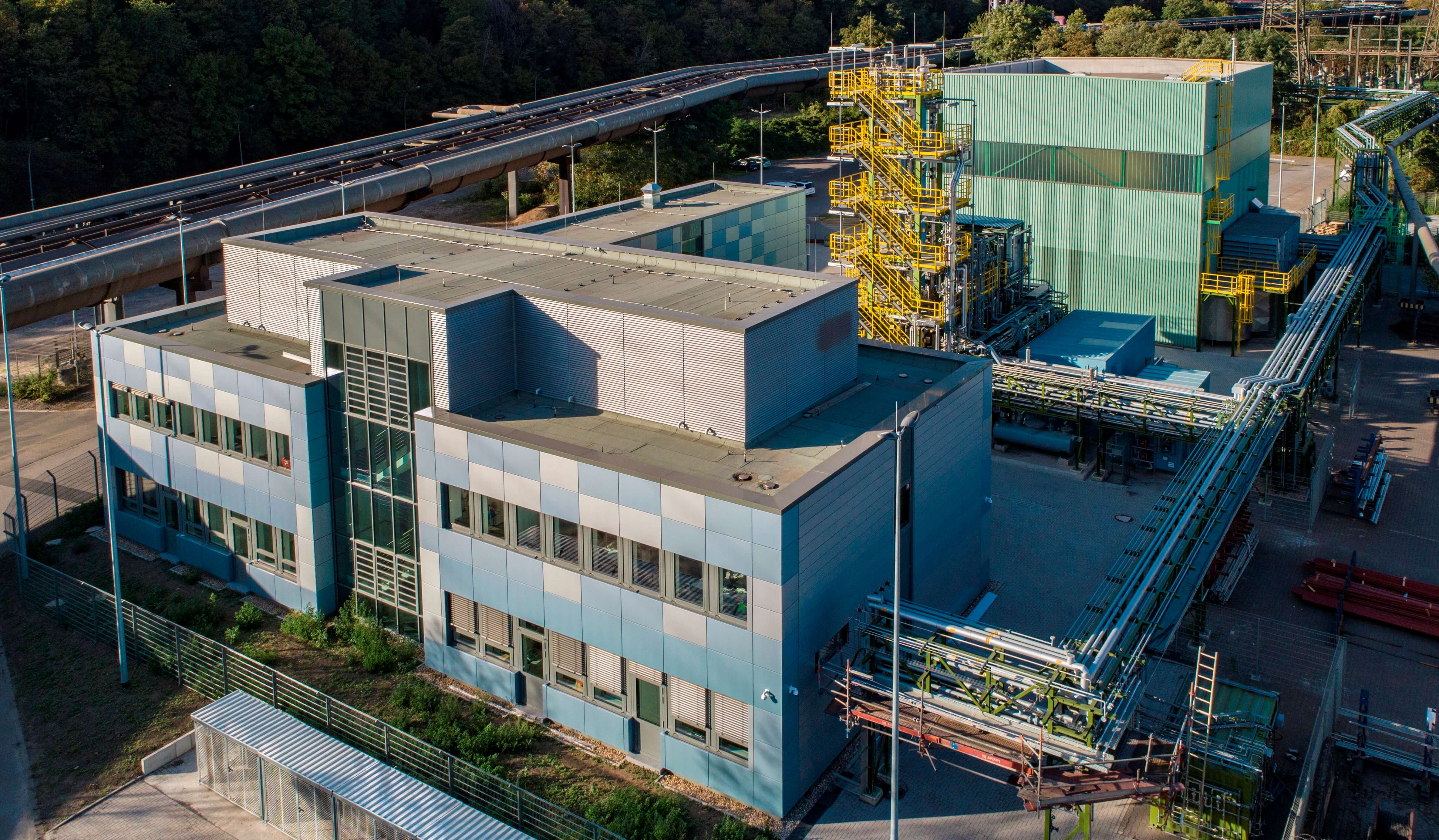
DEAlkaline water electrolysis pilot plant at the thyssenkrupp Steel Europe site
- Materials
- Blast furnace gases, hydrogen
- 2-MW alkaline water electrolysis pilot plant (since 2018)
Dortmund
DEHeadquarters of thyssenkrupp nucera (project partner, Decarbon Technologies segment)
- scalum 20-MW standard module for alkaline water electrolysis
Projects & Plants
Inside the production

Industries
Processes & technical limits
| Processes | Tolerance | Max. part | Weight | Lot size | Materials |
|---|---|---|---|---|---|
| Alkaline water electrolysis (AWE) – plant engineering for green hydrogenEngineering | – | – | – | – | – |
| Chloralkali electrolysis – plant engineeringEngineering | – | – | – | – | – |
| Conversion of blast furnace gases into chemicals (methanol, ammonia, plastics) – Carbon2Chem®Engineering | – | – | – | – | – |
| Chemical plant engineering (design, construction, commissioning)Engineering | – | – | – | – | – |
| Flue gas cleaning systems (thyssenkrupp Uhde)Engineering | – | – | – | – | – |
| PureOxyfuel cement plants (CCUS-ready, thyssenkrupp Polysius)Engineering | – | – | – | – | – |
| Green methanol productionEngineering | – | – | – | – | – |
| Green ammonia productionEngineering | – | – | – | – | – |
6 Anlagen & Maschinen
| Machine | Manufacturer / model | Quantity | Working area | Year built | Site |
|---|---|---|---|---|---|
| Alkaline water electrolyzer module “scalum” (20-MW standard module) | thyssenkrupp nucera scalum | – | – | – | – |
| Alkaline water electrolysis pilot plant 2 MW | thyssenkrupp nucera | 1 | 2 MW capacity | 2018 | Duisburg (thyssenkrupp Steel Europe) |
| Water electrolysis plant 20 MW (green ammonia) | thyssenkrupp nucera | 1 | 20 MW | – | Louisiana, USA |
| Electrolysis plant >2 GW (green hydrogen) | thyssenkrupp nucera | 1 | >2 GW | 2021 | NEOM, Saudi Arabia |
| Hydrogen plant 200 MW | thyssenkrupp nucera | 1 | 200 MW | 2022 | Port of Rotterdam, Netherlands |
| Electrolysis plant (steam electrolysis, pilot) | thyssenkrupp nucera / Fraunhofer IKTS | 1 | – | 2025 | Arnstadt, Thuringia |
Additional services
Reference customers
Research & Partners
The research is carried out in cooperation with leading industrial partners and research institutions such as the Max Planck Institute for Chemical Energy Conversion and Fraunhofer UMSICHT. Processes are tested under real industrial conditions with real blast furnace gases in the pilot plant in Duisburg.
| Evidence | Duisburg |
|---|---|
| BMBF-funded industrial scale |
Project History
- 2016
Start of the thyssenkrupp Carbon2Chem® research project to build a CO₂ value chain
- 2018
Commissioning of a 2-MW pilot plant for alkaline water electrolysis at the thyssenkrupp Steel Europe site in Duisburg
- 2023
Carbon2Chem® has received more than 144 million euros in BMBF funding
- 2025
Start of the third project phase with 50 million euros in BMBF funding; new partners BASF, EY Consulting, FernUniversität in Hagen and Universität Duisburg-Essen; research on Sustainable Aviation Fuels and a new generation of electrolyzers