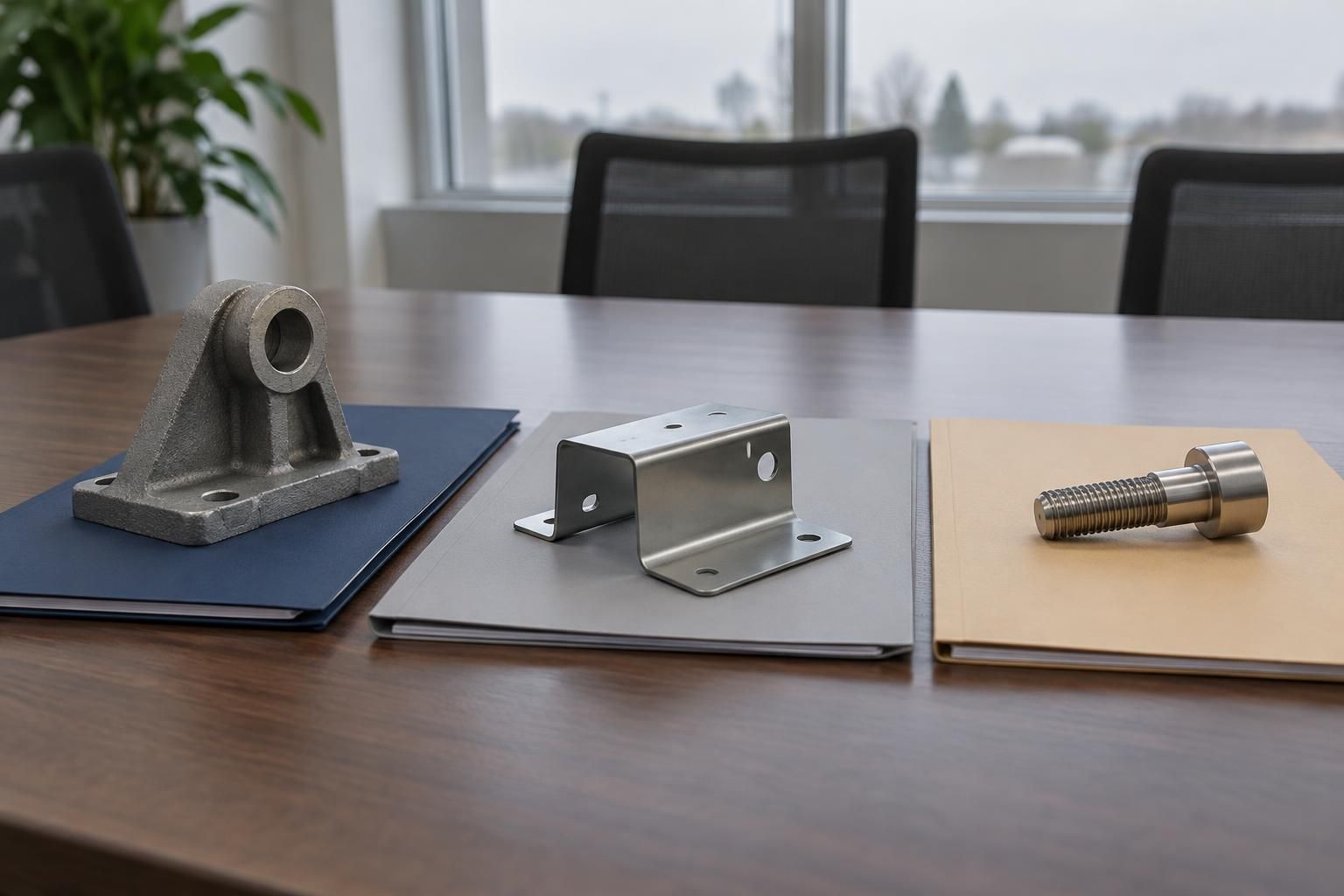
Goods receiptthe interface between delivery performance and availability
Procurement glossary · Updated · 8 min read
Also known as: Goods Receipt, Goods Acceptance, Goods Inward, Incoming Goods
Short answer
- Goods receipt is the acceptance, inspection and posting of delivered goods by the receiving company.
- It links logistics, quality assurance and accounting and forms the basis for invoice release and supplier evaluation.
- A risk-based, digitally recorded goods receipt process secures stock data, availability and payment control.
Goods receipt refers to the physical and accounting takeover of goods and materials by the receiving company. It links logistics with procurement, quality assurance and financial accounting and is therefore one of the central interfaces in operational purchasing. A well-organised goods receipt secures stock data, on-time delivery evaluations and invoice verification alike. Errors at this point have a direct impact on production, liquidity and supplier evaluation.
Key facts
- Goods receipt comprises the arrival, counting, identification, inspection and accounting posting of the delivered goods.
- In practice, a distinction is made between purely physical goods receipt and qualitative incoming goods inspection.
- Goods receipt is the data basis for KPIs such as delivery performance and the complaint rate.
- Incoming inspection often follows a risk classification of the supplier rather than a full inspection of all shipments.
- Without a clean goods receipt, the three-way match (purchase order, goods receipt, invoice) and thus payments on time cannot be reliably carried out.
- Digitalisation using barcodes, RFID and mobile recording devices typically significantly reduces recording errors.
Contents
Definition: goods receipt
Goods receipt is the process by which delivered goods are received, checked and transferred into the responsibility of the receiving company. It comprises both the physical acceptance and the systematic posting, whereby the stock of warehouse material is increased. Legally, goods receipt typically marks the transfer of risk and, in part, of ownership, unless the respective contract and the Incoterms provide otherwise.
Distinction from goods acceptance
Colloquially, goods acceptance and goods receipt are often used synonymously. In technical terms, however, goods acceptance refers only to the physical act of receipt, whereas goods receipt additionally includes identification, inspection and posting. Only with the accounting recording is the goods available for downstream processes such as planning, production or invoice verification.
Position in the procurement process
Goods receipt concludes the ordering process and forms the counterpart to the supplier's outgoing invoices. It provides the decision basis for payment releases and at the same time feeds the supplier evaluation: delivery performance, quantity accuracy and the complaint rate can be derived from receipt data. Goods receipt is therefore also a control instrument of procurement policy and not merely a logistics process.
Procedure and methods of goods receipt
A structured goods receipt follows largely standardised steps in practice. The exact scope depends on the industry, the criticality of the material and the supplier risk. Important for technical buyers: the depth of inspection is frequently defined along the supplier classification and the material risk.
Receipt, identification and quantity recording
First, the arrival, accompanying documents and condition of the packaging are checked. The shipment is then identified – typically via purchase order number, delivery note or barcode or RFID label – and the quantity is recorded. Deviations from the purchase order are documented immediately, as they form the basis for complaints, blocking and later data maintenance in demand planning.
- Comparison of delivery note, purchase order and actual contents
- Recording of batch, best-before date or production date for relevant materials
- Documentation of transport damage before acceptance or with reservation
Incoming goods inspection and AQL sampling
Incoming goods inspection covers identity, quantity, condition and – where required – function or material properties. For large quantities or serial parts, an incoming goods inspection using an AQL sample is frequently carried out instead of a full inspection, evaluated according to recognised sampling plans. The inspection effort is typically tiered according to material criticality and historical supplier performance: proven suppliers receive reduced inspection depth, while new or conspicuous suppliers receive intensified controls.
Posting, warehousing and release
After passing the inspection, the goods receipt is posted in the ERP system; inspected goods move to the warehouse or directly to production, blocked goods to a quarantine store. The posting time is relevant for the three-way match with invoice and purchase order and thus for the on-time payment rate vis-à-vis the supplier. With direct delivery to production or to customers, the intermediate warehouse is omitted, which reduces throughput time but requires the incoming inspection to be organisationally adapted.
Key KPIs around goods receipt
Goods receipt provides raw data for key procurement and logistics KPIs. Those who evaluate this data systematically identify supplier risks early and can argue control measures credibly in quarterly business review (QBR) meetings.
On-time delivery and quantity accuracy
Delivery performance measures whether deliveries arrive in the agreed quantity and on the agreed date. It is typically measured against the confirmed or agreed delivery date, not against the desired date of the purchase order. In practice, values well above 95 per cent are considered a good benchmark, whereby critical A-materials justify stricter requirements.
Complaint and reject rate
The complaint rate puts rejected deliveries or parts in relation to the total quantity and feeds the supplier evaluation as well as the supplier classification. Blocked stock and rework effort are also relevant, as they indirectly increase the total landed cost (TLC). A low complaint rate can justify the inspection depth at goods receipt and free up inspection capacity.
Throughput time at goods receipt
The period between arrival and availability in the system – the so-called receipt throughput time – influences the actual lead time from the planner's perspective. Long dwell times of uninspected goods distort stock and availability data and increase the pressure on the safety stock calculation. Common target values range from hours to one working day, depending on the industry.
Risks and controls in goods receipt
Goods receipt is a classic control point against fraud, short deliveries and quality risks. At the same time, it entails operational risks: incorrect postings distort stock levels, and company-wide an incomplete receipt is a frequent cause of supply shortages and increases in the backorder rate.
Typical sources of error
Common problems are incorrectly declared shipments, over- or under-delivery, labelling errors, damaged packaging and late deliveries outside agreed time windows. Receipts that are documented but not posted – so-called shadow stock – also cause discrepancies during stocktakes. Clear acceptance time windows, standardised labelling requirements and loading rules in the supplier contract effectively reduce these risks.
Controls and release processes
An essential control is the three-way match between purchase order, goods receipt and invoice; it prevents payments for quantities not delivered or delivered in excess. For critical materials and first deliveries, series release is added, in which samples are qualified before series supply. For major projects or advance payments, a performance bond can additionally be agreed; whether this is necessary should be examined legally on a case-by-case basis.
Supplier-specific inspection depth
The inspection depth should be tiered on a risk basis: audited and consistently good suppliers receive sampling or skip-lot inspection, while new suppliers and materials from countries with increased country risk in procurement receive intensified controls. In addition, compliance requirements such as a supplier code of conduct stipulate packaging, labelling and documentation requirements, which can be verified on a sample basis at goods receipt.
Organisation and interfaces
Goods receipt involves several departments and only works if roles and information channels are clearly regulated. In smaller companies it is often carried by the warehouse and planning function; in larger organisations there are dedicated receiving and inspection areas.
Cooperation between procurement, quality and logistics
Procurement defines contractual requirements, quality assurance specifies inspection criteria and inspection scope, and logistics organises the physical process and capacities. Regular coordination – for example as part of a quarterly business review (QBR) with strategically important suppliers – helps to solve recurring receipt problems structurally rather than repeatedly fending them off. Clear escalation paths for rejected shipments shorten decision times.
Goods receipt for MRO and capex
Not every goods receipt should be treated identically: for operating and consumable materials, a simplified inspection is typically sufficient, as may be regulated in the procurement policy on MRO vs. capex. For capital goods and plants, by contrast, documentation, CE conformity, inspection certificates and commissioning data are part of the receipt process. Differentiated processes save effort without jeopardising control.
Current developments: digitalisation and sustainability in goods receipt
Goods receipt is increasingly being digitalised and at the same time becoming a place of evidence for sustainability and compliance requirements. Both are changing the demands on processes, systems and staff qualifications.
Automation and data quality
Barcodes, RFID, mobile recording and electronic delivery notes (delivery note via EDI) reduce manual input and improve data quality. The prerequisite is a well-maintained data catalogue with unambiguous material master data; otherwise digitalisation creates duplicated effort without benefit. Open interfaces with the supplier – such as advanced shipping notifications – make arrivals plannable and enable fine planning of inspection capacity.
Sustainability and proof of origin
Increasingly, evidence relevant to reporting obligations and customer requirements is recorded at goods receipt: origin information, material certificates and data on the recycled content ratio. Similarly, in the case of material substitution (ESG) – for example switching to recycled or lower-emission materials – incoming inspection and documentation must be adapted, as new properties need to be inspected. What exactly is owed depends on the contract, industry and regulation and should be clarified legally on a case-by-case basis.
Typical metrics
| Metric | Benchmark | Context |
|---|---|---|
| Delivery Performance | > 95% | On-time delivery based on the confirmed delivery date; critical A-parts assessed more strictly |
| Complaint rate | < 1–2% | Rejected parts as a proportion of total quantity; varies by industry |
| Receipt throughput time | < 1 working day | Time from arrival to system availability |
| Goods receipt posting accuracy | > 99% | Proportion of error-free postings; basis for inventory quality |
Typical practical benchmarks – they vary by industry, part and contract.
Practical example
A medium-sized mechanical engineering company with around 250 employees repeatedly experienced discrepancies between posted and actual stock, delayed invoice releases and conflicts with production over 'missing' parts. The root cause analysis showed: goods receipt postings were sometimes made only days after arrival, inspection requirements were uniformly high, and data for supplier evaluations was missing. The company therefore introduced a tiered receipt process and digitalised the recording.
- Risk-based inspection depth: full inspection for new and critical suppliers, AQL sampling for proven sources
- Mobile posting directly at acceptance using barcodes, enabling same-day availability
- Introduction of a three-way match with automatic blocking in the event of deviations
- Monthly evaluation of delivery performance and complaint rate as a basis for supplier meetings
Conclusion
Goods receipt is more than a logistical intermediate step: it secures stock data, protects against payments without consideration and provides the data basis for supplier management. Companies benefit when they tier inspection depth on a risk basis, digitalise recording and make clear agreements with suppliers. Clear roles between procurement, quality and logistics prevent friction losses at the interface. Those who consistently evaluate receipt data identify supplier risks earlier and can reliably improve KPIs such as delivery performance. A professionally organised goods receipt thus pays directly into availability, costs and supplier relationships.
Frequently asked questions
What is included in goods receipt?
Goods receipt comprises the physical acceptance of the delivery, the check of identity, quantity and condition, the quality inspection to the agreed extent and the accounting posting in the ERP system. Depending on the material and supplier risk, a documented inspection with an inspection report is added. Only after posting is the goods considered available for planning, production and invoice verification.
What is the difference between goods acceptance and goods receipt?
Goods acceptance is purely the physical receipt of the shipment including a visual check of the packaging. Goods receipt additionally covers identification, inspection and the posting-related stock increase. Only the complete goods receipt makes the goods usable for downstream processes.
When are goods inspected at goods receipt?
In practice, checks are carried out in stages: for every delivery, quantity, identity and transport damage are checked; qualified properties are checked depending on material criticality and supplier history. For proven suppliers, an incoming goods inspection using an AQL sample or skip-lot inspection is often sufficient; for new sources, intensified controls up to 100% inspection apply. The tiering should be set out in writing in quality management.
Why is goods receipt important for invoice verification?
Without a posted goods receipt, there is no proof that the ordered service was actually rendered. In the three-way match between purchase order, goods receipt and invoice, quantity, price and delivery date are compared; payment is only released once they match. A complete goods receipt also enables payments on time and improves the on-time payment rate vis-à-vis the supplier.
Which KPIs are measured at goods receipt?
Typical KPIs are delivery performance (on-time delivery), quantity accuracy, the complaint rate and the throughput time between arrival and system availability. Blocked stock ratios and inventory discrepancies are also meaningful indicators. These figures feed into supplier evaluation and support decisions in supplier classification.
What happens in the event of a defect or deviation at goods receipt?
Deviations are documented immediately and the affected goods are typically blocked so that they do not enter production. A notice of defects is then issued to the supplier within the contractually agreed deadlines; the specific handling is governed by the respective purchase contract. The incident is recorded and feeds into the complaint rate and supplier evaluation.