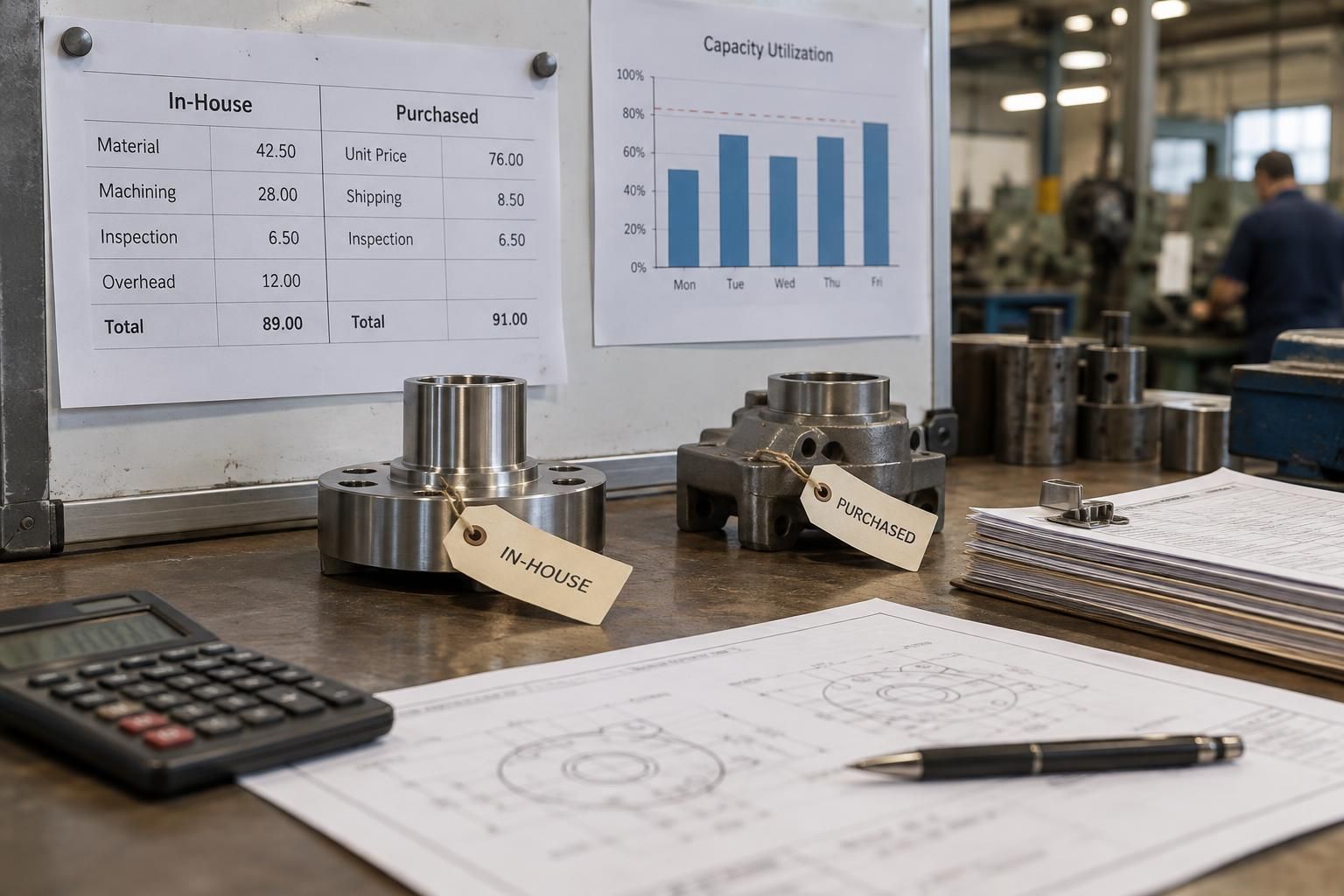
Price and Condition MaintenanceThe Foundation of Transparent and Robust Procurement Contracts
Procurement glossary · Updated · 8 min read
Also known as: Condition maintenance, Price maintenance, Terms management, Price and Condition Management, Price master data maintenance
Short answer
- Price and condition maintenance is the systematic management of all prices, discounts, surcharges and delivery conditions in procurement contracts and systems.
- It ensures that purchase orders, contracts and invoices are consistent and that negotiated savings are actually realised.
- Success factors are a clear approval process, clean master data quality and regular checks of condition data.
Price and condition maintenance refers to the systematic recording, updating and management of all prices, price adjustment clauses and delivery conditions in procurement contracts and master data. It ensures that purchase orders, pricing models and contractual reality are consistent and forms the data basis for cost control, budget planning and supplier evaluation. In practice, the quality of this maintenance determines the meaningfulness of procurement KPIs and the avoidance of costly incorrect orders.
Key facts
- Price and condition maintenance covers prices, discounts, surcharges, payment terms, volume tiers and price adjustment mechanisms.
- It is the foundation for correct order values, budget compliance and meaningful procurement KPIs.
- Typical objects of maintenance are one-off conditions, framework agreements and dynamic adjustment clauses.
- Without regular maintenance, price discrepancies between order and invoice as well as follow-up claims loom.
- Automated catalogue and ERP integrations significantly reduce the manual effort.
- Deadlines, responsibilities and approval rules are key requirements for process organisation.
Contents
Definition: price and condition maintenance
Price and condition maintenance is the ongoing management of all price- and condition-related agreements between procurement and suppliers in the company's systems. It covers the maintenance of prices, discounts, surcharges, tiers, payment and delivery terms as well as the updating of contract and material master data.
Distinction from price negotiation
Price negotiation is a one-off or recurring event; price and condition maintenance, by contrast, is a continuous process. Negotiated results only become contract-compliant and system-consistent reality through consistent maintenance. In practice, it frequently becomes apparent that major savings potential fails not at the negotiation but at implementation: negotiated discounts never reach the ordering systems, outdated prices remain in catalogues, or surcharges such as a freight surcharge are applied twice or not at all. Maintenance is thus the operational hinge between negotiation management and order processing and defines what procurement actually realises.
Position within the procurement process
Maintenance typically begins after the conclusion of a contract or following a tender and accompanies the entire term. It feeds several downstream processes: enquiries and purchase orders, invoice verification, supplier management and reporting. Cleanly maintained conditions also facilitate working with a should-cost library, because cost drivers and price differentiation remain systematically traceable. If maintenance lapses, both the Category Vision and operational steering lose their data basis – decisions are then made on unreliable figures.
Objects and fields of condition maintenance
The scope of maintenance extends far beyond the pure unit price. If only base prices are maintained, discrepancies quickly arise in day-to-day processing, which manifest themselves in follow-up claims, clarification effort and poor data quality.
Price components in detail
Typically, maintenance covers unit prices, volume tiers, annual volume discounts, bonuses and rebates, tooling and set-up costs, freight and packaging components as well as special surcharges such as a raw material or freight surcharge. Currencies, price validity periods and price levels by region or plant delivery address are also part of it. For contract manufacturing and other services, hourly rates, machine rates and mark-ups are added. The more complex the pricing structure, the more important structured data management is instead of scattered Excel lists in individual buyers' inboxes.
Conditions beyond price
In addition to prices, delivery and payment terms are maintained: payment terms and early payment discount periods, delivery terms according to Incoterms such as EXW or CFR, minimum order quantities, price-fixing guarantees and service levels. Secondary agreements such as consignment stock, contractual penalties or specific quality agreements around a goods receipt with quality inspection also have a conditional character. It is important that every agreement is assigned a clearly defined validity period and scope of validity (supplier, material, plant) so that systems and processors can make unambiguous decisions.
Price adjustment clauses
For medium- to long-term contracts, the maintenance of index and adjustment formulas is central. Raw material index clauses, energy price escalator clauses or annual adjustments with defined limits are common. These clauses must be documented in a machine-readable form or at least with clear processes: Which index values apply, when is the adjustment made, who reviews and approves it? In practice, disputes with suppliers often hinge less on the clause itself than on its careless application – a well-maintained standard form with documented evidence prevents this.
Methods and approach in practice
Successful price and condition maintenance follows a clear process: recording, review, approval, distribution and regular monitoring. Without defined responsibilities and control routines, data becomes outdated faster than many organisations expect.
Process and approval rules
Every condition change should go through a standardised request, with reference to the underlying contract or negotiation result. A four-eyes approval – buyer prepares it, team leader or category manager approves it – is a common standard. Traceability is important: who changed which condition, when and on what grounds? The process organisation must clarify who maintains conditions during absences (deputisation) and how time-critical changes, such as short-notice surcharges, enter the system quickly yet in a controlled manner.
Master data quality and data maintenance
Maintenance stands or falls with data quality. Duplicate material numbers, poorly assigned supplier contracts or expired but still active conditions cause ordering errors. A data quality score for condition data helps make weaknesses measurable – for example the share of expired conditions, missing validity data or duplicate price entries. Regular cleansing cycles, often before annual budget or category reviews, are part of good practice. Catalogue content and suppliers' catalogue compliance requirements should be transferred to the same quality standard.
System support and automation
ERP and e-procurement systems offer condition tables, contract coverage and automatic price determination at order entry. In practice, it has proven effective to let negotiated conditions take effect exclusively via system contracts and to channel manual price entries through approval processes. Interfaces to supplier catalogues and price lists reduce transfer errors. Artificial intelligence increasingly supports the reconciliation of contract documents with system conditions and the detection of anomalies such as sudden price jumps.
Key KPIs for condition maintenance
The effect of maintenance can be measured. The following KPIs have proven themselves in practice and make deviations between contract and processing visible.
Contract coverage and price deviation
Contract coverage shows what share of the order volume is actually procured at maintained contract conditions; values well above 80 per cent are often considered desirable. The price deviation between order price and contract price should be close to zero; frequent deviations indicate missing maintenance or circumvention of the contract. Together, these two metrics show whether negotiation results are actually effective or exist only on paper.
Currency and data quality
The share of expired conditions and the average time until a negotiated price is uploaded to the system characterise process speed. In addition, a data quality score for condition master data provides an overall picture. These metrics are suitable for regular reviews within supplier and category management and frequently also feed into supplier ratings, since clean condition handling is part of supplier performance evaluation.
Risks and controls
Poorly maintained conditions create tangible risks: financial disadvantages, compliance breaches and friction with suppliers. Suitable controls are manageable but require discipline.
Typical risk areas
Common problems are outdated prices leading to over- or under-ordering, surcharges applied twice, invalid discount agreements and missing price validity periods that open the door to renegotiations by suppliers. Particularly critical are index clauses that no one actively monitors: adjustments are omitted or occur unexpectedly. Also, when contacts change or staff turnover in procurement is high, condition knowledge is lost if it lives only in people's heads and private spreadsheets.
Control and review mechanisms
Effective controls include reconciling contract documents with system conditions, periodic reports on expiring conditions and sample checks during invoice verification. Complaints from goods receipt with quality inspection and price discrepancies from accounts payable provide valuable feedback. In supplier audits, for example within a supplier audit programme, condition issues can be addressed in a structured way. For contract renewals, structured negotiation management helps ensure that outdated conditions are not simply carried over.
Legal and contractual aspects
Price maintenance commitments, clauses on raw material-driven adjustments and exclusion periods for follow-up claims have legal relevance. The design and application of such clauses should be legally reviewed on a case-by-case basis, as permissibility and interpretation are complex in detail. As a general rule: what is not documented and systematically maintained is difficult to enforce in a dispute. Clean documentation of adjustment decisions and index values is therefore also a legal safeguard.
Current developments and outlook
Price and condition maintenance is becoming measurably more professional. Digitalisation, more volatile sourcing markets and higher demands for traceability are driving this change.
Dynamic pricing models and market data
Instead of fixed annual prices, more and more companies are adopting dynamic models with formula clauses or short adjustment cycles. Market and index data feed automatically into condition calculations; demand sensing and a reconciliation process such as a consensus forecast help plan volumes – and thus price tiers – more realistically. In practice, this increases the maintenance effort per contract while reducing the risk of major one-off adjustments.
AI-supported review and digital contract integration
Tools for the automatic extraction of prices and conditions from contract documents shorten the path from negotiation to system. AI methods detect deviations between invoice, purchase order and contract price and generate targeted clarification cases. Reverse auctions and digitally run tenders also feed their results directly into condition tables where the system landscape allows. This reduces manual transfer errors, which historically have been one of the main causes of condition problems.
Typical metrics
| Metric | Benchmark | Context |
|---|---|---|
| Contract coverage | > 80 % | Share of order volume covered by contractual conditions; can be set higher depending on category |
| Price deviation order/contract | close to 0 % | Frequent deviations indicate maintenance or process gaps |
| Share of expired conditions | < 2 % | Share of active condition records without a valid period in the system |
| Data Quality Score (conditions) | > 95 % | Completeness and consistency of prices, validity periods and assignments |
Typical practical benchmarks – they vary by industry, part and contract.
Practical example
A mid-sized mechanical engineering company with around 60 active framework agreements found during its annual analysis that a significant proportion of purchase orders were placed at prices that deviated from the negotiated contract conditions. The causes were outdated price lists, discount agreements that were never uploaded and unused index clauses for steel components.
- Introduction of a standardised condition change request with four-eyes approval in the ERP system
- One-off cleansing of all condition data followed by quarterly validity reports
- Binding formula clauses for raw material and freight surcharges with a documented adjustment process
- Monthly report on contract coverage and price deviation as a standard KPI in the procurement meeting
Conclusion
Price and condition maintenance is not an administrative by-product but a significant lever for procurement success. It determines whether negotiated results actually arrive in day-to-day ordering and whether KPIs are reliable. Success factors are a clear process with approval rules, clean master data quality and regular controls. Companies that organise maintenance systematically reduce friction losses, strengthen their negotiating position and create the data basis for strategic decisions. The effort typically pays for itself quickly through avoided incorrect orders and enforced conditions.
Frequently asked questions
What exactly does price and condition maintenance include?
Maintenance covers prices, discounts, volume tiers, bonuses, surcharges such as freight or raw material surcharges, payment terms, delivery terms and validity periods. Price adjustment clauses and service levels are also part of it. The aim is for ordering systems, contracts and invoicing to be consistent.
Why is price and condition maintenance so important for buyers?
Without consistent maintenance, negotiated savings often go unused because old prices continue to be ordered or discounts do not take effect. Moreover, procurement KPIs are only meaningful if the data is properly maintained. Finally, good maintenance reduces follow-up claims and disputes with suppliers.
How often should prices and conditions be updated?
Immediately after every contractual change and at least once a year as a full reconciliation. In practice, automatic reports on expiring conditions have also proven their worth. With volatile raw material or freight markets, shorter cycles make sense.
Which KPIs measure the quality of condition maintenance?
Key metrics are contract coverage, price deviation between purchase order and contract, the share of expired conditions and a data quality score for condition master data. These metrics show whether negotiated conditions are actually taking effect.
Who is responsible for price and condition maintenance?
Primary responsibility typically lies with the respective buyer or category manager. A clear process organisation with defined responsibilities and a four-eyes approval is important. Deputisation arrangements prevent gaps during absence or staff changes.
How can index clauses be maintained effectively?
Index clauses should be documented and embedded in processes with clearly defined formulas, reference values and adjustment dates. A fixed calendar-based review cycle with documented evidence of the index values used is standard practice. This makes adjustments traceable and provable in the event of a dispute.