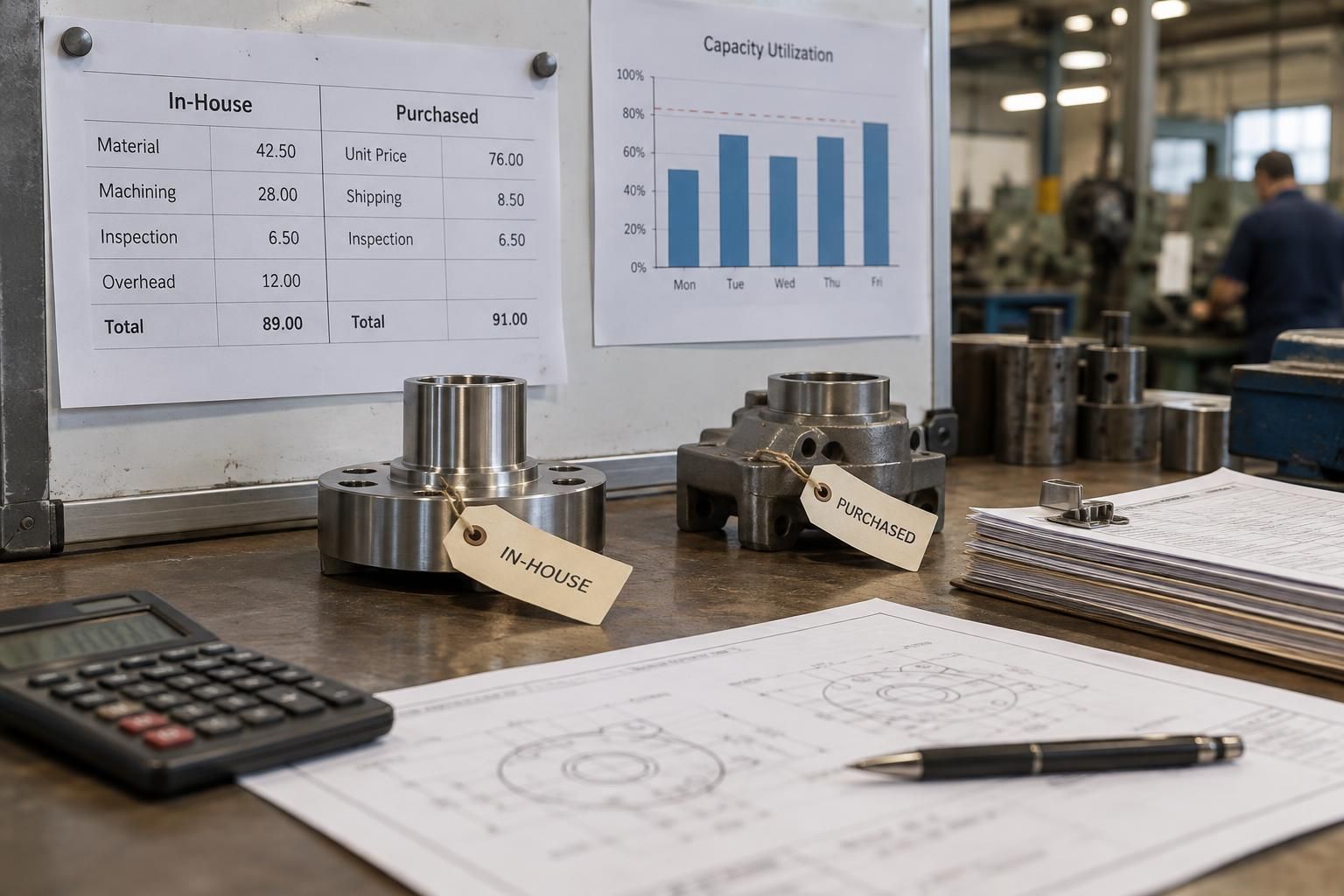
Price deviation workflowsystematically checking invoice prices against target values
Procurement glossary · Updated · 7 min read
Also known as: Price Deviation Workflow, Preistoleranzprüfung, Preisabweichungsprozess, Invoice Price Matching, Preisprüfung Rechnungseingang
Short answer
- A price deviation workflow is a rule-based process that automatically reviews price differences between purchase order and invoice.
- Line items outside defined tolerances are blocked and pass through tiered approval and clarification stages.
- It protects against overpayments, safeguards early payment discount deadlines and provides data for price negotiations and supplier evaluations.
The price deviation workflow is a defined review and approval process by which deviating prices between purchase order, delivery schedule and incoming invoice are identified, assessed and decided upon. It is a core element of invoice verification in industrial procurement and prevents price differences from being paid unchecked or operating policies from being violated. In practice it is frequently implemented digitally as part of substantive invoice verification. A properly configured workflow reduces excess costs, accelerates approvals and creates transparency on price discipline across the supplier portfolio.
Key facts
- A price deviation workflow defines the thresholds at which price differences between purchase order and invoice must be automatically reviewed and approved.
- Typical deviation tolerances in practice are in the low single-digit percentage range, depending on material group and contractual situation.
- The workflow connects inventory management, the procurement system and accounts payable, replacing manual case-by-case checks.
- Key metrics are the deviation rate, lead time and the recovered overcharge amount in euros.
- Clear escalation levels and four-eyes principles protect against unjustified payments and errors in price escalation clauses.
- Regular analyses of deviation root causes feed into price negotiations and supplier evaluations.
Contents
- Definition: price deviation workflow
- Methods and approach in the price deviation workflow
- Key KPIs of the price deviation workflow
- Risks and controls in the price deviation process
- Digital implementation and process integration
- Current developments and outlook
- Typical metrics
- Practical example
- Conclusion
- Frequently asked questions
Definition: price deviation workflow
The price deviation workflow describes the rule-based process that systematically captures, classifies and routes price differences between the ordered target price and the invoiced actual price for decision. It is a control instrument of invoice verification and compliance management in procurement. The workflow defines who may review, approve or reject which deviation and at what amount.
Distinction from quantity and delivery date deviations
Price deviations concern the purchase price per line item; quantity and delivery date deviations are handled separately, for example via AQL sample goods receipt inspection or delivery date monitoring. In integrated systems, all three checks run in parallel but with their own thresholds and responsibilities. This separation is important because price deviations are usually related to contracts or master data, whereas quantity and delivery problems have operational and logistical causes.
Positioning within substantive invoice verification
Substantive invoice verification comprises checking whether a delivery or service was ordered, delivered and invoiced at the correct price. The price deviation workflow automates the price portion of this check: the system compares invoice line items with purchase order or contract prices and routes differences beyond tolerance limits into an approval process. This relieves the burden on accounts payable and ensures that only verified amounts are paid.
Use cases in industrial procurement
Typical use cases are collective invoices with mixed line items, price updates following raw material escalation clauses, first deliveries after the start of production (SOP) with launch prices, and freight invoices checked against freight terms as part of a freight audit. In global sourcing with currency fluctuations, the workflow also helps distinguish permissible exchange rate and price differences from impermissible over-invoicing.
Methods and approach in the price deviation workflow
A functioning workflow consists of five building blocks: target price determination, tolerance definition, automatic matching, escalation and documentation. Without clean master data – such as the correct manufacturer part number (MPN) and maintained contract prices – every workflow only generates false alarms.
Defining target prices and price sources
The target price may come from the purchase order, framework or contract prices, a should-cost library or cost calculation data from the technical specification. For clause-based prices, for example with a raw material escalation clause, the system must map the calculation logic or forward the invoice to a clerk for manual calculation. A clear priority order of price sources is essential so that the system decides reproducibly in the event of conflicts.
Differentiating tolerance thresholds
In practice, tolerances are differentiated by material group, invoice amount and supplier in accordance with simple rules, and combined with early payment discount calculations such as 2/10 net 30. Tiered absolute and percentage limits are common: small amounts of a few euros per line item are tolerated as a matter of routine, while larger amounts are blocked even at low percentage rates. Stricter tolerances often apply to price increases than to price reductions in the company's favour.
Matching, clarification and approval
After automatic matching, line items above the tolerance enter a clarification list. The buyer checks whether there is a valid price change, a bonus, incorrect invoicing or a master data error. Depending on the amount, a multi-level approval scheme applies up to executive management; excessive charges are contested or the early payment discount deadline is stopped. Every decision is documented with a justification – this is a prerequisite for later analyses and external audit.
Key KPIs of the price deviation workflow
The workflow can only be steered if its impact is measurable. Core metrics can be derived directly from system data and are suitable both for supplier negotiations and for internal management reports. They should be discussed regularly within established reporting, for example as part of the S&OP cycle or monthly procurement reviews.
Deviation rate and excess costs
The deviation rate indicates how many invoice line items or invoice amounts lie outside the tolerance. The recovered overcharge amount in euros quantifies how much excess cost the workflow has prevented. Both figures should be broken down by supplier, material group and root cause so that systematic over-invoicing becomes visible.
Lead time and clarification rate
Lead time measures how long a blocked invoice takes from recording to approval. Long lead times jeopardise early payment discount deadlines and supplier relationships. The clarification rate shows what proportion of deviations is genuinely clarified rather than approved as a matter of routine – an important indicator of process discipline.
Master data quality as a guiding metric
Many deviations do not arise from bad intent but from faulty price master data, outdated manufacturer part numbers (MPNs) or missing contract assignments. The rate of master data-related deviations is therefore one of the most important metrics: when it falls, workload and friction losses fall too. Early warning indicators such as rising rates of new price creation help identify problems early.
Risks and controls in the price deviation process
Without an effective workflow, overpayments, lost early payment discounts and compliance violations loom. Conversely, an overly restrictive process can block the invoice run and annoy suppliers. The art lies in balanced controls.
Financial risks
The most common losses are undiscovered price increases contrary to the framework agreement, duplicate or incorrectly assigned line items, and incorrectly applied escalation clauses. In addition, early payment discounts may be lost if clarified invoices miss the payment due date. A systematic analysis of these effects also strengthens your position in price negotiations and when assessing risk diversification in the supplier portfolio.
Control and compliance mechanisms
Proven controls include the four-eyes principle for approvals above defined amounts, the strict separation of ordering and invoice approval, and periodic sample checks of line items already approved automatically. Changes to tolerance rules should themselves again be subject to an approval process. Supplier credit limits and creditworthiness assessments, for example via the DUNS number, can also be incorporated into extended workflows where payments are linked to price approvals.
Supplier-side causes and prevention
Many deviations can be prevented preventively: through clear acceptance criteria and price bindings in the contract, defined delivery concepts with uniform accompanying documents, and regular price reconciliations. When suppliers are informed of recurring deviation patterns, the error rate typically falls significantly. Persistent violations belong in supplier evaluation and escalation management – up to and including consideration in the award of new lots.
Digital implementation and process integration
The price deviation workflow thrives on integration with ERP, e-procurement and invoice management systems. The more complete the price and master data basis, the higher the degree of automation.
System architecture and interfaces
The workflow requires purchase order data, contract prices, invoice data and inventory data from a single source. Digital invoice intake formats and purchase-to-pay platforms significantly shorten the recording process. An auditable audit trail documenting every decision is important, including for external audits.
Automation and AI support
Modern approaches automatically classify deviation root causes, suggest clarification options or detect patterns such as recurring over-invoicing. In practice, the final decision on financially relevant deviations nevertheless remains with a human. However, AI-supported pre-classification noticeably reduces manual effort and prioritises cases by risk amount.
Current developments and outlook
The price deviation workflow is evolving from reactive invoice control into a proactive control instrument for procurement. The drivers are automation, rising raw material volatility and growing compliance requirements.
Price volatility and dynamic contracts
Raw material and energy price volatility mean that escalation price and index mechanisms are increasingly agreed. Workflows must then map this contract logic mathematically, otherwise every invoice escalates manually. Companies that maintain price formulas in a machine-readable form can calculate deviations automatically and escalate only genuine contract breaches.
Integration into procurement management and strategy
Deviation data is increasingly used as an early warning indicator of supplier risk – for example when price-increasing deviations point to financial distress or an imminent supplier failure risk. Deviation analyses also provide hard facts when there is a change of control at a supplier or ahead of upcoming price negotiations. In this way, the workflow connects operational invoice verification with strategic category management.
Typical metrics
| Metric | Benchmark | Context |
|---|---|---|
| Deviation rate | < 5 % | Proportion of invoice line items outside the tolerance; often significantly lower in mature processes |
| Clarification lead time | < 5 working days | Time from block to approval; longer durations jeopardise early payment discount deadlines |
| Recovered overcharge amount | individual | Prevented overpayments per year; core benefit of the workflow |
| Clarification rate | > 95 % | Proportion of deviations documented and clarified rather than approved as a matter of routine |
| Degree of automation | > 80 % | Proportion of line items automatically approved within tolerance |
Typical practical benchmarks – they vary by industry, part and contract.
Practical example
A mid-sized mechanical engineering company with around 40,000 invoice line items per year found that purchased components were frequently invoiced at excessively high prices even though framework prices had been agreed. The causes were outdated price master data and a purely manual invoice reconciliation. The company introduced a digital price deviation workflow with tiered tolerances and integrated clarification directly into the procurement team.
- Target prices from framework agreements and purchase orders stored in the system with a clear priority order
- Tolerance thresholds defined by material group and amount; approvals up to 5,000 euros anchored at team leader level
- Monthly deviation analysis by supplier as input for price negotiations and supplier evaluation
- Quarterly sample checks of approved line items by internal audit
Conclusion
The price deviation workflow combines invoice verification, compliance and procurement management in a single process. It prevents overpayments, creates cost transparency and provides reliable facts for negotiations and supplier management. Clean master data, realistically tiered tolerances and consistent root cause analysis are decisive. Those who merely process deviations instead of analysing them squander the real potential. Investments in automation and data quality typically pay for themselves quickly in practice.
Frequently asked questions
What is a price deviation workflow?
A price deviation workflow is a defined review process that automatically detects, classifies and routes price differences between purchase orders and incoming invoices for decision. It defines tolerance thresholds, approval levels and responsibilities. It therefore forms part of the substantive invoice verification in procurement.
What tolerance for price deviations is customary?
In practice, tolerances are often in the low single-digit percentage range, frequently combined with absolute euro limits per line item or invoice. The specific level depends on the material group, invoice value, contractual situation and internal control requirements. Price increases are usually tolerated less strictly than discounts.
How does price deviation checking work in SAP?
In common ERP systems, tolerance keys defined per purchase order line or supplier determine the percentage and absolute difference at which an invoice is blocked. Blocked items enter an approval workflow in which buyers review the deviation and either approve or raise a complaint. The exact configuration is system-specific and should be agreed on a case-by-case basis with IT and the responsible specialist departments.
Why are invoices blocked due to price deviations?
Invoices are blocked when the invoiced price deviates from the ordered or contractually agreed price and the difference exceeds the defined tolerance. This protects against unjustified or accidental overpayments. The block triggers a clarification process that documents the root cause and decides on approval.
Which KPIs belong to a price deviation workflow?
Key metrics include the deviation rate in percent, the recovered overcharge amount in euros, the lead time for blocked invoices and the clarification rate. The master data error rate is also useful as a root-cause metric. These values should be analysed regularly by supplier and material group.
Who approves price deviations in procurement?
This depends on the internal approval concept. A tiered scheme is common: small differences are approved by the clerk, medium ones by the buyer or team leader, and large amounts by procurement management or executive management. Amount thresholds, the four-eyes principle and documented justifications are essential.