Price Negotiation TechniquesApproach, Methods and KPIs for Technical Procurement
Procurement glossary · Updated · 7 min read
Also known as: Negotiation technique in procurement, Negotiation Techniques, Price negotiation, BATNA, Terms negotiation
Short answer
- Price negotiation techniques are structured methods for obtaining better terms from suppliers — from market analysis and target definition through to conversation management.
- The most important lever is a credible alternative (BATNA), combined with a cost breakdown of the quotation.
- Success is measured using the savings rate, total cost of ownership and supplier metrics, not the unit price alone.
Price negotiation techniques are structured procedures and argumentation strategies with which industrial buyers obtain better terms from suppliers. They range from preparation through market analyses and cost analysis to conversation management and contractual safeguards. For technical buyers, they are decisive for material costs, margins and the ability of their own production to deliver.
Key facts
- In practice, price negotiations in B2B procurement are frequently decided up to 80 per cent before the actual meeting — through analysis, target definition and alternatives.
- The BATNA (Best Alternative to a Negotiated Agreement) is a buyer's most important source of negotiating power.
- Cost driver analysis and should-cost analysis are the central preparation tools in technical procurement.
- A typical negotiation target is savings of around 2 to 8 per cent per negotiation round, depending on the market and volume situation.
- The foundation of all negotiation success is a sound market analysis and a clean supplier rating.
- Price negotiations should always be conducted on the basis of total cost of ownership rather than unit prices.
Contents
Definition: price negotiation techniques
Price negotiation techniques refer to all plannable methods, argumentation patterns and conversation techniques whose aim within the procurement process is to improve terms — in particular prices, but also payment terms, service levels and ancillary services — from the buyer's perspective. The term covers analytical preparation as well as psychosocial conversation management. They are to be distinguished from a mere request for quotation or tender, which only provides data from which negotiation targets can be derived.
Distinction from pricing and terms negotiation
Pricing is the supplier's prerogative; the buyer influences it only indirectly through demand, volume pooling and negotiating power. Price negotiation is the deliberate influencing of this process in direct exchange. It also covers secondary conditions such as Incoterms, payment terms, minimum order quantities or warranties, as these often offer more leverage in practice than the pure unit price.
Relevance for technical buyers
In technical procurement, prices are often difficult to compare: drawing parts, cast components or contract manufacturing can rarely be assessed using catalogue prices. Price negotiation techniques therefore rely particularly on cost breakdowns, should-cost calculations and a sound market analysis. In addition, quality requirements play a role, underpinned by measurement equipment management and Gage R&R — a higher price can be justified where delivery performance is demonstrably better.
Methods and approach: negotiating systematically
Successful price negotiations follow a structured process: preparation, target definition, conversation management and follow-up. Anyone who comes to the table unprepared typically negotiates over the position set by the supplier rather than over the supplier's cost drivers. The following building blocks have proven themselves in practice.
Preparation: market analysis, should-cost and objectives
The foundation of every negotiation is a market analysis: price indices, commodity developments, capacity utilisation and competitive quotations define the realistic range. Building on this, the buyer defines a target price, an expectation price and a walk-away price. A should-cost analysis breaks the price down into materials, manufacturing, set-up times, overheads and margin — it turns discussions about wishful prices into factual comparisons. For batch production, the lot size analysis according to Andler helps to quantify price benefits from batch size optimisation or changed packaging units.
Negotiating power: BATNA and alternatives
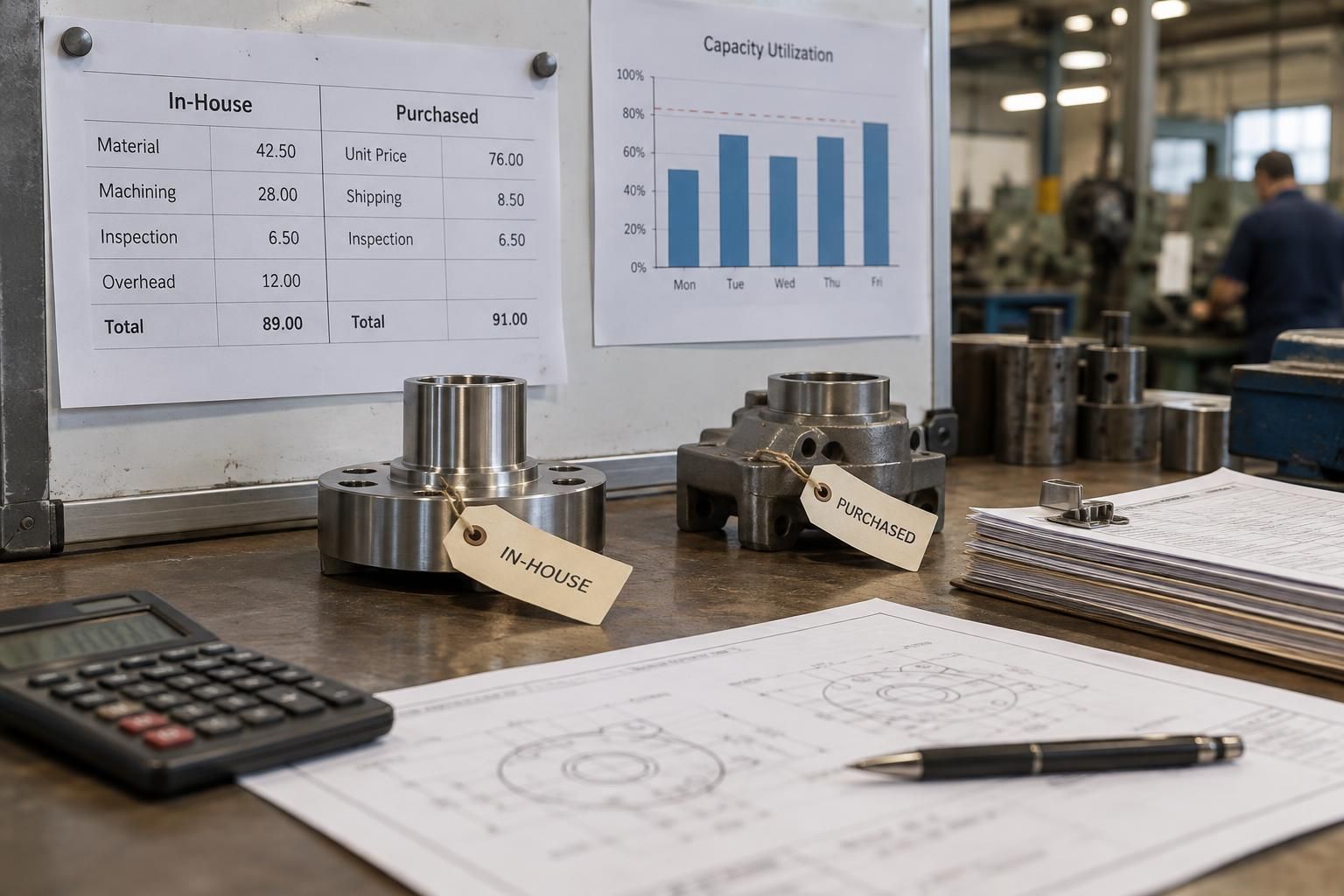
The most important negotiating power is a credible alternative — the BATNA. It can be a qualified second source, a material substitution (ESG) or an in-house production option. The buyer should know their own walk-away threshold and have agreed it internally. A weakness in the BATNA can be partially compensated, for example by pooling volumes across multiple sites or through clear category governance that consolidates assortments and points of contact.
Conversation management and tactics
Proven tactics include anchoring (setting a low but justifiable anchor price), breaking large demands into partial concession packages, and linking price concessions to counter-concessions such as longer contract durations, more reliable call-offs or an improved on-time payment rate. Active listening is equally important: whoever understands the supplier's cost drivers, order situation and bottlenecks can put together packages that benefit both sides. Freight surcharges and energy surcharges are typical areas where transparency and index clauses work better than blanket discounts.
Key KPIs for steering price negotiations
Negotiation success can be measured — and should be measured, in order to improve approaches and present results credibly to management. The following metrics have become established in technical procurement; benchmarks must always be assessed individually according to industry and market phase.
Savings rate and cost deviation
The savings rate (negotiated saving as a ratio of the starting price) frequently lies between 2 and 8 per cent per negotiation round in practice. In addition, the price deviation from target cost shows how realistic internal targets were. It is important to distinguish between negotiated, realised and volume-weighted savings — only the realised ones count in the success calculation.
Price stability and supplier metrics
In addition to price, supplier ratings should be systematically recorded, for example through the on-time payment rate of the company's own payments and through the supplier's quality and delivery reliability. A low price with high delivery lead time variability can be more expensive than a more stable supplier. The order-to-cash duration on the supplier's side also influences their willingness on price — fast payment is a tradable currency.
Risks and controls: what endangers negotiations
Aggressive price negotiations can deliver short-term success but damage the supply base in the medium term. Without controls, quality losses, supply shortfalls and silent reductions in service threaten. Risks can be reduced systematically.
Relationship risks and supplier performance
Excessive price targets frequently lead in practice to reductions in unobserved areas: longer set-up times, thinner inspection, less advance planning. Control instruments include regular supplier ratings, defined quality requirements including measurement equipment management, and a binding first article inspection (EMPB/FAI) for changes. Anyone using external services should additionally carry out a subcontracting analysis in order to identify hidden costs and gaps in responsibility.
Contract and process controls
Agreements only take effect through contract clauses: price adjustment and index clauses, minimum quantities, service levels and clear escalation paths. A contingency plan for the failure of a main supplier is part of the basic toolkit, as are defined match-and-merge rules and clean ordering processes to ensure discipline between purchase order and invoice. Tax and legal questions — for example regarding cartel limits on price-fixing agreements or customs and compliance matters — should always be examined on a case-by-case basis.
Current developments and digital support
Day-to-day negotiation is changing due to volatility, data availability and AI support. Good preparation remains the core — but tools and levers are changing markedly.
Volatility and indexation
Commodity and energy prices fluctuate more strongly; blanket fixed prices over long terms are becoming rarer. Instead, index clauses, sliding price agreements and shorter negotiation cycles are becoming common. Buyers must expect suppliers to actively request surcharges for freight or energy — a prepared response logic is more important than ever.
AI-supported preparation and platform processes
AI tools now support the evaluation of quotation comparisons, the creation of requests and the simulation of negotiation scenarios. Digital marketplaces and platforms standardise enquiries and comparisons, create transparency over packaging sizes and minimum order quantities, and accelerate the detailed planning of procurement capacity. Human negotiation remains central — it translates the data into relationships, trust and binding agreements. Budgeting within internal departments also benefits: reliable target costs instead of estimates.
Typical metrics
| Metric | Benchmark | Context |
|---|---|---|
| Savings rate (negotiated) | 2–8% per round | typical benchmark, depending on market and volume situation |
| Price deviation from target cost | < ±5% | indicates the realism of internal target costs |
| Price stability (annual surplus delta) | < 3% p. a. | moderate; higher in commodity markets |
| Supplier rating overall score | > 85 out of 100 | ensures price gains do not come at the expense of performance |
| On-time payment rate (own company) | > 98% | strengthens negotiating power and payment terms |
Typical practical benchmarks – they vary by industry, part and contract.
Practical example
A medium-sized mechanical engineering company with a material cost ratio of around 60 per cent renegotiated its framework agreement for cast and machined parts. Before the negotiation, the team carried out a should-cost analysis for the top 20 line items, commissioned in parallel quotations from two second sources and consolidated demand across three sites. During the negotiation, the buyer linked price concessions to longer-term call-off commitments and improved forecast quality.
- Should-cost analysis for the top 20 parts as the basis for negotiation
- Qualification of two second sources as a credible BATNA
- Volume pooling across sites with clear category governance
- Linking the price reduction to longer contract durations and more stable call-offs
Conclusion
Price negotiation techniques are not a talent but a manageable process of analysis, target definition, conversation management and contractual safeguards. Anyone who comes to the table with a market analysis, should-cost analysis and a credible alternative negotiates on equal footing rather than asking for discounts. Balance is decisive: price targets must remain compatible with quality, delivery capability and supplier relationships. Measurable KPIs make successes visible and show where the approach can be improved. In this way, negotiation turns from a one-off event into a repeatable procurement capability.
Frequently asked questions
What are price negotiation techniques in procurement?
Price negotiation techniques are structured methods that buyers use to obtain better terms from suppliers. They include preparation through market analysis and should-cost analysis, the definition of target and walk-away prices, and concrete negotiation tactics such as anchoring and package negotiation. The goal is the best overall value, not merely the lowest unit price.
How do I prepare a price negotiation with a supplier?
First, conduct a market analysis and understand the market price range. Then create a cost breakdown or should-cost analysis and define your target, expectation and walk-away prices. Finally, establish your own BATNA — for example second sources or material substitution — and prepare arguments and counter-concessions.
What does BATNA mean in procurement?
BATNA stands for Best Alternative to a Negotiated Agreement, i.e. the best alternative if the negotiation fails. It may be a second supplier, in-house production or a material substitution. A strong BATNA significantly increases negotiating power and defines the walk-away threshold.
Which KPIs measure the success of price negotiations?
Key metrics are the savings rate, the price deviation from target cost and the realised total cost effect including logistics and quality. In addition, supplier ratings provide an indication of whether price gains have come at the expense of performance. On-time delivery and delivery lead time variability also form part of the overall assessment.
How much saving is realistic in a price negotiation?
In practice, negotiated savings frequently range between 2 and 8 per cent per round, depending heavily on the market phase, volume leverage and starting price. For volumes consolidated for the first time or a change of supplier, double-digit percentages are also possible. In commodity-driven markets, index adjustments are often more realistic than absolute price reductions.
Which negotiation tactics are common in B2B procurement?
Typical approaches include anchoring with a justified anchor price, package negotiations in which price is traded against volume, contract duration or payment terms, and steering the discussion towards cost drivers rather than prices. The deliberate use of competitive quotations and linking negotiations to improvements in the on-time payment rate are also common. It is important to tie every concession to a counter-concession.