Open-Book CostingTransparent Cost Partnership with Suppliers
Procurement glossary · Updated · 7 min read
Also known as: Open Book Costing, Open-book costing, open price quotation, costing transparency, Open Book Accounting
Short answer
- Open-book costing means that a supplier discloses its cost structure and margin to the purchasing partner.
- It is typically used for long-term framework agreements, contract manufacturing and complex components.
- Success factors are a costing guideline, an audit right and a balanced incentive system.
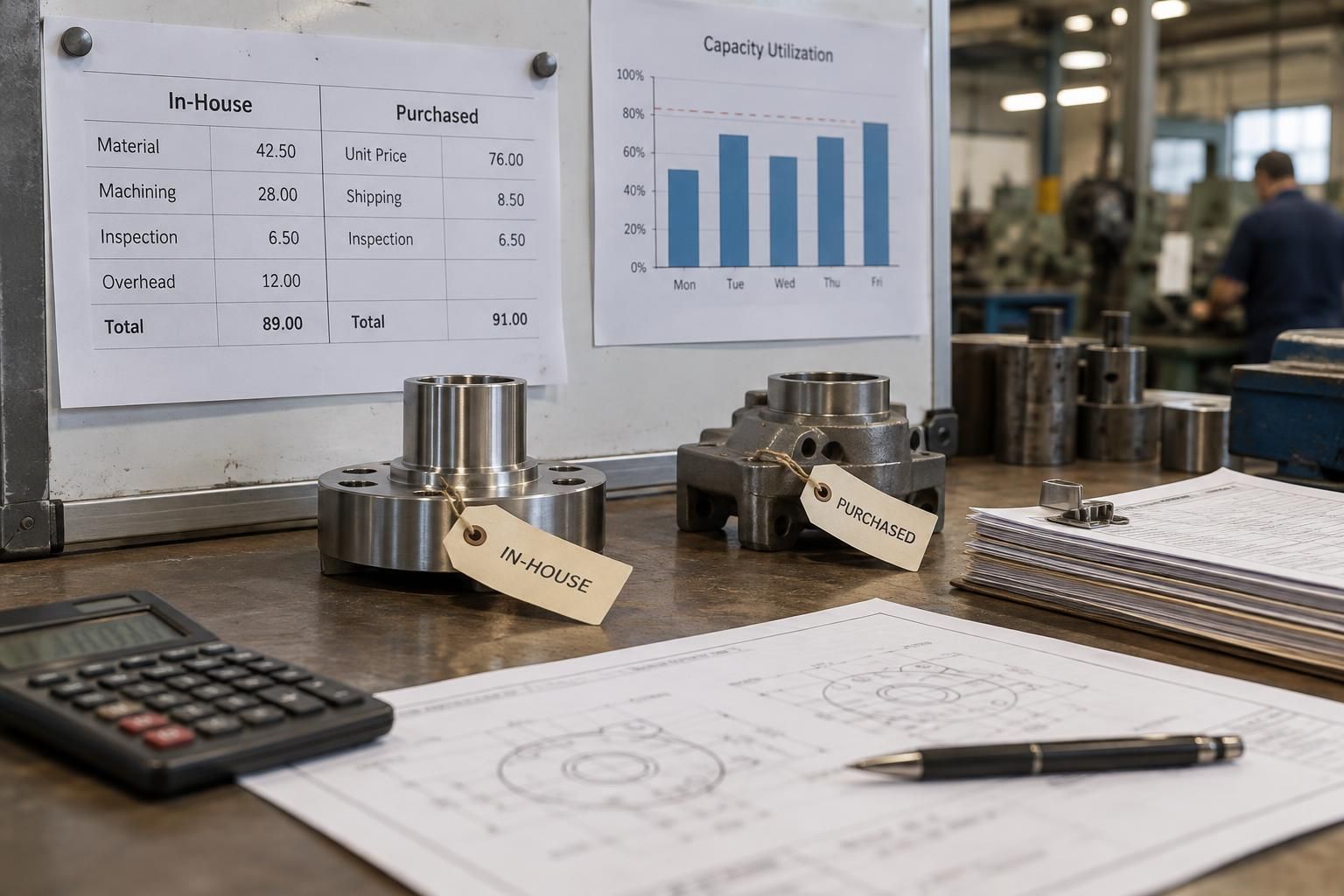
Open-book costing refers to a procurement method in which suppliers disclose their cost structure – material, labour, machine hours, overheads and profit margin – to the customer. The aim is a joint, traceable price discussion based on real data rather than mere comparative quotes. In DACH industry, open-book costing is typically used for long-term series supply contracts, development projects and make-or-buy decisions.
Key facts
- Open-book costing means that suppliers disclose their cost and margin base to their purchasing partner.
- It requires a high degree of trustworthiness and is frequently safeguarded by confidentiality agreements.
- Typical areas of application are framework agreements, long-running series, contract manufacturing and development projects.
- A computer-aided target costing (should-costing) serves as a cross-check of the disclosed costing.
- Success depends significantly on audit rights, defined costing rules and regular price adjustment clauses.
Contents
Definition: open-book costing
Open-book costing is a form of price transparency in which the supplier gives the customer access to its notional cost structure up to and including the margin. It is the opposite of closed-book costing, where only a final price is quoted. Legally, it is a voluntary contractual agreement that can take on the character of an ongoing cooperation obligation.
Distinction from open book (open-book accounting)
Open-book costing refers to the costing of a product or service – i.e. bill-of-materials costs, manufacturing times, machine rates and surcharges. Open book in the narrower sense goes further and includes insight into the accounting, e.g. revenue, cost centres and profit disclosure. In practice, open-book costing is often chosen as an intermediate stage because it is less sensitive and companies can more easily regulate it contractually.
Fields of application in industrial procurement
Open-book costing is particularly useful for services that cannot be priced via a free market comparison: complex components with tooling dependencies, contract manufacturing, assembly services or development content. For long-term framework agreements with flexible quantities, it also helps to traceably link price changes to raw material and wage developments.
Methods and approach in open-book costing
A functioning model requires clear rules on which cost elements are disclosed, on what data basis and at what cadence they are updated. Without methodology, open-book costing quickly degenerates into a one-way disclosure obligation for the supplier.
Agreeing a costing guideline
A proven approach is a mutually aligned costing guideline: it defines cost types (material, manufacturing, tooling, logistics, sales, administration, margin), planning values such as hourly rates and material indices, and the update cadence, usually semi-annual or annual. In addition, evaluation criteria are defined with which volume, complexity and risk are reflected in the price.
Should-costing as a cross-check
Procurement should in parallel prepare its own target costing based on the bill of materials, expected machine rates and gross hourly rates. This should-cost analysis does not serve as a control instance in the sense of an audit, but as a basis for dialogue: if disclosed manufacturing times or material quantities deviate significantly, this reveals both savings potentials and costing errors.
Price adjustment mechanics
Instead of renegotiating every change, the parties agree formulas, for example a material price escalator linked to exchange-listed indices or a labour cost escalator. Open-book costing makes the basis verifiable here; the supplier demonstrates that an index change actually reaches its cost structure.
Key KPIs for managing open-book costing
Since open-book costing creates effort, success should be measurable. Typical KPIs link cost transparency with concrete result contributions and process quality.
Result-oriented KPIs
Key metrics are the realised cost reduction against the baseline, the costing accuracy as the deviation between disclosed and subsequently determined costs, and the share of procurement volume handled under open-book costing. In practice, valid deviations below five percent are frequently set as a target.
Process and supplier KPIs
In addition, supplier management metrics such as on-time delivery or goods receipt lead time are useful to check whether price changes actually correlate with performance or cost changes. The number of accepted costing updates per year also shows whether the mechanism remains alive.
Risks and controls in open-book costing
Open-book costing offsets information asymmetry on the customer side – but only if the data is reliable. At the same time, risks arise for both sides: strategic loss of information, artificial cost-factoring artefacts and loss of trust if handled improperly.
Data quality and verification
The biggest mistake in practice is uncritical adoption of the disclosed data. Precise verification requires an audit right: the customer may inspect documents, view production data or measure cycle times. By way of limitation: the audit right should be contractually limited to the costing context in order to limit competitive risks for the supplier.
Reputational and trust risks
Anyone who uses disclosed data on volumes or margins vis-à-vis other suppliers or in tenders risks reputational damage in procurement and loses the supplier's willingness to disclose in the long term. A defined data cycle, clear confidentiality arrangements and a non-disclosure obligation are the minimum standard.
Distorted incentives
Open-book costing can tempt suppliers to spread overheads broadly or shun investment in efficiency, because every saving would be skimmed off by the customer in the next update. Profit-sharing or target costing models prevent this by leaving the supplier an agreed share of the realised savings.
Contractual and legal aspects
Open-book costing is primarily contract law, not regulatorily mandated. It is important to cleanly regulate data obligations, confidentiality, audit rights, adjustment mechanics and consequences in case of incorrect information. Legal or tax implications – for example regarding antitrust law or tax profit determination – should be examined on a case-by-case basis.
Confidentiality and secrecy protection
Disclosed costing data are trade secrets. Required are purpose limitation (only for this contractual relationship), a defined circle of recipients and security levels for transmitted data. In export business, additional topics such as the long-term supplier declaration (LLE) or carnet (ATA) for sample goods may become relevant, but these must be regulated independently of the costing method.
Audit and evidence obligations
Contractually common is an audit right that allows the customer to verify the costing on the basis of documents – for example material invoices, wage and payroll tax records or machine depreciation. False statements should trigger sanctions, such as a reimbursement obligation or a right of termination for cause.
Current developments and digitalisation
Open-book costing is increasingly supported digitally: data platforms, standardised costing templates and automated index feeds reduce the reconciliation effort. At the same time, sustainability and CO2 costs are entering the costing, further expanding transparency.
Digital collaboration with suppliers
Modern supplier integration encompasses shared costing models in which both parties maintain parameters and document changes with version control. This shortens price update cycles and creates a common data basis that can also be used for procurement planning, forecast error analysis and ramp-down management.
Extension to sustainability and compliance
Increasingly, customers require evidence of energy costs, CO2 intensity or compliance costs in the costing. This is heading towards open sustainability costing: the logical structure resembles classical open-book costing, except that emission factors and certificate costs are additionally disclosed. Topics such as supplier credit checks are also increasingly incorporated into the evaluation, because costing risk and solvency are coupled.
Typical metrics
| Metric | Benchmark | Context |
|---|---|---|
| Costing accuracy | Deviation typically < 5% | Deviation between disclosed and subsequently determined costs |
| Realised cost reduction | typically 2–5% p. a. at relevant volumes | measured against the baseline agreement |
| Open-book coverage rate | often 20–40% of strategic procurement volume | Share of volume under open-book costing |
| Price adjustment cycle | typically semi-annual to annual | Cadence of costing updates |
Typical practical benchmarks – they vary by industry, part and contract.
Practical example
A mid-sized mechanical engineering company sources a complex die-cast component under a three-year framework agreement. Instead of soliciting several quotes each year, it agrees open-book costing with the supplier: every six months, the supplier submits an updated costing with material costs, manufacturing hourly rates, tooling costs and an agreed margin. Procurement concurrently prepares its own should-cost calculation based on the bill of materials and compares the two. When a significant price increase occurs due to energy costs, the customer requests evidence of energy consumption per tonne of casting – the research reveals energy-saving potential through furnace optimisation, which is shared via a profit-sharing arrangement.
- Costing guideline with defined cost types and a semi-annual update cycle
- Should-cost analysis as an internal cross-check of the disclosed costing
- Contractual audit right on a documented basis, limited to the costing context
- Agreed profit sharing for realised efficiency gains as an incentive balance
Conclusion
Open-book costing is an effective instrument for evolving price negotiations from pure positional defence to evidence-based collaboration. It pays off particularly for long-term, complex or volume-flexible sourcing, where market prices alone offer no orientation. Prerequisites are reliable data, clearly defined costing rules and a balanced incentive system that does not unilaterally skim off efficiency gains. Those who combine open-book costing with should-costing, audit rights and digital supplier integration achieve sustainably more stable cost structures in practice than with pure price negotiations. The investment in methodology and trust typically pays for itself over several contract periods.
Frequently asked questions
What does open-book costing mean?
Open-book costing means that a supplier discloses its cost structure – material, labour, machine hours, overheads and margin – to the customer. The customer gains insight into how the final price is composed. This fundamentally distinguishes it from closed-book costing, where only the final price is quoted.
When is open-book costing worthwhile in procurement?
It is worthwhile above all for long-term series contracts, contract manufacturing, complex components or development projects, where no reliable market price exists. For short-term, standardised purchases, the effort is usually not justified. With strongly fluctuating raw material prices, open-book costing also helps to assess price changes in an evidence-based manner.
What is the difference between open-book and closed-book costing?
With closed-book costing, the supplier only quotes the final price without a cost breakdown. With open-book costing, individual costs, overhead surcharges and the margin are disclosed. In practice, intermediate stages exist, such as disclosing only direct costs while keeping the margin confidential.
What risks does open-book costing pose for suppliers?
Suppliers risk that sensitive cost data will be used in future tenders or vis-à-vis competitors. In addition, disclosure can weaken the negotiating position if the customer uses margin information as a skimming potential. Confidentiality agreements, purpose limitation and profit-sharing models mitigate these risks.
What is should-costing?
Should-costing is a target costing independently prepared by the buyer, which derives the 'should' price of a product from the bill of materials, manufacturing times, machine rates and typical surcharges. It serves as a cross-check against the supplier's open-book costing and as a basis for negotiation. If the two calculations deviate significantly, this indicates potentials or costing errors.
Is open-book costing mandatory?
No, open-book costing is not a legal obligation but a voluntary contractual agreement between the parties. Public sector buyers partially have separate transparency regulations, but these are independent of the private open-book costing model. In the private sector, the contract determines whether and to what extent disclosure takes place.