Vertical IntegrationStrategy and Implementation in Industrial Procurement
Procurement glossary · Updated · 8 min read
Also known as: Vertikalintegration, Wertschöpfungstiefe, Vertical Integration, Fertigungstiefe, Rückwärtsintegration
Short answer
- Vertical integration means that a company takes over further stages of the value chain itself, such as supply manufacturing or distribution.
- It increases control, security of supply and margin scope, but ties up capital and reduces flexibility.
- In procurement, it changes the supplier portfolio, contracts and metrics and is managed through make-or-buy analyses.
Vertical integration refers to the expansion of a company's level of vertical integration along the value chain, for example through the takeover of upstream or downstream value creation stages such as supply processes or distribution functions. For procurement, it fundamentally changes the understanding of the procurement role, as classic procurement tasks become internal service relationships. The term is therefore central to make-or-buy decisions, supplier risk and long-term cost structure.
Key facts
- Vertical integration describes the level of value creation along the supply chain, graded into upstream and downstream integration.
- procurement focuses in particular on backward integration, make-or-buy analyses and the reassessment of supplier risk.
- Typical motives are security of supply, protection of technology and know-how, economies of scale and better margin control.
- The main disadvantages are capital commitment, reduced flexibility, complexity costs and dependence on the utilisation of in-house capacities.
- In practice, a graduated spectrum between full in-house production and external sourcing has proven effective, for example through contract manufacturing or strategic partnerships.
- A robust risk analysis with supplier segmentation and serial production release planning is a prerequisite for successful integration steps.
Contents
Definition: Vertical Integration
Vertical integration is the strategic extension of a company into upstream or downstream stages of the value chain. It differs from horizontal integration, which refers to mergers with competitors at the same stage.
Forward and backward integration
In backward integration, the company takes over stages of its suppliers, for example the in-house production of components, tooling or raw material processing. Forward integration extends into downstream stages such as assembly, service or distribution. For buyers, backward integration is particularly relevant because it converts supplier relationships into internal service relationships and reduces or restructures procurement volumes.
- Backward integration: supply stages are taken over internally, the classic case of make rather than buy.
- Forward integration: expansion towards the customer, for example through own service and distribution stages.
- Stage integration: partial takeover of individual process steps, often via equity interests.
Distinction from horizontal integration
Horizontal integration takes place at the same value creation stage and aims at market share, economies of scale and range extension. Vertical integration, by contrast, aims at control of the supply chain and the level of vertical integration. The two strategies are not mutually exclusive; in practice, corporations often pursue combined patterns, with procurement having to manage volume-bundling synergies in horizontal steps and structural changes in the supplier portfolio in vertical steps.
Motives and forms of vertical integration
The decision for or against a higher level of vertical integration usually follows several simultaneous objectives. A structured evaluation prevents strategic motives from overriding short-term cost considerations.
Strategic motives
Common drivers are security of supply for critical material categories, protection of manufacturing know-how and intellectual property, and control of quality and lead times. The absorption of margins from upstream supply stages, economies of scale in in-house production and the reduction of dependence on monopoly or scarcity markets also play a role. Increasing regulatory requirements along the supply chain, such as documentation and due diligence obligations, reinforce the practical interest in greater control over upstream stages.
Forms and degree of integration
Vertical integration is not a yes/no decision but a staged model. Full integration with own production and capital participation stands at one end, pure market purchasing at the other. In between are proven hybrid forms: contract manufacturing with supplied or stockpiled material, joint ventures, long-term purchase agreements with extensive information rights, and exclusive supplier relationships. Hybrid forms reduce capital commitment and can be unwound more easily, but they require clearly regulated termination rights for cause and defined exit paths.
- Full integration: purchase or build-up of a production stage, maximum control with the highest capital commitment.
- Partial integration: in-house production only for core parts and peak loads, with the remainder sourced externally.
- Hybrid models: contract manufacturing, joint ventures, long-term contracts and capacity options.
Make-or-buy as a decision-making tool
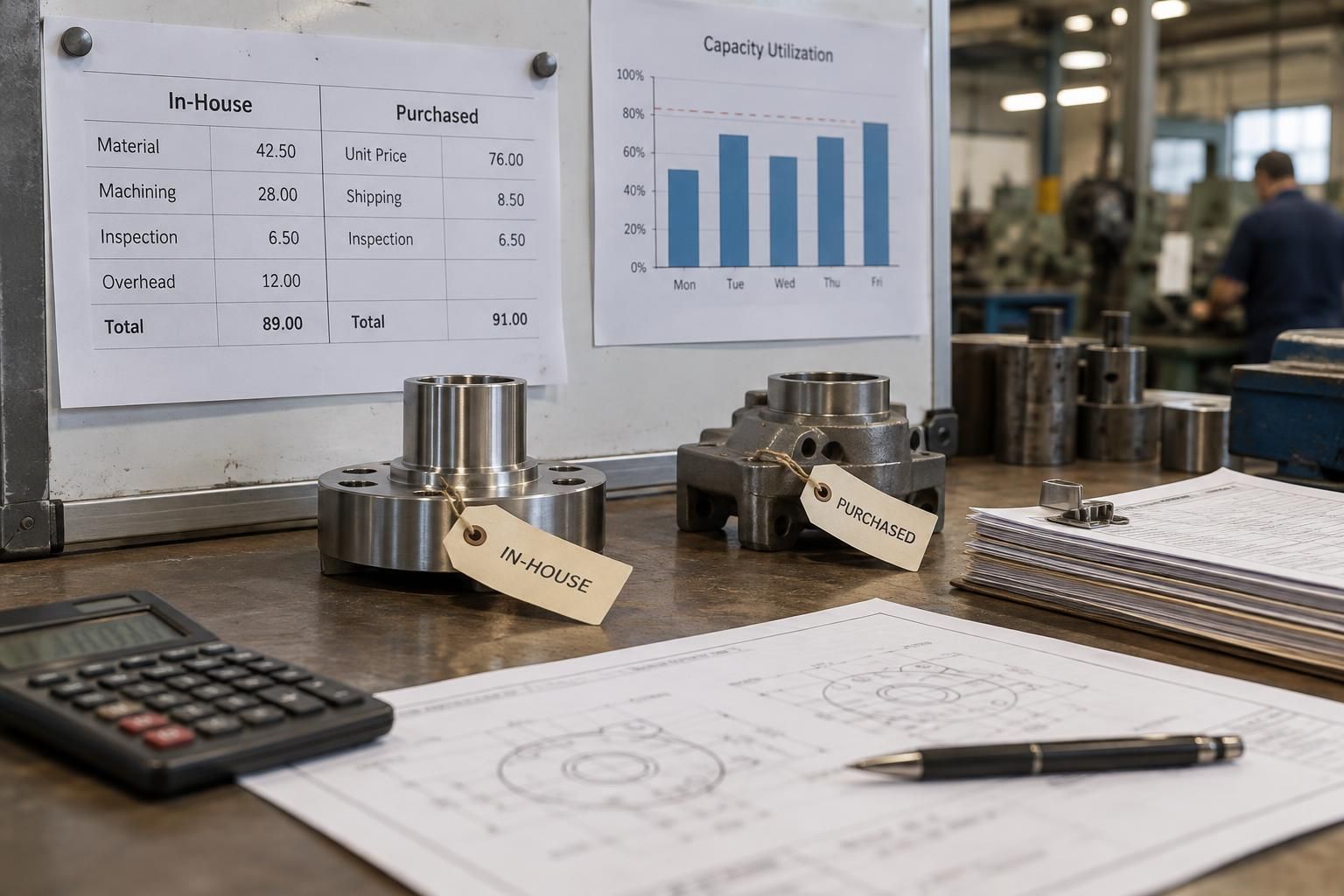
The core procurement process for integration questions is the systematic make-or-buy analysis. It compares the full costs of in-house production (materials, labour, depreciation, capital commitment, quality assurance, administration) with the procurement costs including coordination and risk premiums. In addition to costs, strategic criteria are incorporated: technology criticality, availability of alternative suppliers, utilisation effects and flexibility requirements. The result should be anchored in the supplier segmentation matrix so that make and buy positions are managed consistently across material categories.
Implementation in procurement: approach and control
An integration project changes the supplier structure, contracts and operational processes at the same time. Without a clear approach, siloed solutions and untapped potential result.
Analysis of material categories and the portfolio
The starting point is a risk analysis across all relevant material categories: which parts are critical in terms of availability, technology or single-source situations? Where do high volumes accumulate for which volume tiers and volume discounts should be reassessed in procurement? Supplier segmentation then classifies which suppliers should be strategically protected, developed, substituted or replaced by in-house production. This creates a prioritised roadmap instead of isolated individual decisions.
Contract and exit design
Before any integration step, existing supply contracts must be reviewed and shaped. Important elements are contract terms, automatic contract renewal with notice periods, and the right of termination for cause in the event of changing conditions. For hybrid forms, ownership of tooling, equipment and intellectual property, supplier RTO arrangements (right to own or retransfer rights) and successor arrangements for serial production release must be documented in a binding manner. Transition periods with dual sourcing should also be contractually secured and commercially regulated.
Operational integration after take-over
After a stage is taken over, procurement tasks shift in-house: scheduling and capacity planning, inventory control and quality assurance of the now internal supply follow their own rules. Established instruments such as delivery date tracking, service level targets and clear planning horizons between sales, production and the new internal stage must be established or adapted. A defined procurement emergency team maintains escalation paths in case the integrated stage fails and external sourcing must be activated at short notice.
Key KPIs for vertical integration
The success of integration measures can only be verified with metrics that jointly capture cost, supply and flexibility.
Value creation and cost metrics
The central metric is the level of vertical integration, typically measured as the share of in-house production in manufacturing costs or as manufacturing depth as a percentage of revenue. In addition, full costs per unit of the integrated stage compared with external sourcing show the economic added value. For internal performance charging, metrics such as capacity utilisation, unit cost variance against business case planning and capital commitment in inventories of the integrated stage have proven effective in practice. Expected savings should be tracked via the savings pipeline so that planned effects are not lost.
Delivery and risk metrics
Even after integration, supplier performance measurement remains essential: on-time delivery and service level targets towards the internal customer replace the previous supplier evaluation. Material availability, scrap rate and lead time of the new stage feed into the supplier rating model as an internal pseudo-supplier. The metrics also define escalation thresholds: if the integrated stage performs persistently worse than the former market, this strengthens the case for re-outsourcing.
- Level of vertical integration: typically measured as the share of in-house production in manufacturing costs.
- On-time delivery of the internal stage: comparison against the agreed service level target.
- Full cost coverage: actual costs per unit versus the planned business case.
- Capital commitment: inventories and equipment investment as a return on investment benchmark.
Risks and controls
Vertical integration ties up capital and decision-making latitude for years. The main risks can be controlled with structured controls.
Economic and operational risks
The biggest risk is fixed cost commitment when utilisation declines: own capacities must be paid for regardless of the order situation. Further risks are misjudgements of technology cycles, quality problems in the new stage, hidden follow-up costs and the loss of the market benchmark because internal prices are no longer benchmarked against competition. Organisational risks are also real: cultural friction after acquisitions and know-how leakage before the transaction is closed.
- Fixed cost risk in the event of sales fluctuation, partly mitigable through contract manufacturing for third parties.
- Benchmark loss: internal prices regularly benchmarked against market prices and third-party quotes.
- Technology risk: fixed equipment becomes obsolete faster than flexible supplier relationships.
Control and governance mechanisms
Effective controls start before the transaction: a solid business case with sensitivity analyses, defined exit options and clear governance for the integrated stage. Internal service relationships should be organised in a market-like manner, with binding framework agreements, defined match-and-merge rules for order and invoice processing and a regular review of the make-or-buy decision. Maverick buying around the internal stage, i.e. uncoordinated recourse to external suppliers, is prevented through clear procurement policies and approval processes.
Planning exit paths
Not every integration delivers what the business case promises. Therefore, an exit path should exist from the outset: contractual retransfer rights (reversed supplier RTO perspective), disposal options for equipment, qualified alternative suppliers and a transition plan with a sufficient planning horizon. Those who document exit scenarios early avoid rushed distressed sales with value loss in a crisis.
Current developments and outlook
The debate on the level of vertical integration has intensified in recent years. Several developments are having a lasting influence on integration decisions.
Resilience and regionalisation
Supply chain disruptions, geopolitical tensions and trade barriers have pushed the motive of security of supply back to the fore. Instead of global full integration, practice frequently observes regionalisation: production is relocated closer to sales markets, sometimes as the localisation of entire production stages. This increases the relevance of risk analyses and contingency concepts in procurement, as regionally concentrated structures can create new risk concentrations.
Sustainability and regulatory requirements
Reporting and due diligence requirements along the supply chain increase the control effort for upstream stages. Vertical integration can close control gaps here, because transparency, data quality and material origin are easier to verify internally. At the same time, material substitution (ESG) comes into sharper focus: substitute materials with a better sustainability profile may make in-house development necessary, or alternatively render integration unnecessary if substitution strategies reduce the criticality of an upstream product.
Digitalisation as a substitute for integration
Digital platforms, real-time data from supplier systems and AI-supported early warning systems can, in some cases, replicate the control effects of integration without tying up capital — the so-called virtual or quasi-integrated approach. Networked planning, automated delivery date tracking and data-based risk analysis for strategic suppliers provide part of the transparency that only in-house production used to offer. For many medium-sized companies, this is the more economical path before capital is tied up in production stages.
Typical metrics
| Metric | Benchmark | Context |
|---|---|---|
| Level of vertical integration | typically 30–70 % of manufacturing costs | Share of in-house production; must be interpreted very differently depending on the industry. |
| On-time delivery of the internal stage | > 98 % | Measured against the agreed service level target of the internal customers. |
| Full cost coverage | ≥ 95 % of the business case | Actual unit costs of the integrated stage versus plan, with regular variance analysis. |
| Capacity utilisation | typically > 75 % | Critical threshold for the profitability of the integrated capacity. |
Typical practical benchmarks – they vary by industry, part and contract.
Practical example
A medium-sized mechanical engineering company sourced critical precision cast parts from a single supplier in Asia. After repeated delivery delays and rising logistics costs, the company examined backward integration. A structured make-or-buy analysis showed that full integration of the casting stage did not promise a sufficient return on investment given the existing sales certainty. Instead, the company chose a hybrid path.
- Building partial capacity for core parts in its own plant, with the remaining volume continuing to be sourced externally.
- Establishing a second qualified supplier in Europe as a fallback option with a clear release for serial production.
- A long-term contract with the previous main supplier, including a supplier RTO clause covering special tooling.
- Inclusion of the new internal stage in the supplier rating model with its own service level target.
Conclusion
For procurement, vertical integration is far more than a management investment decision: it changes the supplier portfolio, contracts, metrics and operational processes. It is successful when make-or-buy analyses are conducted rigorously, hybrid forms are used as intermediate steps and exit paths are considered from the outset. Internal stages should be managed in a market-like manner so that the benchmark is not lost. In times of heightened supply chain risks and regulatory requirements, the topic is gaining importance, but it is no substitute for a solid risk analysis or a broad supplier base. Those who consciously weigh capital commitment against flexibility decide on a sound basis rather than reflexively.
Frequently asked questions
What does vertical integration mean in simple terms?
Vertical integration means that a company takes over further stages of the value chain itself instead of purchasing them externally. A manufacturer that starts producing its own supply parts or runs its own distribution is vertically integrating. The opposite is purchasing on the open market with a high diversity of suppliers.
What is the difference between vertical and horizontal integration?
Vertical integration extends value creation along the supply chain, i.e. upstream or downstream stages. Horizontal integration takes place at the same stage, for example through the acquisition of a competitor. For procurement, vertical integration changes the procurement structure, while horizontal integration mainly affects volumes and market position.
What are the benefits of vertical integration for companies?
Typical benefits are greater security of supply, protection of technology and know-how, better quality control and the absorption of margins from upstream supply stages. In addition, dependence on individual suppliers decreases. These benefits are offset by capital commitment, reduced flexibility and fixed cost risks.
What risks does vertical integration entail?
The main risks are fixed cost commitment when utilisation declines, technology risks, quality problems in the new stage and the loss of the market benchmark. Organisational conflicts after acquisitions and know-how leakage before the transaction is closed are also real risks. These risks can be managed with sensitivity analyses, exit options and regular make-or-buy reviews.
When is vertical integration worthwhile in procurement?
It typically pays off for critical material categories with single-source risk, a strong need for know-how protection, stable and high volumes, and sustainably lower full costs of in-house production. With fluctuating demand or rapid technological change, hybrid models such as contract manufacturing are usually the better choice. The decision should always be made on the basis of a structured risk analysis.
What is backward integration?
Backward integration is the takeover of upstream value creation stages, meaning the company integrates its suppliers or their functions. In procurement, this means that previous purchasing volumes become internal value creation. Procurement nevertheless remains important, for example for the raw materials and upstream products of the new internal stage.